Each year, the developers behind well-known iPhone camera app Halide take an in-depth look at the new camera technology that Apple has introduced. This year, Sebastiaan de With took more than 1,000 photos with the iPhone 16 Pro to examine changes to the camera setup, Apple's image processing, and more.
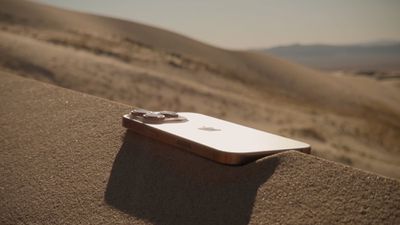
Apple added an upgraded 48-megapixel Ultra Wide camera to the iPhone 16 Pro models this year. De With found it to take photos that have "impressive sharpness," but Apple did not add a larger sensor, so you're still not going to get the level of detail that you get with the Wide camera, which has a much bigger sensor.
For macro photos, the 48-megapixel lens "does wonders" for up-close shots. In prior iPhones, the Ultra Wide was cropping in from a 12-megapixel photo, which meant you ended up with an image that was approximately three megapixels. With the 48-megapixel lens, cropping in provides a true 12-megapixel image with more detail.
As for the Main camera, which Apple now calls the "Fusion" camera, it is using a sensor that is the same physical size as the iPhone 15 Pro sensor. While both the iPhone 16 and iPhone 16 Pro have a "Fusion" camera, the iPhone 16 Pro has a larger and higher quality sensor. As with the iPhone 15 Pro, the iPhone 16 Pro combines pixels and can produce better 24-megapixel and 12-megapixel images using that data, in addition to full 48-megapixel photos. Processing is about the same as last year, and there is little difference between images captured with the iPhone 15 Pro and the iPhone 16 Pro with the standard Wide camera.
There are some notable internal changes that speed up image capture. The Apple Camera Interface provides faster sensor readout times for improvements to QuickTake. QuickTake also supports 4K Dolby Vision HDR, which is a noticeable improvement, according to de With. Capturing 48-megapixel ProRAW images is also a lot faster with quicker shutter speeds, and there's little delay.
For those interested in more info on everything new with the iPhone 16 Pro related to photography, including Camera Control, the Telephoto lens, Night mode, and more, the full Halide review is well worth a read.


/https://forums.macrumors.com/attachments/2431570/)
/https://forums.macrumors.com/attachments/2431571/)
/https://forums.macrumors.com/attachments/2431572/)
/https://forums.macrumors.com/attachments/2431574/)























![Apple Pulls Keynote, Pages and Numbers From App Store [Update: Back]](https://images.macrumors.com/t/Okb7kitB_gNr6qe5Pex9nQIysD8=/112x112/article-new/2026/01/Apple-Creator-Studio-iWork-suite.jpg)