macOS Sequoia Adds iCloud Support for macOS 15 Virtual Machines - MacRumors
Skip to Content

macOS Sequoia Adds iCloud Support for macOS 15 Virtual Machines

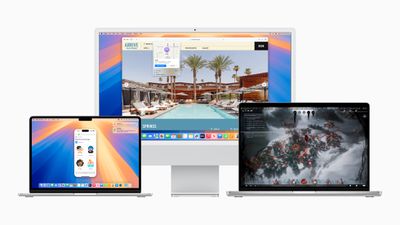
Apple is introducing a notable enhancement to its virtualization framework in macOS Sequoia by enabling Mac users to sign into iCloud within macOS virtual machines (VMs).
Apple WWDC24 macOS Sequoia hero 240610
Previously, users could not sign into iCloud on macOS VMs, which limited the framework's utility for developers needing to test iCloud features and for users looking to sync their apps with iCloud. As spotted by ArsTechnica, macOS Sequoia removes that barrier, provided that both the host and guest operating systems are macOS 15 or newer.

The feature will be available on Apple silicon Macs, but it has some limitations. Developers aiming to run older macOS versions alongside macOS 15 in a VM or those who upgrade VMs from older macOS versions will not be able to sign into iCloud on the VM. Only brand-new VMs created from a macOS 15 install image (an .ipsw file) can utilize iCloud and services related to Apple Account (formerly Apple ID).

Apple's virtualization framework documentation explains:

"When you create a VM in macOS 15 from a macOS 15 software image… Virtualization configures an identity for the VM that it derives from security information in the host's Secure Enclave. Just as individual physical devices have distinct identities based on their Secure Enclaves, this identity is distinct from other VMs."

Apple says that if someone moves a VM to a different Mac host and restarts it, the Virtualization framework automatically creates a new identity for the VM using the information from the Secure Enclave of the new Mac host. This identity change requires the person using the VM to re-authenticate to allow iCloud to restart syncing data to the VM.

Both Parallels and VMware offer virtualization software, and Broadcom recently made VMware Fusion free for personal use. macOS Sequoia is currently in developer beta, with a public beta set to arrive in July, followed by a general release in the fall.
Related Forum: macOS Sequoia

Popular Stories

iPhone 18 Pro Deep Red Feature

iPhone 18 Pro Launching in Two Months With These 12 New Features

Friday July 24, 2026 7:26 pm PDT by
It is now late July, and that means the iPhone 18 Pro and iPhone 18 Pro Max are less than two months away. The devices are expected to look similar to the iPhone 17 Pro and iPhone 17 Pro Max, but there will still be many year-over-year changes, with rumored features including a smaller Dynamic Island, 5G via satellite, and more. Apple is expected to unveil the iPhone 18 Pro, iPhone 18 Pro...
macbook ultra

'MacBook Ultra' Coming Soon With These 12 New Features

Friday July 24, 2026 6:00 pm PDT by
Apple's first high-end MacBook redesign in five years is expected to arrive in the near future, bringing a run of firsts to the Mac. Bloomberg's Mark Gurman expects the laptop to arrive between late 2026 and early 2027, with the later window now looking more likely owing to the global memory chip shortage. Analyst Ming-Chi Kuo expects mass production to begin by late 2026. Apple last...
iPhone 18 Pro and Pro Max Feature

'Apple Upgrade' Program Launching on Tuesday

Sunday July 26, 2026 8:20 am PDT by
In his newsletter today, Bloomberg's Mark Gurman reiterated that a new "Apple Upgrade" program is set to launch in the U.S. on Tuesday, July 28. Apple will stop accepting iPhone Upgrade Program sign-ups on the same day, but he said customers who are already enrolled will be able to remain in the program "for the time being." Apple is partnering with buy-now, pay-later company Klarna on the...

Top Rated Comments

28 months ago
Ok, now allow virtualization on iPads and we are good
Score: 12 Votes (Like | Disagree)
chrfr Avatar
28 months ago

Thank you! I actually just purchased my MacPro 2019 machine a couple of months ago (refurb). I don't like the limitations that Apple Silicon imposes. This is yet another one.
Well, performance is the big limitation that staying with Intel imposes.
Score: 7 Votes (Like | Disagree)
therunningman Avatar
28 months ago

Well, performance is the big limitation that staying with Intel imposes.
My workload involves virtualization pertaining to Intel hardware specifically. I can expand the RAM in my Intel MacPro to ridiculous amounts. I can do eGPUs. Apple Silicon allows none of this. So a performance hit vs. no performance at all is a really easy choice for me.
Score: 6 Votes (Like | Disagree)
chrfr Avatar
28 months ago
Both Parallels and VMware offer virtualization software, and Broadcom recently made VMware Fusion free for personal use (https://www.macrumors.com/2024/05/15/vmware-fusion-pro-13-free-personal-use/). macOS Sequoia is currently in developer beta, with a public beta set to arrive in July, followed by a general release in the fall.
Article Link: macOS Sequoia Adds iCloud Support for macOS 15 Virtual Machines (https://www.macrumors.com/2024/06/20/macos-sequoia-adds-icloud-support-vms/)
VMware Fusion does not allow the virtualization of macOS on Apple Silicon hosts, so that it exists at all is irrelevant to this topic.
Score: 5 Votes (Like | Disagree)
28 months ago

Ok, now allow virtualization on iPads and we are good
Apple rejected an App Store submission for UTM on iPhone and iPad, and also refused to notarize the app so that it could be listed on third-party app stores in the EU.

https://9to5mac.com/2024/06/09/apple-blocks-pc-emulator-utm-app-store/
Score: 3 Votes (Like | Disagree)
yoink Avatar
28 months ago
Don’t forget UTM: https://github.com/utmapp/UTM
https://getutm.app/

It’s nowhere near as feature complete as Fusion or Parallels desktop (particularly awkward file sharing), but it’s great for development, and has an easy to use headless mode.
Score: 3 Votes (Like | Disagree)