macOS Sequoia Adds iCloud Support for macOS 15 Virtual Machines
Apple is introducing a notable enhancement to its virtualization framework in macOS Sequoia by enabling Mac users to sign into iCloud within macOS virtual machines (VMs).
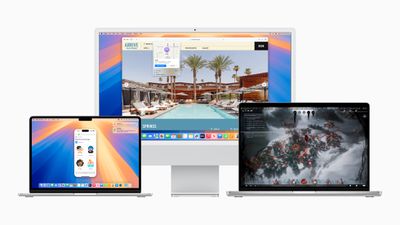
Previously, users could not sign into iCloud on macOS VMs, which limited the framework's utility for developers needing to test iCloud features and for users looking to sync their apps with iCloud. As spotted by ArsTechnica, macOS Sequoia removes that barrier, provided that both the host and guest operating systems are macOS 15 or newer.
The feature will be available on Apple silicon Macs, but it has some limitations. Developers aiming to run older macOS versions alongside macOS 15 in a VM or those who upgrade VMs from older macOS versions will not be able to sign into iCloud on the VM. Only brand-new VMs created from a macOS 15 install image (an .ipsw file) can utilize iCloud and services related to Apple Account (formerly Apple ID).
Apple's virtualization framework documentation explains:
"When you create a VM in macOS 15 from a macOS 15 software image… Virtualization configures an identity for the VM that it derives from security information in the host's Secure Enclave. Just as individual physical devices have distinct identities based on their Secure Enclaves, this identity is distinct from other VMs."
Apple says that if someone moves a VM to a different Mac host and restarts it, the Virtualization framework automatically creates a new identity for the VM using the information from the Secure Enclave of the new Mac host. This identity change requires the person using the VM to re-authenticate to allow iCloud to restart syncing data to the VM.
Both Parallels and VMware offer virtualization software, and Broadcom recently made VMware Fusion free for personal use. macOS Sequoia is currently in developer beta, with a public beta set to arrive in July, followed by a general release in the fall.
Popular Stories
Apple today confirmed to Reuters that it has acquired Q.ai, an Israeli startup that is working on artificial intelligence technology for audio.
Apple paid close to $2 billion for Q.ai, according to sources cited by the Financial Times. That would make this Apple's second-biggest acquisition ever, after it paid $3 billion for the popular headphone and audio brand Beats in 2014.
Q.ai has...
Last year, Apple launched CarPlay Ultra, the long-awaited next-generation version of its CarPlay software system for vehicles. Nearly nine months later, CarPlay Ultra is still limited to Aston Martin's latest luxury vehicles, but that should change fairly soon.
In May 2025, Apple said many other vehicle brands planned to offer CarPlay Ultra, including Hyundai, Kia, and Genesis. At the time,...
Apple recently updated its online store with a new ordering process for Macs, including the MacBook Air, MacBook Pro, iMac, Mac mini, Mac Studio, and Mac Pro.
There used to be a handful of standard configurations available for each Mac, but now you must configure a Mac entirely from scratch on a feature-by-feature basis. In other words, ordering a new Mac now works much like ordering an...
Apple today introduced its first two physical products of 2026: a second-generation AirTag and the Black Unity Connection Braided Solo Loop for the Apple Watch.
Read our coverage of each announcement to learn more:Apple Unveils New AirTag With Longer Range, Louder Speaker, and More
Apple Introduces New Black Unity Apple Watch BandBoth the new AirTag and the Black Unity Connection Braided...
A newly surfaced resale operation is seemingly offering Apple Store–exclusive display accessories to the public for the first time, potentially giving consumers access to Apple-designed hardware that the company has historically kept confined to its retail environments.
Apple designs a range of premium MagSafe charging stands, display trays, and hardware systems exclusively for displays in ...