Gurman: Apple Working on On-Device LLM for Generative AI Features
Apple is developing its own large language model (LLM) that runs on-device to prioritize speed and privacy, Bloomberg's Mark Gurman reports.

Writing in his "Power On" newsletter, Gurman said that Apple's LLM underpins upcoming generative AI features. "All indications" apparently suggests that it will run entirely on-device, rather than via the cloud like most existing AI services.
Since they will run on-device, Apple's AI tools may be less capable in certain instances than its direct cloud-based rivals, but Gurman suggested that the company could "fill in the gaps" by licensing technology from Google and other AI service providers. Last month, Gurman reported that Apple was in discussions with Google to integrate its Gemini AI engine into the iPhone as part of iOS 18. The main advantages of on-device processing will be quicker response times and superior privacy compared to cloud-based solutions.
Apple's marketing strategy for its AI technology will apparently be based around how it can be useful to users' daily lives, rather than its power. Apple's broader AI strategy is expected to be revealed alongside previews of its major software updates at WWDC in June.
Popular Stories
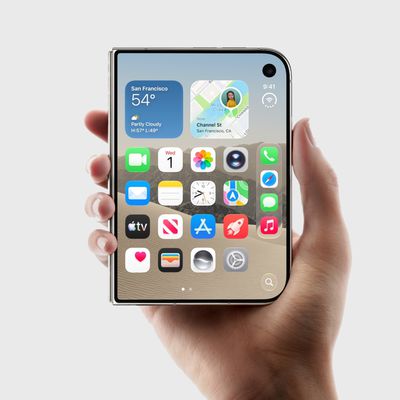
Bloomberg's Mark Gurman today said Apple has four goals for future iPhone Duo models: Face ID, an Action button, a telephoto camera, and a thinner-and-lighter design. Gurman said Apple has already developed iPhone Duo 2 prototypes with Face ID on the outer display, but it is "running out of time" to finalize the feature for that model, so it might not arrive until the iPhone Duo...
Apple plans to unveil an iPhone 18e, iPhone 18, updated entry-level iPad, and new MacBook Neo and MacBook Air models around February or March next year, according to the latest word from Bloomberg's Mark Gurman.
In his Power On newsletter today, Gurman said Apple has some additional products planned for the first half of 2027, including the iPhone Air 2 and new iPad Air and iPad Pro models,...
Apple has made a change to its development process for iOS 28, macOS 28, and corresponding software updates, according to Bloomberg's Mark Gurman.
In his Power On newsletter today, he said Apple separates development of each year's new operating systems into three major stages. Typically, he said each stage consists of four weeks of coding followed by a four-week "convergence" period where...