Few features have promised to revolutionize the way we interact with our Apple devices as much as Siri, the company's ubiquitous virtual assistant. Launched in 2011, Siri was introduced as heralding a new era in human-computer interaction, offering an intuitive voice-controlled interface for accessing information, scheduling appointments, sending messages, and much more. The vision was grand: A personal assistant in your pocket, capable of understanding and acting upon a wide array of voice commands with ease and accuracy. So what happened?
Enthusiasm for Siri has undeniably waned in the intervening years. Despite regular updates and improvements from Apple, Siri has struggled to keep pace with its advancing rivals, and in an era of generative AI chatbots and large language models, Siri's failings have only been magnified. Issues ranging from misinterpreted commands to limited contextual understanding have not only hindered Siri's usability but have also led to an almost universal perception of the virtual assistant as a source of user frustration rather than assistance. This persistent underperformance begs the question: Is it time for Apple to kill Siri and start over?
Siri's Birth Pangs
Siri's conceptual roots at Apple can be traced back to the company's early exploration of human-computer interaction. Thirty years ago, Apple commissioned a group of employees to create a video showing how in the future humans might interact with computers using spoken language. The video, known as "Knowledge Navigator," featured a professor chatting with a virtual assistant to perform everyday tasks and academic research. In one of the tasks, the professor asks the assistant to search for a five-year-old publication. The assistant pulls up an article dated 2006, suggesting the video is supposed to be set in September 2011.
The video was criticized at the time for being an unrealistic portrayal of the capacities of a virtual assistant in the foreseeable future. Yet the demonstration inspired developers Adam Cheyer, Dag Kittlaus, and Tom Gruber, who began AI research on virtual assistants at SRI International, a DARPA-funded research laboratory in Menlo Park, California. Their work would result in a spin-out called Siri, named by Kittlaus after a co-worker in Norway. (Siri is short for Sigrid, which has its origins in Old Norse for words meaning "victory" and "beautiful".)
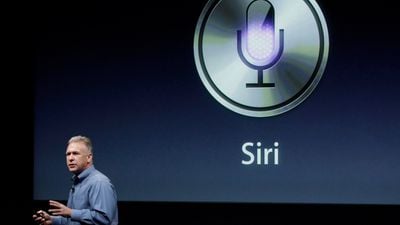
In February 2010, Kittlaus launched Siri as an app on Apple's App Store. Steve Jobs soon began playing with the app and was impressed with how it allowed the user to search the internet by voice. A few weeks later, Apple acquired the start-up. Siri's AI backend was in place, while its voice recognition technology would be supplied by Nuance Communications. Apple subsequently released its Siri virtual assistant (in beta) for the iPhone 4S in October 2011, just one month later than the fictional future in which Knowledge Navigator had been originally envisioned.
Fiction vs. Reality
Apple marketed Siri as more than just a tool — it was your intelligent assistant ready to help with a variety of tasks. Whether setting reminders, sending texts, making phone calls, or finding information online, Siri aimed to streamline it all with a simple voice command. There was nothing like it at the time and the initial results were impressive, but the underlying promise was that Siri would not only understand you but also learn from you, becoming more efficient and personalized over time.
Regular iOS updates in the intervening years have worked towards making Siri more effective and realizing its original promise. Whenever a new iOS feature comes along, Apple usually ensures that it works with Siri, and these days it can be used to identify songs, get driving directions, send money via Apple Pay, and control HomeKit products, to name just a few of its skills. In 2021, Apple announced that Siri would work offline by default – whenever possible, it would process user requests on-device, with the same quality of server-based speech recognition.
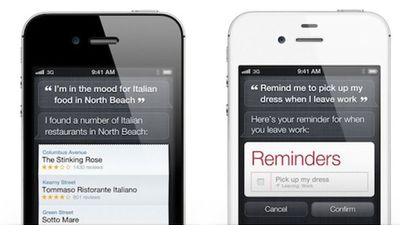
However, even now, the assistant that was supposed to understand context and grow with the user still faces significant challenges with context, understanding, and integration, regardless of whether it pings Apple's servers or processes requests locally. Many Apple device owners often say it struggles with even basic commands. Indeed, many users believe that, at least in some areas, Siri's abilities have gotten worse over time, especially since the release of iOS 17.
It is astounding how bad it is. Even things that used to work fine like asking Siri to send a text message now don’t seem to work consistently anymore. Sometimes she asks me if I want to use the phone number or email, and other times it just tries to call the person. Sigh. — Joseph Bella (@jbella) March 20, 2024
Michael Tsai's blog has done a good job of recording users' more recent frustrations with Siri. Here are just a handful of serial issues some users have recently reported:
- Setting timers instead of alarms.
- Bungling music requests (even for purchases that Siri has local access to).
- Delayed responses over fast data connections.
- Nonsense responses to conversion requests.
- Creating notes instead of reminders.
- Acknowledging requests without acting on them.
- Overwrought punctuation when dictating.
- Inability to consistently control smart devices.
The list could go on. But has Siri really gotten more stupid? Could most issues be put down to fringe use cases, or over-expectations in a brave new world of chatbots powered by immensely resource-heavy large-language models? Consider what Walt Mossberg said in 2016, writing for The Verge:
Before Apple bought it, Siri was on the road to being a robust digital assistant that could do many things, and integrate with many services — even though it was being built by a startup with limited funds and people. After Apple bought Siri, the giant company seemed to treat it as a backwater, restricting it to doing only a few, slowly increasing number of tasks, like telling you the weather, sports scores, movie and restaurant listings, and controlling the device's functions.
...On too many occasions, Siri either gets things wrong, doesn't know the answer, or can't verbalize it. Instead, it shows you a web search result, even when you're not in a position to read it.
Many users would agree that very little has changed in the past eight years.
AI Hopes on the Horizon
Apple's next major software update, iOS 18, is rumored to include new generative AI features for Siri that will assist users in their daily lives. "Generative AI" is the key term here. The concept surged in popularity in late 2022, when OpenAI released its ChatGPT chatbot that can reply to questions and prompts with unnervingly nuanced human-like responses. The company has since expanded into generative AI tools for images and videos.
One leaker has suggested that Apple is planning to use large-language models to entirely revamp Siri and turn it into the "ultimate virtual assistant." Rumors suggest that improvements could come in the form of better natural conversation capabilities (potentially aided by an improved iPhone microphone) and improved user personalization. The new functionality is expected to be available across devices, so Siri may retain conversation information from one device to another. According to Bloomberg's Mark Gurman, one of the specific features Apple is developing is an improved interaction between Siri and the Messages app, which would let Siri auto-complete sentences more effectively and answer complex questions.
However, more recent reports have claimed that Apple is not planning to debut its own generative AI chatbot. Apple has reportedly held discussions with companies such as Google, OpenAI, and Baidu about potential generative AI partnerships, but Apple's first set of new AI features in iOS 18 will not rely on cloud servers at all, according to Gurman.
Move Over Siri?
Whether or not a groundbreaking incarnation of Apple's virtual assistant is on the cards, given the persistent issues that have tarnished Siri's reputation, could a new name and branding help Apple distance itself from past failures?
The idea of rebranding Siri into something entirely new has been floated by some observers in the tech world. Josh Johnson's blunt assessment echoes a common sentiment: "I honestly think Apple should kill the Siri brand. I'm not sure it can recover from the universal understanding that it’s just not good." He suggests the introduction of an LLM-powered assistant under a new name, proposing a fresh start to overcome the negative associations that currently plague Siri.
Ty Belisle supports a drastic transformation, noting, "I've thought they should make a very bold 'Siri 2.0' announcement, but it's true the name Siri is so spoiled that they should ditch it." He also points out the practical benefits of a new name, such as reducing accidental activations — a problem that shorter names like "Siri" often face.
John Gruber's perspective underscores the importance of first impressions and the long-term effects of Siri's underwhelming performance: "First impressions really matter, but in Siri's case, it's over a decade of lived experience." If Apple has significantly improved its voice technology, he argues, it should be introduced under a new brand to signify a clean break from the past.
These voices present a compelling case for rebranding, but Apple would face significant risks if it introduced a new virtual assistant. Siri is deeply integrated into Apple's ecosystem and recognized worldwide. Abandoning the brand could confuse and alienate existing users who are accustomed to the name and functionality, despite its flaws. That being said, unlike Amazon's Alexa and Google's assistant, Siri has become the butt of numerous jokes. A new name and persona for the assistant could potentially revitalize its image, but Apple would have to ensure that any new product lives up to its promises, otherwise another misstep could be potentially disastrous.
What are your thoughts about and experiences with Siri? Has its performance gotten better over time as Apple's software has become more complex, or is it in a death spiral? Let us know in the comments.