Zuckerberg Calls Apple's DMA Compliance Changes 'Onerous' and 'Difficult to Seriously Entertain'
Meta CEO Mark Zuckerberg has criticized Apple's compliance with the EU's Digital Markets Act (DMA) regulation, which forces Apple to let third-party developers create alternative App Stores and use their own payment systems, amongst other things.

Speaking to investors on Thursday during Meta's Q4 earnings call, Zuckerberg called Apple's new rules "so onerous" that he would not be surprised if any developer adopted them.
"I don't think that the Apple thing is going to have any difference for us. Because I think that the way they have implemented it, I would be very surprised if any developer chose to go into the alternative app stores that they have. They've made it so onerous, and I think so at odds with the intent of what the EU regulation was, that I think it's just going to be very difficult for anyone, including ourselves, to really seriously entertain what they're doing there."
The introduction of the EU's DMA regulations were designed to increase competition in the bloc's app economy by allowing other companies to host their own app stores and collect payments, without them being subjected to Apple's commission rates. However, Apple has introduced a new fee structure as part of the change, including a €0.50 "Core Technology Fee" or CTF for every app install over one million installs, a model that could be prohibitively expensive for free apps like Meta's if they are distributed outside of the App Store.
Meta's comments broadly align with several other big companies critical of Apple's proposed DMA changes, including Spotify, Epic Games, Mozilla, and Microsoft.
Spotify CEO Daniel EK called Apple's plan "a complete and total farce" under "the false pretense of compliance and concessions." Epic Games CEO Tim Sweeney, another outspoken Apple critic, said that the App Store changes are a "devious new instance of malicious compliance" aimed at thwarting EU regulations. Microsoft said they are a "step in the wrong direction," while Mozilla said it was "extremely disappointed" and called the plans "another example of Apple creating barriers to prevent true browser competition on iOS."
EU regulators say they intend to study Apple's proposed plans after March 7, when the DMA goes into effect.
Popular Stories
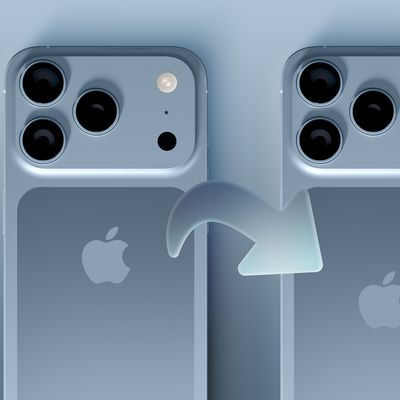
Apple's next-generation iPhone 17 Pro and iPhone 17 Pro Max are less than three months away, and there are plenty of rumors about the devices.
Apple is expected to launch the iPhone 17, iPhone 17 Air, iPhone 17 Pro, and iPhone 17 Pro Max in September this year.
Below, we recap key changes rumored for the iPhone 17 Pro models:Aluminum frame: iPhone 17 Pro models are rumored to have an...
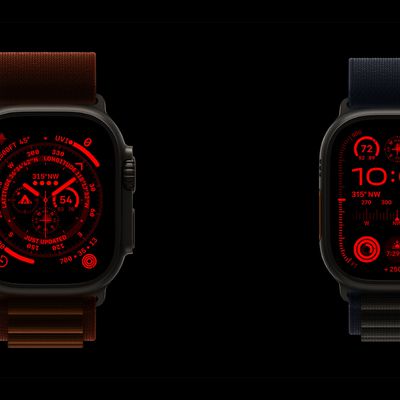
The long wait for an Apple Watch Ultra 3 appears to be nearly over, and it is rumored to feature both satellite connectivity and 5G support.
Apple Watch Ultra's existing Night Mode
In his latest Power On newsletter, Bloomberg's Mark Gurman said that the Apple Watch Ultra 3 is on track to launch this year with "significant" new features, including satellite connectivity, which would let you...
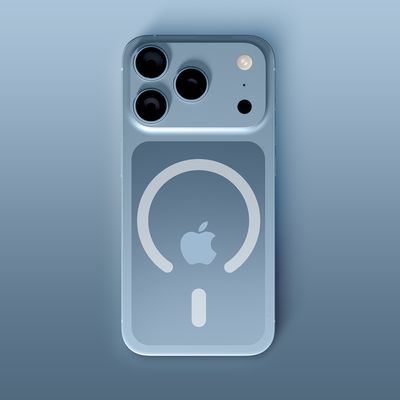
The upcoming iPhone 17 Pro and iPhone 17 Pro Max are rumored to have a slightly different MagSafe magnet layout compared to existing iPhone models, and a leaked photo has offered a closer look at the supposed new design.
The leaker Majin Bu today shared a photo of alleged MagSafe magnet arrays for third-party iPhone 17 Pro cases. On existing iPhone models with MagSafe, the magnets form a...
iOS 26 and iPadOS 26 add a smaller yet useful Wi-Fi feature to iPhones and iPads.
As spotted by Creative Strategies analyst Max Weinbach, sign-in details for captive Wi-Fi networks are now synced across iPhones and iPads running iOS 26 and iPadOS 26. For example, while Weinbach was staying at a Hilton hotel, his iPhone prompted him to fill in Wi-Fi details from his iPad that was already...
The iPhone 17 Pro Max will feature the biggest ever battery in an iPhone, according to the Weibo leaker known as "Instant Digital."
In a new post, the leaker listed the battery capacities of the iPhone 11 Pro Max through to the iPhone 16 Pro Max, and added that the iPhone 17 Pro Max will feature a battery capacity of 5,000mAh:
iPhone 11 Pro Max: 3,969mAh
iPhone 12 Pro Max: 3,687mAh...
Apple today seeded the second betas of upcoming iOS 18.6 and iPadOS 18.6 updates to public beta testers, with the betas coming just a day after Apple provided the betas to developers. Apple has also released a second beta of macOS Sequoia 15.6.
Testers who have signed up for beta updates through Apple's beta site can download iOS 18.6 and iPadOS 18.6 from the Settings app on a compatible...
Apple is developing a MacBook with the A18 Pro chip, according to findings in backend code uncovered by MacRumors.
Subscribe to the MacRumors YouTube channel for more videos.
Earlier today, Apple analyst Ming-Chi Kuo reported that Apple is planning to launch a low-cost MacBook powered by an iPhone chip. The machine is expected to feature a 13-inch display, the A18 Pro chip, and color options...