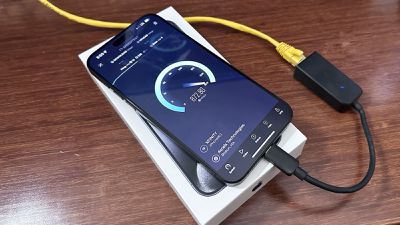
Following the launch of the iPhone 15 series today, a few readers of our website have reached out to highlight that the devices support USB-C to Ethernet adapters, allowing for a wired internet connection with faster download speeds than Wi-Fi.
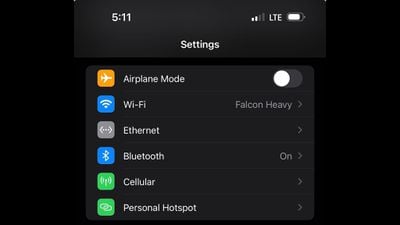
Apple confirmed this information in a support document last week, with USB to Ethernet adapters listed as compatible with iPhone 15 models. When an iPhone is connected to an Ethernet cable, an otherwise hidden Ethernet menu appears in the Settings app with IP-related information and various configuration options.
One reader informed us that their iPhone 15 Pro connected to Ethernet achieved a peak download speed of over 800 Mbps in a speed test.
While this is one of the various clever ways that the USB-C port on the iPhone 15 models can be used, it should be known that previous iPhones with the Lightning connector also supported Ethernet with an adapter. Nevertheless, we have decided to highlight this information as a helpful tip since it is getting attention.
All four iPhone 15 models launched today in the U.S. and more than 40 other countries.
Sunday September 20, 2026 7:24 pm PDT by Joe Rossignol
In May, Apple agreed to pay $250 million to settle a U.S. class action lawsuit over Siri AI's delayed launch, and the settlement website is now live.
Apple will pay an estimated $25 per eligible iPhone to eligible customers, who can submit a claim via the settlement website between September 21 and December 21 of this year. The exact payment may be higher or lower than $25 depending on the...
Tuesday September 22, 2026 9:19 am PDT by Joe Rossignol
Apple is developing an all-new operating system that is essentially a mix of tvOS, watchOS, and iOS, according to Bloomberg's Mark Gurman.
In his latest Power On newsletter, Gurman reiterated that the operating system will feature a grid of app icons, widgets, and customizable clock faces.
The new software platform is intended for Apple's long-rumored smart home hub. With built-in facial...
Monday September 21, 2026 4:29 am PDT by Tim Hardwick
Apple's 20th-anniversary iPhone lineup could feature slightly larger displays than the iPhone 18 Pro models, if a new leak shared on Weibo is accurate.
Prolific Chinese leaker Digital Chat Station claims that early iPhone 20 Pro display specifications include a 6.41-inch screen with a resolution of approximately 2,686 × 1,236 pixels, while the iPhone 20 Pro Max is said to have a 6.96-inch...
MacRumors, I'd love to see some speed tests of iPhone 15 vs. iPhone 15 Pro. According to your article, the non-Pro is exceeding the 480 Mbps speed limit of the USB 2 spec.
> it should be known that previous iPhones with the Lightning connector also supported Ethernet with an adapter.
The interesting thing is that technically previous iPhones supported a lot of different devices with an adapter. Ethernet interfaces, USB thumbdrives, audio interfaces, keyboards, etc. all could theoretically work, using the iPhone to USB camera adapter.
The problem was that nearly every device, even stuff that draws very little power like thumbdrives, would produce a "this device requires too much power" dialog and wouldn't work. So the feature wasn't all that useful. It was an artificial limitation too; the phone would ask the device how much power it needs, then fail to work if it asked for even 100mA. I was able to bypass it by using a small unpowered USB hub I have that "pretended" to be a powered hub, and all my thumbdrives worked just fine with it.
It looks like Apple has corrected this finally with USB-C, allowing a full amp to be drawn from the port without a problem. The old power restriction made no sense, either; lightning could support plenty of current for charging; why couldn't it power a lousy thumbdrive?
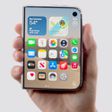
Apple's first foldable iPhone, with a book-style design featuring a 5.4-inch outer display and a 7.6-inch inner display with a minimal crease down the middle.





/https://forums.macrumors.com/attachments/2276842/)


















![Apple Watch Ultra 3 Drops to Record Low $599.97 on Amazon [Updated]](https://images.macrumors.com/t/99z85mg_XjeuFDPW3me6tOe0oOw=/112x112/article-new/2026/09/apple-watch-ultra-3-new.jpeg)