iPhone's Built-In Music Recognition Feature Syncs With Shazam App on iOS 16
Since the release of iOS 14.2 in 2020, the iPhone has included a built-in Music Recognition feature in Control Center powered by Shazam. And with iOS 16, and also the iOS 15.6 beta, the feature has received a small but useful upgrade.
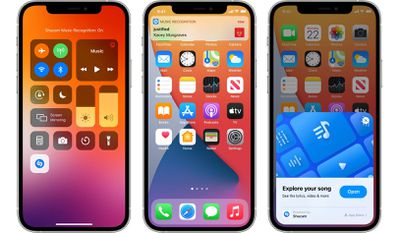
As noted by Twitter user @someone_andrew, songs identified with Music Recognition in Control Center finally sync with the Shazam app.
It also remains possible to view a list of previously identified songs by long pressing the Music Recognition control in Control Center, but syncing with the Shazam app is a useful addition for those who rely more on the app, which is free on the App Store.
Apple acquired Shazam in 2018 for a reported $400 million and has been steadily improving the service since by removing ads from the app and more. In September 2021, Apple announced that the Music Recognition feature in Control Center had surpassed one billion cumulative recognitions across the iPhone and iPad since launching.
Music Recognition can be added to Control Center in the Settings app under the Control Center menu. From there, scroll down and tap the "+" button next to the "Music Recognition" option, which is shown with a Shazam logo.
Popular Stories
The Apple launches keep coming! The company is set to release two new products on Friday, November 13: the all-new Apple HomeView and the fourth-generation Apple TV 4K, both of which have been available to pre-order since mid-October.
Apple HomeView: Apple's new smart home display, powered by Apple Intelligence with Siri AI, for entertainment and managing the home. Available in tabletop and...
Apple has announced that the long-running Apple Support Community discussion forums for user-to-user tech support will be permanently closing on Friday, November 20. The forums have existed in some form for nearly 30 years, so it is the end of an era.
Effectively immediately, the Apple Support Community forums are in a read-only state, with new posts no longer being accepted. The final...
Apple has made a change to its development process for iOS 28, macOS 28, and corresponding software updates, according to Bloomberg's Mark Gurman.
In his Power On newsletter today, he said Apple separates development of each year's new operating systems into three major stages. Typically, he said each stage consists of four weeks of coding followed by a four-week "convergence" period where...