iPhone 15 Pro Rumored to Feature Under-Screen Face ID System From Samsung
Samsung Display is developing new under-panel camera technology that Apple plans to use to hide Face ID under the display on next year's tentatively named "iPhone 15 Pro" models, according to sources cited by Korean website The Elec.
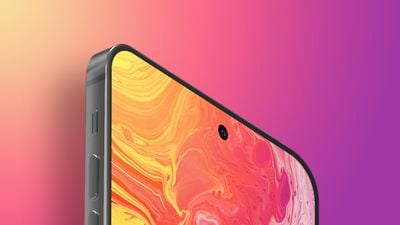
While rumors suggest that this year's "iPhone 14 Pro" models will feature both a "hole-punch" and a pill-shaped cutout for the front camera and Face ID components, respectively, today's report claims that Apple is planning for iPhone 15 Pro models to have only a hole for the front camera, with Face ID appearing hidden under the display.
Samsung's technology would effectively make Face ID sensors look invisible to the naked eye, in a similar manner as the hidden under-display camera on its Galaxy Z Fold3 smartphone, according to the report. On the Fold3, the pixel density over the under-display camera is lower compared to the rest of the display to allow light to reach the camera, but this results in the camera producing relatively low-quality photos.
It remains to be seen if the under-display version of Face ID would be as effective or secure as the existing system in a notch, or if there would be any other tradeoffs. Samsung is said to be collaborating with Canada's OTI Lumionics to develop the technology.
In its Korean-language version of the report, The Elec said Samsung first plans to apply the technology to its so-called "Galaxy Z Fold5" next year if development is completed on schedule, followed by the iPhone 15 Pro and iPhone 15 Pro Max.
This is far from the first time that under-display Face ID has been rumored for the iPhone. In an April 2021 research note, reputable analyst Ming-Chi Kuo said that he expected Apple to adopt under-display Face ID for at least one new iPhone model launching in 2023, but he did not provide any further details at the time. Display industry consultant Ross Young also claimed Face ID would not be moved under the display until at least 2023.
Popular Stories
Apple today confirmed to Reuters that it has acquired Q.ai, an Israeli startup that is working on artificial intelligence technology for audio.
Apple paid close to $2 billion for Q.ai, according to sources cited by the Financial Times. That would make this Apple's second-biggest acquisition ever, after it paid $3 billion for the popular headphone and audio brand Beats in 2014.
Q.ai has...
Last year, Apple launched CarPlay Ultra, the long-awaited next-generation version of its CarPlay software system for vehicles. Nearly nine months later, CarPlay Ultra is still limited to Aston Martin's latest luxury vehicles, but that should change fairly soon.
In May 2025, Apple said many other vehicle brands planned to offer CarPlay Ultra, including Hyundai, Kia, and Genesis.
In his Powe...
Apple today introduced its first two physical products of 2026: a second-generation AirTag and the Black Unity Connection Braided Solo Loop for the Apple Watch.
Read our coverage of each announcement to learn more:Apple Unveils New AirTag With Longer Range, Louder Speaker, and More
Apple Introduces New Black Unity Apple Watch BandBoth the new AirTag and the Black Unity Connection Braided...
Apple recently updated its online store with a new ordering process for Macs, including the MacBook Air, MacBook Pro, iMac, Mac mini, Mac Studio, and Mac Pro.
There used to be a handful of standard configurations available for each Mac, but now you must configure a Mac entirely from scratch on a feature-by-feature basis. In other words, ordering a new Mac now works much like ordering an...
A newly surfaced resale operation is seemingly offering Apple Store–exclusive display accessories to the public for the first time, potentially giving consumers access to Apple-designed hardware that the company has historically kept confined to its retail environments.
Apple designs a range of premium MagSafe charging stands, display trays, and hardware systems exclusively for displays in ...