Apple Could Release OLED iPad With Samsung Display Panel in 2024 - MacRumors
Skip to Content

Apple Could Release OLED iPad With Samsung Display Panel in 2024

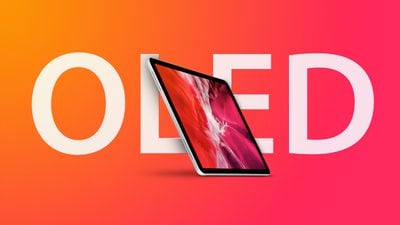
Apple might release an iPad with an OLED display provided by Samsung in 2024, according to a report from The Elec. Samsung is developing the necessary equipment to create the ‌OLED‌ panels that Apple wants for its iPads, but Apple will need to make a big enough order to make the project financially viable.
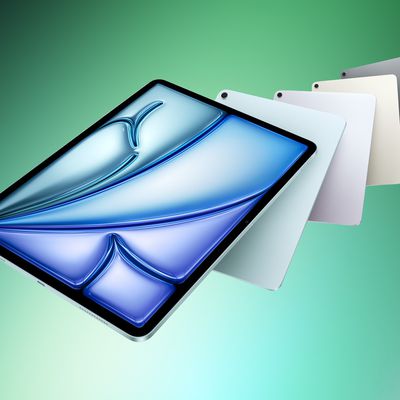
OLED iPad Air
The Elec says that Apple and Samsung were working together to create a 10.86-inch ‌OLED‌ panel in 2021, but work on the display was halted in the third quarter. Apple asked for panels with a "two stack tandem structure," but the project was too expensive for Samsung and Samsung was not able to manufacture enough of the panels at the right price.

For the second collaboration, if Apple places a "large enough order," Samsung will be able to finalize its spending plans during the second quarter of 2022, ordering the necessary equipment during the third quarter. The equipment is expected to be delivered in 2023 for Samsung to manufacture displays destined for a 2024 ‌OLED‌ ‌iPad‌.

The report suggests that Samsung is working to expand its Gen 8.5 IT ‌OLED‌ panels to offer the technology that Apple wants at the price Apple wants, but it needs new machinery to do so as well as Apple's approval. Samsung's current Gen 5.5 and Gen 6 substrates make the panels too expensive because there are not enough units cut out per substrate.

The South Korean display panel maker's development of a vertical deposition machine, in collaboration with Japan's Ulvac, for use in Gen 8.5 IT OLED panel that started last year was ongoing as of January 2022, sources told TheElec.

The equipment, along with fine metal masks (FMM) used to deposit organic materials precisely on the substrate, is a key technology needed to commercialize Gen 8.5 IT OLED panels.

The launch of a 2024 ‌OLED‌ ‌iPad‌ may depend on whether Apple decides to order a substantial number of ‌OLED‌ display panels from Samsung, but Apple could also opt to go with panels from another display provider.

Recent rumors have suggested that Apple is working with BOE on larger-sized ‌OLED‌ panels destined for Macs and iPads, with BOE's recently converted factory able to manufacture ‌OLED‌ displays that are up to 15 inches in size.

At the current time, Apple uses ‌OLED‌ displays for the iPhone and the Apple Watch, but Macs and iPads are limited to LCD and mini-LED. There have been continuous rumors about Apple's interest in ‌OLED‌ panels for devices like Macs and iPads, but the technology may still be a few years away due to the high cost of ‌OLED‌ display panels.

Related Roundup: iPad Pro
Buyer's Guide: iPad Pro (Neutral)

Popular Stories

samsung galaxy z fold8

Apple's Foldable iPhone Ultra Faces a Surging Samsung Galaxy Z Fold 8

Monday August 10, 2026 7:41 am PDT by
Apple's foldable iPhone is expected to arrive in September against a rival already outrunning its own forecasts. ETNews reports Samsung is building an extra one million Galaxy Z Fold 8 units, after the 4:3 device took 70 percent of a record 1.44 million Galaxy Z8 series pre-orders. Apple's foldable display – made by Samsung – is rumored to use the same aspect ratio in the same book-style...
samsung galaxy buds 3

Samsung is Starting to Catch Up to Apple on Hearing Health

Tuesday August 11, 2026 5:01 pm PDT by
Samsung today said its Galaxy Buds Hearing Aid feature has been cleared by the U.S. FDA, which means hearing aid capabilities will be coming to the Galaxy Buds in the fourth quarter of 2026. Samsung will join Apple in offering over-the-counter hearing aid functionality. Apple added an FDA-cleared hearing health feature to the AirPods back in 2024, allowing them to be used as a clinical-grade ...
Low Angle iPhone Purple

iPhone 18 Pro: Apple Secures Lower Display Prices Amid RAM Shortage

Wednesday August 12, 2026 9:43 am PDT by
Apple has secured lower prices for OLED displays for the upcoming iPhone 18 Pro models, according to industry sources cited by South Korea's DealSite. For example, the report said Apple will pay LG and Samsung around $68 per OLED display destined for the iPhone 18 Pro Max, down significantly from the $110 to $120 that it paid those suppliers for each iPhone 17 Pro Max display. Apple is...

Top Rated Comments

justiny Avatar
61 months ago

as someone who personally very much dislikes mini LED on my iPad & MacBook Pro, this would be great. My iPhone has no blooming and looks amazing in all conditions. My iPad and MacBook Pro are unreadable with black backgrounds. I wish MiniLED had never happened.
I’m honestly not trying to provoke. Blooming is a non-issue for me, and really only if I crank the brightness ridiculously high with 95% of the display pure black and I’m trying to look for it.

The mini-LED on my MBP 16 is gorgeous. If it was unreadable, which I would believe to be a deal-breaker on any laptop, I’d return it.
Score: 16 Votes (Like | Disagree)
GMShadow Avatar
61 months ago
I just don’t see Apple investing millions and millions into mini LED just to abandon it for OLED a few years later.
Score: 9 Votes (Like | Disagree)
61 months ago
as someone who personally very much dislikes mini LED on my iPad & MacBook Pro, this would be great. My iPhone has no blooming and looks amazing in all conditions. My iPad and MacBook Pro are unreadable with black backgrounds. I wish MiniLED had never happened.
Score: 9 Votes (Like | Disagree)
james2538 Avatar
61 months ago

I'm confused though. Isn't mini LED superior to OLED except for the blooming issue? Better HDR experience on mini-LED vs OLED.
You're confusing Micro and Mini LED.

Display quality wise: Micro-LED (Doesn't exist in commercial products yet) > OLED (TVs, iPhones, Watch) > Mini-LED (MacBook/iPad Pros) > Full Array LED (More Expensive LCD TVs) > Edge Lit LED (Cheaper LCD TVs)

With Micro-LED and OLED each individual pixel can be lit and unlit so there is no need for a backlight; thus giving an infinite contrast ratio with perfect blacks. While OLED do have burn-in issues, that has gotten much better within the past few years. Both Mini-LED and Full Array LED suffer from blooming. They essentially are the same thing, with Mini-LED just shoving a ton more individual dimming zones in its backlighting. Edge Lit LED have the worst contrast ratios since there is no way to dim only certain parts of the screen.

As far as HDR is concerned it's a subjective experience. OLED can provide a wider contrast ratio but all other LED based displays can get much brighter. Personally I prefer my retinas not to be seared out when watching a movie on a TV in a dark room. However in a laptop/tablet used outdoors Mini-LED makes more sense as a stop gap until Micro-LED matures.
Score: 7 Votes (Like | Disagree)
mi7chy Avatar
61 months ago
Wasn't it BOE the other day? For the price you're paying you should get a Samsung OLED panel and not BOE though. iPadOS needs to retire though and replaced with MacOS.
Score: 6 Votes (Like | Disagree)
Populus Avatar
61 months ago
I was skeptical with OLED technology at first (burn in, PMW), but after using an iPhone 13 mini, all other screens I have in my home (iPhone 8, 9.7” iPad, 11” iPad Pro) all pale in comparison, and I even perceive some ghosting on the LCD IPS devices. Colors are vibrant and blacks are true black in OLED. Now I want an OLED iPad, even if it’s a non-pro iPad.
Score: 5 Votes (Like | Disagree)