Banks Pressuring Visa to Cut Back on Apple Pay Fees
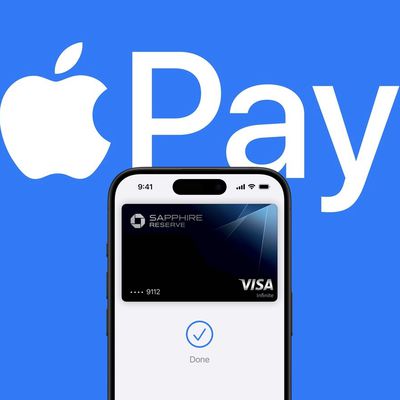
A number of banks are currently pressuring Visa to make changes to the way it processes some payments made via Apple Pay, moves that would reduce the fees the banks pay to Apple for certain transactions, reports The Wall Street Journal.

At the heart of the issue are automatic recurring payments like memberships and streaming services. Visa is aiming to change the way it issues tokens for Apple Pay cards such that Apple would only receive a transaction fee on an initial subscription payment and not on subsequent transactions.
When Apple introduced Apple Pay in 2014, the iPhone had already clobbered music players, cameras and GPS systems. Banks and card networks worried it also would displace card payments.
Banks agreed to pay Apple 0.15% of each purchase made by their credit cardholders. (They pay a separate fee on debit-card transactions.) Those fees account for most of the revenue that Apple makes from its digital wallet, according to people familiar with the matter.
Aside from the fee arrangement, Apple garnered several other concessions from credit card issuers as it rolled out Apple Pay, and in exchange, Apple agreed not to launch its own credit card network to go up against Visa and Mastercard.
With the launch of Apple Card in partnership with Goldman Sachs, Apple has become more of a direct competitor to other banks, and some bank executives have reportedly been angered by Apple's move and are seeking ways to reduce the payments they make to Apple.
Apple has unsurprisingly informed Visa that it objects to the proposed change that would reduce the fees it receives on recurring transactions, so it remains to be seen whether Visa will follow through on its plans, which are scheduled to go into effect next year.
Popular Stories
While the iPhone 18 Pro and iPhone 18 Pro Max are not expected to launch for another eight months, there are already plenty of rumors about the devices.
Below, we have recapped 12 features rumored for the iPhone 18 Pro models, as of January 2026:
The same overall design is expected, with 6.3-inch and 6.9-inch display sizes, and a "plateau" housing three rear cameras
Under-screen Face ID...
Apple plans to upgrade the iPad mini, MacBook Pro, iPad Air, iMac, and MacBook Air with OLED displays between 2026 and 2028, according to DigiTimes.
Bloomberg's Mark Gurman previously reported that the iPad mini and MacBook Pro will receive an OLED display as early as this year, but he does not expect the MacBook Air to adopt the technology until 2028 at the earliest.
A new iPad Air is...
Apple today updated its trade-in values for select iPhone, iPad, Mac, and Apple Watch models. Trade-ins can be completed on Apple's website, or at an Apple Store.
The charts below provide an overview of Apple's current and previous trade-in values in the United States, according to the company's website. Most of the values declined slightly, but some of the Mac values increased.
iPhone
...
In select U.S. states, residents can add their driver's license or state ID to the Apple Wallet app on the iPhone and Apple Watch, and then use it to display proof of identity or age at select airports and businesses, and in select apps.
The feature is currently available in 13 U.S. states and Puerto Rico, and it is expected to launch in at least seven more in the future.
To set up the...
iOS 27 is still many months away, but there are already plenty of rumors about new features that will be included in the software update.
The first beta of iOS 27 will be released during WWDC 2026 in June, and the update should be released to all users with a compatible iPhone in September.

Bloomberg's Mark Gurman said that iOS 27 will be similar to Mac OS X Snow Leopard, in the sense...