Video: Testing Windows on an M1 Mac With Parallels 16 - MacRumors
Skip to Content

Video: Testing Windows on an M1 Mac With Parallels 16

Late last week, Parallels launched a Parallels Desktop 16 for Mac Technical Preview Program, which allows M1 Mac owners to use the Parallels software. Paired with a version of Arm-based Windows that's available through the Windows Insider program, it's possible to get Windows up and running on an Arm-based Mac.
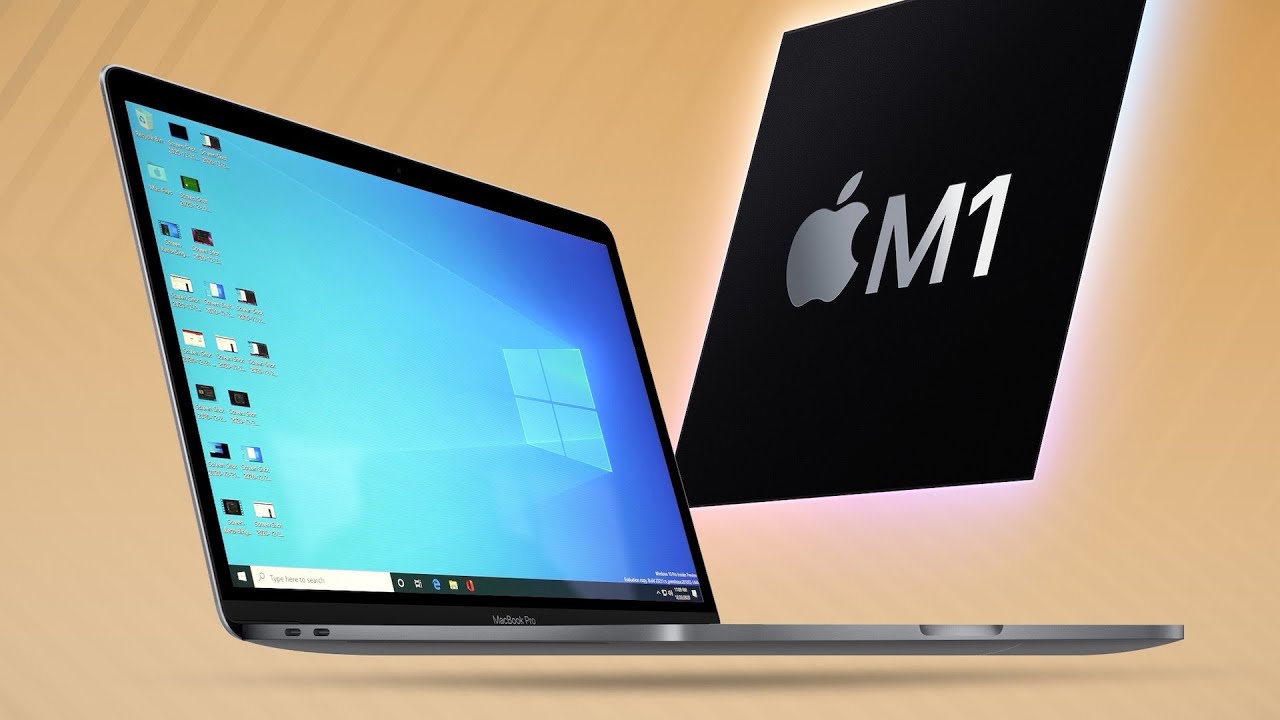

In our latest YouTube video, we installed Parallels on an ‌M1‌ Mac and tested out Windows, but it didn't exactly go smoothly. When we first set up Parallels on an ‌M1‌ Mac, it was functional, but about an hour into the experience we kept running into errors attempting to get Windows working. It continually froze and the performance was abysmal.

With some tinkering and some troubleshooting help from the MacRumors forums, we were able to get it working well enough to test out. Parallels on the ‌M1‌ Mac is available as a Technical Preview and Windows can only be installed through Windows Insider, so neither of these are release versions of software. Given that we're working with beta software that's still in development, it's not surprising that there are issues that need to be worked out, and anyone who wants to test out Windows on an ‌M1‌ Mac through Parallels should expect to deal with bugs.

When running macOS Big Sur, the ‌M1‌ MacBook Pro with 8GB RAM has a single-core Geekbench score of 1719 and a multi-core score of 7384. When running Windows 10 through Parallels using the default two-core setting, the ‌M1‌ Mac achieved a single-core score of 1491 and a multi-core score of 2753.

That's pretty similar to Microsoft's own Surface Pro X in terms of multi-core performance, and better when it comes to single-core performance, so when it works, speeds aren't too bad. Parallels defaults to allowing just two cores when running Windows, but you can swap over to four core operation.

With four cores activated, multi-core Geekbench scores were much better, hitting 5013. The single-core score didn't improve quite as much at 1518. You can enable eight cores too, but going from four to eight cores did little for performance (1524 single core and 5958 multi-core).

In the four-core mode, there are some performance issues, so it's best to stick to the two-core default where possible. When an app is able to open and run, performance is solid, but there are a lot of bugs to deal with and a lot of software that does not work.

Many pre-installed apps don't function well and often refuse to open, but third-party apps like Geekbench seem to operate as expected. Paint 3D, the Xbox app, and the Calendar app refused to work, for example, but the Microsoft Edge browser and Office suite of apps were functional and performed decently. Third-party apps like Spotify, Notion, and others worked well, and the Windows VM is even capable of playing older games like Civilization IV and Skyrim.

Right now, getting Arm-based Windows on an ‌M1‌ Mac requires Parallels and the Windows Insider preview version of the software, and it continues to be unclear if Microsoft will make a release version of Arm Windows available for people to license.

Those who want to try out Windows (or another OS) on an ‌M1‌ Mac can sign up to try the Parallels Technical Preview.

Popular Stories

apple silicon feature joeblue

Apple Silicon Exec Explains Mac Mini AI Demand and On-Device Future

Monday July 6, 2026 5:10 am PDT by
Apple's Mac mini and Mac Studio have become the machines of choice for running AI agents, according to Doug Brooks, Apple's senior product manager of Apple silicon. Brooks made the claim while discussing Apple's chip strategy in a newly published interview with The Deep View conducted just prior to WWDC 2026 in June. Brooks says that the company has seen "incredible demand" for the two...

apple silicon 1 feature

Apple Silicon is Taking an Unexpected Turn

Friday July 10, 2026 7:24 am PDT by
Ever since the Mac switched from Intel processors to Apple silicon starting in 2020, each generation of M-series chips has included higher-end Pro and Max variants. If a recent report proves to be accurate, though, that streak will be coming to an end. According to Bloomberg's Mark Gurman, Apple will be releasing a regular M6 chip, but it has no plans to offer higher-end M6 Pro and M6 Max...
M6 Pro M6 Max Mockup

Here's Why Apple is Reportedly Skipping M6 Pro and M6 Max Chips

Sunday July 12, 2026 8:12 am PDT by
According to Bloomberg's Mark Gurman, Apple will be releasing a regular M6 chip, but it has no plans to offer higher-end M6 Pro and M6 Max chips. In his Power On newsletter today, he said the reason for this break in tradition is AI. "Apple had been planning major neural-processing upgrades for the M7 family and ultimately decided those improvements were important enough to justify...

Top Rated Comments

Chompineer Avatar
73 months ago

Errors, freezing, bad performance... sounds like typical windows to me.
Was the last time you used an windows machine during Vista or something?

This reads like fanboy garbage.
Score: 26 Votes (Like | Disagree)
TheDailyApple Avatar
73 months ago
Errors, freezing, bad performance... sounds like typical windows to me.
Score: 24 Votes (Like | Disagree)
73 months ago

A solution to a problem that pretty much does not exist. There's a very limited set of apps that run on Windows ARM and I suspect that they're already available on a Mac. I doubt many would need this.
ARM Windows also runs Intel apps (though the x64 emulator is still in beta). This would thus allow us to run a ton of Windows apps, including games, in an environment potentially much more reliable than CrossOver.

I honestly don't know why Microsoft doesn't work with Apple to make Boot Camp possible with ARM Windows. Perhaps in 1-2 years? Anyway, the first Intel Macs didn't have Boot Camp from day one either, so we might still see something in the future.
Score: 14 Votes (Like | Disagree)
73 months ago
The reason that many of the Windows apps don't run is that they are 32-bit Arm apps. For some reason known only to Microsoft, they compiled many apps as 32-bit and the M1 will not run 32-bit Arm binaries. Here is a list compiled by @Gnattu of all the 32-bit binaries. I'm guessing this will correlate to the apps that didn't run while testing for the article.

https://forums.macrumors.com/threads/parallels-tech-preview-for-m1.2275996/post-29412503
Score: 11 Votes (Like | Disagree)
73 months ago
"...but going from four to eight cores did little for performance (1524 single core and 5958 multi-core)."

Um... the difference between 4 and 8 cores is 945 points by your own numbers. 945 points is an increase of almost twenty percent (18.85%) going from 5013 to 5958... That's not insignificant!
Score: 11 Votes (Like | Disagree)
mrat93 Avatar
73 months ago

Right now, getting Arm-based Windows on an M1 Mac requires Parallels and the Windows Insider preview version of the software, and it continues to be unclear if Microsoft will make a release version of Arm Windows available for people to license.
Wouldn’t that make Macs the best Windows machines? If M1 is already beating official ARM Microsoft-branded PCs via virtualization, imagine the native performance benchmarks if you could install ARM Windows via Boot Camp.
Score: 10 Votes (Like | Disagree)