Apple Said to Have 'Dramatically Reduced' Multi-Billion-Dollar iPhone Repair Fraud in China

Within the past four years, Apple has managed to "dramatically reduce" the rate of iPhone-related repair fraud in its retail stores in China, according to The Information's Wayne Ma. The report is based on interviews with more than a dozen former Apple employees who spoke on condition of anonymity.
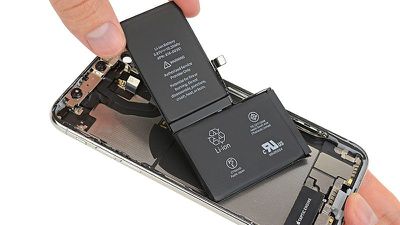
iphone ifixit

Image: iFixit

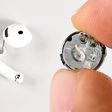
In 2013, Apple is said to have discovered a highly sophisticated fraud scheme in which organized thieves would buy or steal iPhones, remove valuable components like the processor or logic board, swap in fake components, and return the "broken" iPhones to receive replacements they could resell.

Thieves would stand outside stores with suitcases full of iPhones with some of the original components stripped out and replaced with inferior parts, two of the people said. The fraudsters would hire people to pretend to be customers to return them, each taking a device to stand in line at the Genius Bar, the people said. Once the phones were swapped, the actors would pass the new phones to the fraudsters and get paid for their time, the people said.

"In the old-school world, this would be a car chop shop, where you would take all the pieces off and sell them," said Kyle Wiens, co-founder and CEO of iFixit. "Now they're doing that with iPhones."

The report claims most of the schemes originated in Shenzhen, a southern Chinese city known as a hotbed for criminal organizations because of its proximity to gangs in nearby Hong Kong. Shenzhen is also the largest electronics manufacturing base in the world, home to many Apple suppliers like Foxconn.

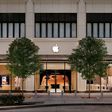
When the first Apple Store opened in Shenzhen in November 2012, the report says weekly iPhone warranty claims, including repair and replacement requests, jumped from about 200 to more than 2,000 within the first six months—"almost three times more" than Apple's flagship Fifth Avenue store in New York at the time.

At first, the report says Genius Bar employees would swap broken iPhones for new ones as long as they didn't appear intentionally damaged, as was the policy elsewhere. But as the problem started to have a material impact on Apple's financial sheet, to the tune of billions, the company began to take further action.

Hesitant to get Chinese authorities involved, due to the risks of public backlash and negative publicity in state-run media, Apple launched an online reservation system that required proof of ownership, and later developed diagnostic software that allowed retail employees to quickly detect fake parts in iPhones.

Fraudsters found ways to evade these tactics, however, and even went as far as obtaining Apple customer records, including serial numbers, for iPhones that had already been sold in China. Last year, police in China arrested a ring of suspected data thieves involved with the fraud.

An increase in rejected warranty claims sparked angry scenes in Apple Stores, the report says, as customers suspected of fraud "grew irate" when their iPhones weren't accepted. Partly for this reason, Apple stopped authorizing iPhone replacements in stores and began requiring sending them to off-site repair centers for inspection.

Apple also began dipping batteries in a special dye that could only be seen under a high-frequency light to authenticate them during repairs, the report says. A-series chips in iPhones are also allegedly coated in a waterproof sealant that can be seen under certain wavelengths, offering another countermeasure.

Apple's efforts appear to have worked, with fraud rates in the Greater China region dropping to about 20 percent of repair claims from more than 60 percent at its peak, according to the report.

Fraudsters are now said to be shifting to Apple Stores in other countries, including Turkey and the United Arab Emirates.
Popular Stories

Apple Logo Black

Apple Just Made Its Second-Biggest Acquisition Ever After Beats

Thursday January 29, 2026 10:07 am PST by
Apple today confirmed to Reuters that it has acquired Q.ai, an Israeli startup that is working on artificial intelligence technology for audio. Apple paid close to $2 billion for Q.ai, according to sources cited by the Financial Times. That would make this Apple's second-biggest acquisition ever, after it paid $3 billion for the popular headphone and audio brand Beats in 2014. Q.ai has...

Aston Martin CarPlay Ultra Screen

Apple's CarPlay Ultra to Expand to These Vehicle Brands Later This Year

Sunday February 1, 2026 10:08 am PST by
Last year, Apple launched CarPlay Ultra, the long-awaited next-generation version of its CarPlay software system for vehicles. Nearly nine months later, CarPlay Ultra is still limited to Aston Martin's latest luxury vehicles, but that should change fairly soon. In May 2025, Apple said many other vehicle brands planned to offer CarPlay Ultra, including Hyundai, Kia, and Genesis. In his Powe...


14 inch MacBook Pro Keyboard

Apple Changes How You Order a Mac

Saturday January 31, 2026 10:51 am PST by
Apple recently updated its online store with a new ordering process for Macs, including the MacBook Air, MacBook Pro, iMac, Mac mini, Mac Studio, and Mac Pro. There used to be a handful of standard configurations available for each Mac, but now you must configure a Mac entirely from scratch on a feature-by-feature basis. In other words, ordering a new Mac now works much like ordering an...
Apple Logo Black

Apple's Next Launch is 'Imminent'

Sunday February 1, 2026 12:31 pm PST by
The calendar has turned to February, and a new report indicates that Apple's next product launch is "imminent," in the form of new MacBook Pro models. "All signs point to an imminent launch of next-generation MacBook Pros that retain the current form factor but deliver faster chips," Bloomberg's Mark Gurman said on Sunday. "I'm told the new models — code-named J714 and J716 — are slated...
Apple MacBook Pro M4 hero

New MacBook Pros Reportedly Launching Alongside macOS 26.3

Sunday February 1, 2026 5:42 am PST by
Apple is planning to launch new MacBook Pro models with M5 Pro and M5 Max chips alongside macOS 26.3, according to Bloomberg's Mark Gurman. "Apple's faster MacBook Pros are planned for the macOS 26.3 release cycle," wrote Gurman, in his Power On newsletter today. "I'm told the new models — code-named J714 and J716 — are slated for the macOS 26.3 software cycle, which runs from...

Top Rated Comments

Charles50 Avatar
96 months ago
LOL this reminds me of my oldest days in the Apple computer repair trade, when Apple accused me of repair fraud!
Around 1980, I was a tech at a computer store in Dubuque, Iowa, we sold a lot of Apple ][s and we had an advanced repair kit for aligning disk drives. Most dealers didn't have the advanced repair tools, it required an oscilloscope and seriously advanced computer skills. I re-aligned a lot of Disk ][ units, and I noticed some of them were machines we had sold recently. So I decided to start checking every single Disk ][ that came into the shop. I discovered they were all sloppily calibrated, some of them slightly misaligned. If these drives came in for repair under warranty, or were DOA, I could realign them and Apple would reimburse us for the labor.
I would take the case off, put in the calibration disk, hook it up to the oscilloscope, and turn the potentiometer on the controller board until the alignment was perfect, then put the drive back together and pack it back up in the box, better than new. We started to put in for warranty reimbursement on drives I considered out of alignment and basically DOA due to miscalibration at the factory, and assured our customers that our drives were better quality than other Apple stores. They really were!
About a month later, we got a call from the Apple regional repair manager. He accused us of fraudulently claiming reimbursement for dozens of disk alignments. I explained it to him, that the products were coming in with sloppy calibration and were out of spec, so we checked them all before we sold them. That did not make him happy at all. We were told that we would not be reimbursed for ANY disk calibration on Disk ][ units that were not repairs from customers. No more presale recalibrations.
We pre-calibrated all our Disk ][ units anyway and considered it a free customer service. It prevented a lot of customer problems and avoided repairs in the long run.
Score: 18 Votes (Like | Disagree)
DipDog3 Avatar
96 months ago
Another case of ruining life for honest people.
Score: 6 Votes (Like | Disagree)
MRrainer Avatar
96 months ago
More reason to want Right to Repair laws in our own country. One of the tenants of R2R is that manufacturers have to offer OEM parts to outside services. A readily available supply of OEM parts would mostly curb black markets like this one.
No, it wouldn't.

It would just mean even more fake spare-parts.

You do understand that just because the ebay auction says "genuine" in the headline doesn't mean the part actually is genuine?

And most people would somehow still put the blame on Apple when some 3rd-party repair shop that bought a part for cheap on ebay would brick their phone.
Score: 6 Votes (Like | Disagree)
acorntoy Avatar
96 months ago
We spent three weeks in China. The guides said crimes involving fraud, such as selling a Ming Dynasty relic to tourists that was made yesterday, considered a skill. Attacking someone, or crimes against the State, punishable. Outsmarting Apple, a skill, they should be more vigilant in their business practices. Not all places in the world follow our ethical guidelines.
I actually felt much more comfortable in China than in major European cities, where people were always warning about pickpockets and thieving gypsies ( I honestly didn’t know that word was still used in normal conversation).


The world is full of amazing people, and not so amazing people.
Score: 6 Votes (Like | Disagree)
danskin Avatar
96 months ago


Apple's efforts appear to have worked, with fraud rates in the Greater China region dropping to about 20 percent of repair claims from more than 60 percent at its peak, according to the report.
i am surprised the peak wasn’t 100%. welcome to china, apple.
Score: 6 Votes (Like | Disagree)
Sanlitun Avatar
96 months ago
We spent three weeks in China. The guides said crimes involving fraud, such as selling a Ming Dynasty relic to tourists that was made yesterday, considered a skill. Attacking someone, or crimes against the State, punishable. Outsmarting Apple, a skill, they should be more vigilant in their business practices. Not all places in the world follow our ethical guidelines.
Right at the embassy in Beijing on Dongzhimenwei Dajie for 4 years.

The West still has an ethics system descended from concepts of Christian guilt. Other places don't have this.

Canada has suffered greatly from this clash of cultures. Chinese soft power has completely corrupted our political system.
Score: 5 Votes (Like | Disagree)