Rite Aid's Website Now Accepts Apple Pay in Safari on Mac, iPhone, and iPad
Rite Aid today announced that it now accepts Apple Pay as a payment method on its desktop and mobile website.

iPhone, iPad, and Mac users accessing RiteAid.com through the Safari web browser will now see a "Buy with Apple Pay" option at checkout alongside existing credit card and PayPal payment options.
Rite Aid said it is the first pharmacy retailer to accept Apple Pay as a form of payment on the web, with nearly 12,000 items available in its online store.
Apple Pay on the web is a convenient and secure option for online payments, eliminating the need to repeatedly fill out account, shipping, and billing information for a more seamless checkout experience.
Checking out with Apple Pay on the web requires a Mac, iPhone, or iPad with Touch ID and Safari for macOS Sierra or iOS 10 or later.
Rite Aid began accepting Apple Pay at 4,600 of its retail stores across the United States in August 2015, nearly one year after the drug store chain initially disabled support for the mobile payments service nationwide.
At the time, Rite-Aid was a member of the Merchant Customer Exchange, a consortium of retailers that planned to launch their own mobile payments service called CurrentC, which was postponed indefinitely last year.
Popular Stories
Apple has launched a new "Switch to Safari" marketing campaign that encourages Chrome users to switch to Safari as their web browser of choice on the Mac.
"Safari is a more powerful and private browser than Chrome," says Apple.
Apple has a new "Switch to Safari" page on its website that outlines more than 10 reasons that Chrome users should switch to Safari, including faster performance...
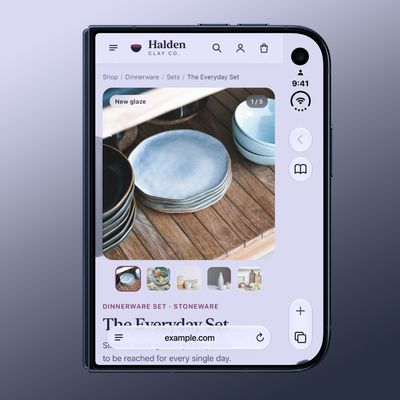
Apple is considering changes to Safari on the iPhone Duo that would give websites access to more of the outer display, although the company has yet to settle on an approach.
The challenge is allowing pages to occupy the area beneath Safari's side-mounted controls without making parts of a website inaccessible. In an Friday, October 23 WebKit post, Apple's Jen Simmons explained that an...
Earlier this month, a security researcher discovered that private cryptographic keys associated with eight of Indian company eMudhra's intermediate certificate authority (CA) certificates were weak. The compromised keys could have allowed attackers to impersonate legitimate websites, potentially putting users' sensitive information at risk. However, there is currently no evidence that the keys...