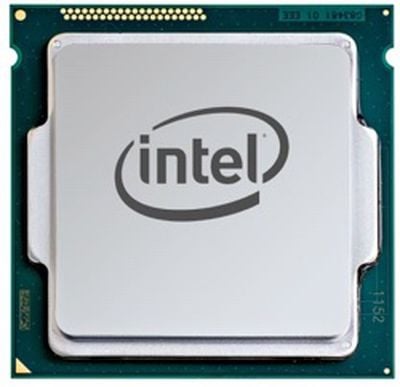
 As Intel prepares to unveil its 8th-generation Coffee Lake processors next week, the company has released basic information on an upcoming 10-nanometer "Ice Lake" chip, which will serve as the successor to the 14-nanometer Coffee Lake and 10-nanometer Cannon Lake chips.
Details on the Ice Lake architecture, which will be made on Intel's 10nm+ process, have been shared on Intel's codename decoder.
"The Ice Lake processor family is a successor to the 8th generation Intel(R) CoreTM processor family. These processors utilize Intel's industry-leading 10 nm+ process technology," reads the site.
As AnandTech points out, Intel's decision to share details on Ice Lake is odd because the company has not announced or shared details on Cannon Lake, the first chips that will be built on its 10-nanometer architecture, and Intel is also referring to Ice Lake as the successor to its soon-to-be-announced 14-nanometer Coffee Lake chips, leading to confusion about its upcoming processor lineup and how Cannon Lake fits in.
Intel's current Kaby Lake chips were built on a second-generation 14nm+ architecture, while Coffee Lake is a third-generation 14nm++ architecture. Both Kaby Lake and Coffee Lake are available for both desktops and laptops, but it appears the 10-nanometer Cannon Lake chips succeed Coffee Lake chips in laptops, while desktops won't see 10-nanometer architecture until the release of Ice Lake.
AnandTech speculates that the chip confusion is the result of the difficulty behind developing a 10-nanometer architecture. Intel needs to perfect 10-nanometer chips for smaller processors before moving on to larger desktop processors.
Simply put, the first generation of 10nm requires small processors to ensure high yields. Intel seems to be putting the smaller die sizes (i.e. anything under 15W for a laptop) into the 10nm Cannon Lake bucket, while the larger 35W+ chips will be on 14++ Coffee Lake, a tried and tested sub-node for larger CPUs. While the desktop sits on 14++ for a bit longer, it gives time for Intel to further develop their 10nm fabrication abilities, leading to their 10+ process for larger chips by working their other large chip segments (FPGA, MIC) first.
Intel's 14nm++ Coffee Lake chips will be officially unveiled on August 21, and these are the chips that we are likely to see in Apple notebooks and standard iMac desktops in the coming year, but again, it's unclear how Cannon Lake fits into the lineup and whether those chips will be available for some machines in time for 2018 refreshes.
As the successor to Intel's 8th-generation chips, Ice Lake is not likely to be available until late 2018 or 2019, with an exact timeline to be determined by Intel's success in improving its 10-nanometer architecture.