Apple Watch Set to Include Third-Party Glucose Tracking App at Launch

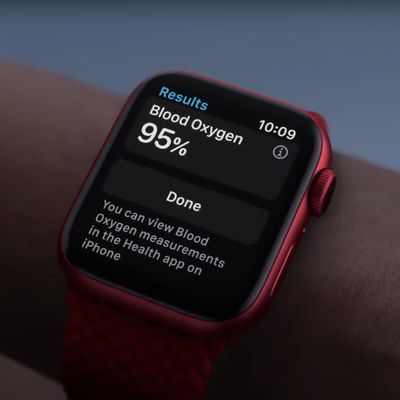
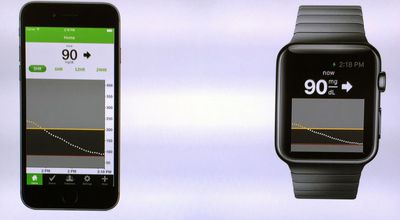
Medical device manufacturer DexCom over the weekend announced the company is developing an app for the upcoming Apple Watch that will display all of a user's glucose and blood sugar-related health data on their wrist (via The Wall Street Journal).

The company, whose expertise lies in "continuous glucose monitoring systems for diabetes management," says the app is expected to be ready when the Apple Watch launches in April. The app would sync to existing monitors manufactured by DexCom that use a "hair's width sensor" located under the user's skin to measure and report blood glucose levels every five minutes, a more seamless process than traditional skin-prick glucose monitors, according to the company.
dexcomwatch
Though most health-related apps have been closely scrutinized by the FDA in the past, The Wall Street Journal reports DexCom and a group of developers behind another diabetes-related application called NightScout have convinced the FDA to change course on health apps.

The group’s effort challenged the slow pace of innovation and regulatory approval in the field. It also highlighted the growing role that Silicon Valley companies and software developers hope to have in monitoring and maintaining people’s health.

Previously, the FDA considered glucose monitors and any associated software to be Class III medical devices, meaning they received the highest level of regulatory scrutiny. But the spread of NightScout, the system developed by the group of software engineers, and DexCom’s submission of a separate iPhone app for review prompted the FDA to change course last month.

Subsequently, DexCom's monitors that require injection under a patient's skin will understandably remain Class III devices but the software that displays the data - such as the Apple Watch app - now only needs to be registered with the FDA without prior marketing approval. Alberto Gutierrez, director of the FDA’s Office of In Vitro Diagnostics and Radiological Health, evoked the positive benefits of the app far outweigh any negatives, “We felt that the risks that the app imposed weren’t as high."

Apple itself has been steadily moving towards a more health-concerned future, with the introduction of the Health app into iOS 8 as a preparation for the upcoming built-in fitness integration features of the Apple Watch. Major U.S. hospitals are rolling out their own trial programs with HealthKit, Apple's tools that leverage the iPhone's various motion-tracking sensors and peripheral accessories to track and log the history of a user's health data.
Related Roundup: Apple Watch 11
Buyer's Guide: Apple Watch (Neutral)

Popular Stories

maxresdefault

Apple Shows Off a Key Reason to Upgrade to the iPhone 17

Saturday February 7, 2026 9:26 am PST by
Apple today shared an ad that shows how the upgraded Center Stage front camera on the latest iPhones improves the process of taking a group selfie. "Watch how the new front facing camera on iPhone 17 Pro takes group selfies that automatically expand and rotate as more people come into frame," says Apple. While the ad is focused on the iPhone 17 Pro and iPhone 17 Pro Max, the regular iPhone...
apple wallet drivers license feature iPhone 15 pro

Apple Says These 7 U.S. States Plan to Offer iPhone Driver's Licenses

Monday February 9, 2026 6:24 am PST by
In select U.S. states, residents can add their driver's license or state ID to the Apple Wallet app on the iPhone and Apple Watch, and then use it to display proof of identity or age at select airports and businesses, and in select apps. The feature is currently available in 13 U.S. states and Puerto Rico, and it is expected to launch in at least seven more in the future. To set up the...
m5 macbook pro deal

Why You Shouldn't Buy the Next MacBook Pro

Tuesday February 10, 2026 4:27 pm PST by
Apple is planning to launch new MacBook Pro models as soon as early March, but if you can, this is one generation you should skip because there's something much better in the works. We're waiting on 14-inch and 16-inch MacBook Pro models with M5 Pro and M5 Max chips, with few changes other than the processor upgrade. There won't be any tweaks to the design or the display, but later this...
iOS 26

Apple Releases iOS 26.3 and iPadOS 26.3

Wednesday February 11, 2026 10:07 am PST by
Apple today released iOS 26.3 and iPadOS 26.3, the latest updates to the iOS 26 and iPadOS 26 operating systems that came out in September. The new software comes almost two months after Apple released iOS 26.2 and iPadOS 26.2. The new software can be downloaded on eligible iPhones and iPads over-the-air by going to Settings > General > Software Update. According to Apple's release notes, ...
Apple Logo Zoomed

Apple Expected to Launch These 10+ Products Over the Coming Months

Tuesday February 10, 2026 6:33 am PST by
It has been a slow start to 2026 for Apple product launches, with only a new AirTag and a special Apple Watch band released so far. We are still waiting for MacBook Pro models with M5 Pro and M5 Max chips, the iPhone 17e, a lower-cost MacBook with an iPhone chip, long-rumored updates to the Apple TV and HomePod mini, and much more. Apple is expected to release/update the following products...

Top Rated Comments

mrgraff Avatar
144 months ago
Where do you get the sensor implanted under your skin? At the Apple store?

That's where I got my Apple Pay barcode tattoo.
Score: 9 Votes (Like | Disagree)
144 months ago
Sadly, this is only tracking software. My meter does this already, and my doctor downloads the data from it. I don't see this changing anytime soon, considering medical devices have soooooo much regulation.
The Dexcom system is not just tracking software. It's a Continuous Glucose Monitor (CGM) via a sensor the user implants under the skin that reads your BG every 5 min.

----------

Where do you get the sensor implanted under your skin? At the Apple store?
No LOL - the user implants the sensor. FDA says to change it every 7 days but I typically get 20+ days out of mine. The Apple Watch and the Dexcom system are mutually exclusive. What is being integrated is the option for the transmitter to send the data now to other devices (i.e. Apple Watch, Android phones etc) and not just the receiver we all have currently to see the data.

Score: 6 Votes (Like | Disagree)
AppleScruff1 Avatar
144 months ago
Where do you get the sensor implanted under your skin? At the Apple store?
Score: 6 Votes (Like | Disagree)
JeffyTheQuik Avatar
144 months ago
Here's your quandary.
You're diabetic. You have a blood glucose test unit for £10.00

You can continue using it like you always have done or spend £400 on a watch(!) to do the same thing.

Or.

You're not diabetic. But have a sudden interest in monitoring your blood sugar or other people's - now the Apple Watch has come out.

Either way. Go for the former option. Honestly. It'll save you much money. £390 more money. Sorted! Next problem?
Here's another quandary:

You're not a diabetic, so your pancreas works, and you have a closed loop system to control your blood sugar. You decide, tonight, to eat a piece of cake with 39g of carbohydrates, and then go to sleep. You wake up, and your blood sugar is 72 +/- 10 mg/dl.

or

You are a T1 diabetic, and so you have to do all of those calculations in your head, or your insulin pump, but in the interest of saving money, you use shots and regular/NPH insulin, instead of a pump ($7000, plus $40/week in supplies and insulin) and a CGM ($1400, plus $50/week), supplied by Dexcom, since Apple isn't making a CGM, just a watch to see the results of that CGM on the watch. You wake up (or not) with blood sugar between 30 and 400, because your carb:insulin ratio didn't take into account the stress you had remembering the foxtrot on the dance floor, the dawn effect, the syringe you used didn't have the resolution needed to give yourself 4.8 units, or that the NPH kicked in after the sugar wore off of that cake, or some reason you didn't take into account, like over/underestimating the carb/fat/protein ratios and the glycemic index of that cake and your body.

Oh yeah, that 10 quid was for the meter. The test strips are still $1/ea for the OneTouch Brand. The meter companies don't lose money, and the meter is a loss leader. Ever try to get the Bayer meter to read a OneTouch Strip?

Come over to my house. I'll let you walk a mile in my shoes.

NOTE: Bruce did apologize for his post. My apologies for this rant after his apology.
Score: 4 Votes (Like | Disagree)
144 months ago
Great...you've identified a feature/benefit that a vast majority of the population will never use. That's not going to be the way to sell me the watch.

Agree that this doesn't apply to the majority of folks out there (thankfully) but it's not really a "feature" of the watch. It's basically just another app. Even if I don't buy an Apple Watch the integration with my iPhone is still very exciting news for CGM users.

If you had a dead pancreas you would understand :)
Score: 4 Votes (Like | Disagree)
144 months ago
:D All joking aside, how do you insert the sensor under your skin?

No worries and I laugh about this stuff all the time. Type 1 (Juvenile Diabetes) is pain in the ass but there are a lot of other folks a lot worse off than me.

There is an insertion device that comes with each sensor. Basically the sensor is wrapped around a needle which is inserted under the skin and then the needle is removed just leaving the sensor embedded. Very cool stuff and useful BG trending information for us.
Score: 4 Votes (Like | Disagree)