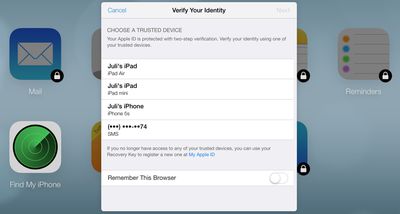
Apple's two-factor authentication system is now enabled for iCloud.com, with the site asking for a verification code before allowing users with two-factor authentication enabled to access various iCloud.com apps.
Access to iCloud.com apps like Mail, Contacts, Calendar, Reminders, Pages, Numbers, and Keynote is restricted until the verification code is entered on the website, but Find My iPhone remains accessible.
Users also receive an email when their Apple ID is used to sign into iCloud via the web browser, a feature that was implemented following the recent hacking of celebrity iCloud accounts that led to hundreds of photos being shared on the Internet.
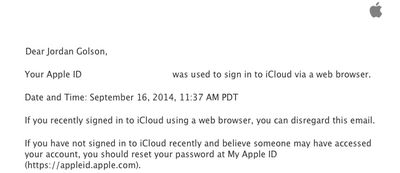
Following the hacking incident, Apple CEO Tim Cook pledged to improve iCloud security by expanding two-factor authentication to iCloud and sending out security emails when a device is restored, iCloud is accessed, or a password change is attempted. Cook also said that Apple will aim to increase awareness about two-factor verification.
Originally implemented back in March of 2013, two-factor verification is an opt-in system designed to increase Apple ID account security by requiring identity verification before allowing users to make account changes or purchase content on new devices. It replaces standard security questions with a security code delivered to a trusted device.
Apple first tested two-factor authentication for iCloud.com back in June, well ahead of the iCloud breach, but the feature was not implemented until today.
Sunday February 1, 2026 10:08 am PST by Joe Rossignol
Last year, Apple launched CarPlay Ultra, the long-awaited next-generation version of its CarPlay software system for vehicles. Nearly nine months later, CarPlay Ultra is still limited to Aston Martin's latest luxury vehicles, but that should change fairly soon.
In May 2025, Apple said many other vehicle brands planned to offer CarPlay Ultra, including Hyundai, Kia, and Genesis.
In his Powe...
Thursday January 29, 2026 10:07 am PST by Joe Rossignol
Apple today confirmed to Reuters that it has acquired Q.ai, an Israeli startup that is working on artificial intelligence technology for audio.
Apple paid close to $2 billion for Q.ai, according to sources cited by the Financial Times. That would make this Apple's second-biggest acquisition ever, after it paid $3 billion for the popular headphone and audio brand Beats in 2014.
Q.ai has...
Sunday February 1, 2026 12:31 pm PST by Joe Rossignol
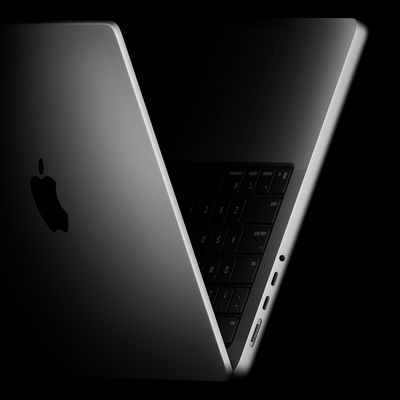
The calendar has turned to February, and a new report indicates that Apple's next product launch is "imminent," in the form of new MacBook Pro models.
"All signs point to an imminent launch of next-generation MacBook Pros that retain the current form factor but deliver faster chips," Bloomberg's Mark Gurman said on Sunday. "I'm told the new models — code-named J714 and J716 — are slated...
Saturday January 31, 2026 10:51 am PST by Joe Rossignol
Apple recently updated its online store with a new ordering process for Macs, including the MacBook Air, MacBook Pro, iMac, Mac mini, Mac Studio, and Mac Pro.
There used to be a handful of standard configurations available for each Mac, but now you must configure a Mac entirely from scratch on a feature-by-feature basis. In other words, ordering a new Mac now works much like ordering an...
Sunday February 1, 2026 5:42 am PST by Joe Rossignol
Apple is planning to launch new MacBook Pro models with M5 Pro and M5 Max chips alongside macOS 26.3, according to Bloomberg's Mark Gurman.
"Apple's faster MacBook Pros are planned for the macOS 26.3 release cycle," wrote Gurman, in his Power On newsletter today.

"I'm told the new models — code-named J714 and J716 — are slated for the macOS 26.3 software cycle, which runs from...
so you have to own two apple devices in order for this to work?
If it is like the rest of their 2FA, It supports SMS. I had it associated with my Android phone for some time until I recently switched it back to my iPhone.
I noticed it a while ago when I logged in months ago. This isn't news, this is just a feature that hasn't been reported on yet.
The whole iCloud "break in" is the dumbest piece of reporting I've seen in a while.
They used a password like, "PASSWORD" or "passw0rd" or "Pass123" or something equally dumb. This is a story about idiots and their bad passwords, not about Apple. Ugh, pisses me off.