Phil Schiller Lays Out Apple's Case for Cracking Down on Screen Time Monitoring Apps

Earlier today, a report from The New York Times highlighted Apple's removal of a number of App Store apps that had allowed users to monitor usage of their devices or those used by their children. The report suggests that Apple's move to pull the apps is related to having rolled out its own Screen Time feature in iOS 12 that competes in some ways with these apps, raising concerns over anticompetitive behavior.

apple screen time

Over the past year, Apple has removed or restricted at least 11 of the 17 most downloaded screen-time and parental-control apps, according to an analysis by The New York Times and Sensor Tower, an app-data firm. Apple has also clamped down on a number of lesser-known apps.

In some cases, Apple forced companies to remove features that allowed parents to control their children’s devices or that blocked children’s access to certain apps and adult content. In other cases, it simply pulled the apps from its App Store.

The report quotes several developers who had their apps removed, including one who says the removal came "out of the blue with no warning." Apple is facing several complaints related to the moves, with a pair of developers filing with the European Union's competition office and Russian cybersecurity firm Kaspersky Lab filing an antitrust complaint in that country.

The New York Times shared a brief statement from an Apple spokeswoman saying that Apple treats "all apps the same," including ones that compete with Apple's own features like Screen Time. The spokeswoman stated that the affected apps "could gain too much information from users' devices."

After reading the article, MacRumors reader Zachary Robinson emailed Tim Cook to express concern over the situation, and earlier today he received a thorough response from Phil Schiller outlining that Apple's removal of these apps is due to their use of Mobile Device Management (MDM) technology to monitor everything that happens on the user's phone.

Schiller notes that MDM technology is intended for enterprise users to install on company-owned devices, giving them easy access to and control over those devices for management purposes. The alternative usage of MDM technology by third-party developers for screen time monitoring or parental controls raises significant privacy and security concerns, however, and Apple has moved to address those issues.

The full email from Schiller, which appears to be authentic based on our examination of the included headers:

Thank you for being a fan of Apple and for your email.

I would like to assure you that the App Store team has acted extremely responsibly in this matter, helping to protect our children from technologies that could be used to violate their privacy and security. After you learn of some of the facts I hope that you agree.

Unfortunately the New York Times article you reference did not share our complete statement, nor explain the risks to children had Apple not acted on their behalf. Apple has long supported providing apps on the App Store, that work like our ScreenTime feature, to help parents manage their children’s access to technology and we will continue to encourage development of these apps. There are many great apps for parents on the App Store, like “Moment - Balance Screen Time” by Moment Health and “Verizon Smart Family” by Verizon Wireless.

However, over the last year we became aware that some parental management apps were using a technology called Mobile Device Management or “MDM” and installing an MDM Profile as a method to limit and control use of these devices. MDM is a technology that gives one party access to and control over many devices, it was meant to be used by a company on it’s own mobile devices as a management tool, where that company has a right to all of the data and use of the devices. The MDM technology is not intended to enable a developer to have access to and control over consumers’ data and devices, but the apps we removed from the store did just that. No one, except you, should have unrestricted access to manage your child’s device, know their location, track their app use, control their mail accounts, web surfing, camera use, network access, and even remotely erase their devices. Further, security research has shown that there is risk that MDM profiles could be used as a technology for hacker attacks by assisting them in installing apps for malicious purposes on users’ devices.

When the App Store team investigated the use of MDM technology by some developers of apps for managing kids devices and learned the risk they create to user privacy and security, we asked these developers to stop using MDM technology in their apps. Protecting user privacy and security is paramount in the Apple ecosystem and we have important App Store guidelines to not allow apps that could pose a threat to consumers privacy and security. We will continue to provide features, like ScreenTime, designed to help parents manage their children’s access to technology and we will work with developers to offer many great apps on the App Store for these uses, using technologies that are safe and private for us and our children.

Thank you,

Phil

Apple's dedication to privacy and security is well-known, so it's unsurprising the company took steps to address concerns related to how these apps were monitoring device usage. But for some users who had come to prefer the capabilities of these apps such as cross-platform compatibility with Android devices in their households and more robust app controls, Apple's Screen Time feature feels like a step backward.

Popular Stories

iphone 17 models

No iPhone 18 Launch This Year, Reports Suggest

Thursday January 1, 2026 8:43 am PST by
Apple is not expected to release a standard iPhone 18 model this year, according to a growing number of reports that suggest the company is planning a significant change to its long-standing annual iPhone launch cycle. Despite the immense success of the iPhone 17 in 2025, the iPhone 18 is not expected to arrive until the spring of 2027, leaving the iPhone 17 in the lineup as the latest...
duolingo ad live activity

Duolingo Used iPhone's Dynamic Island to Display Ads, Violating Apple Design Guidelines

Friday January 2, 2026 1:36 pm PST by
Language learning app Duolingo has apparently been using the iPhone's Live Activity feature to display ads on the Lock Screen and the Dynamic Island, which violates Apple's design guidelines. According to multiple reports on Reddit, the Duolingo app has been displaying an ad for a "Super offer," which is Duolingo's paid subscription option. Apple's guidelines for Live Activity state that...
Clicks Communicator Feature

'Clicks Communicator' Unveiled — Will You Carry This With Your iPhone?

Friday January 2, 2026 6:35 am PST by
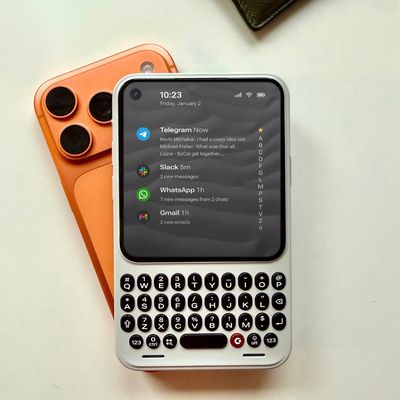
The company behind the BlackBerry-like Clicks Keyboard accessory for the iPhone today unveiled a new Android 16 smartphone called the Clicks Communicator. The purpose-built device is designed to be used as a second phone alongside your iPhone, with the intended focus being communication over content consumption. It runs a custom Android launcher that offers a curated selection of messaging...
Low Cost MacBook Feature A18 Pro

Low-Price 12.9-Inch MacBook With A18 Pro Chip Reportedly Launching Early This Year

Friday January 2, 2026 9:08 am PST by
Apple plans to introduce a 12.9-inch MacBook in spring 2026, according to TrendForce. In a press release this week, the Taiwanese research firm said this MacBook will be aimed at the entry-level to mid-range market, with "competitive pricing." TrendForce did not share any further details about this MacBook, but the information that it shared lines up with several rumors about a more...
Low Cost A18 Pro MacBook Feature Pink

Apple's 2026 Low-Cost A18 Pro MacBook: What We Know So Far

Friday January 2, 2026 4:33 pm PST by
Apple is planning to release a low-cost MacBook in 2026, which will apparently compete with more affordable Chromebooks and Windows PCs. Apple's most affordable Mac right now is the $999 MacBook Air, and the upcoming low-cost MacBook is expected to be cheaper. Here's what we know about the low-cost MacBook so far. Size Rumors suggest the low-cost MacBook will have a display that's around 13 ...
Apple Fitness Plus hero

Apple Announces New Fitness+ Workout Programs, Strava Challenge, and More

Friday January 2, 2026 6:43 am PST by
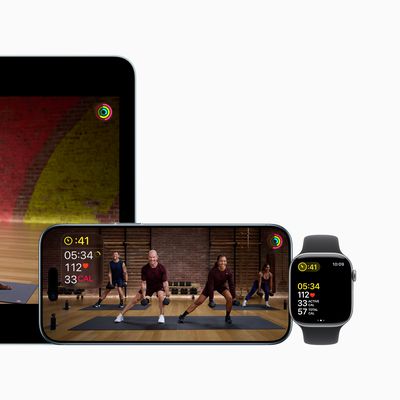
Apple today announced a number of updates to Apple Fitness+ and activity with the Apple Watch. The key announcements include: New Year limited-edition award: Users can win the award by closing all three Activity Rings for seven days in a row in January. "Quit Quitting" Strava challenge: Available in Strava throughout January, users who log 12 workouts anytime in the month will win an ...
govee floor lamp

CES 2026: Govee Announces New Matter-Connected Ceiling and Floor Lights

Sunday January 4, 2026 5:00 am PST by
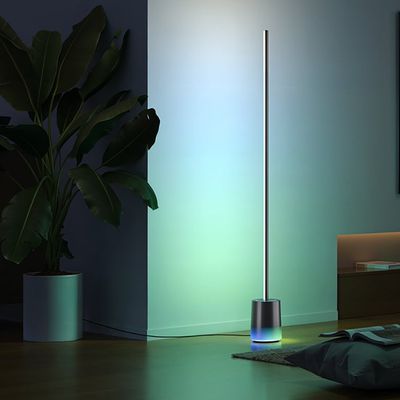
Govee today introduced three new HomeKit-compatible lighting products, including the Govee Floor Lamp 3, the Govee Ceiling Light Ultra, and the Govee Sky Ceiling Light. The Govee Floor Lamp 3 is the successor to the Floor Lamp 2, and it offers Matter integration with the option to connect to HomeKit. The Floor Lamp 3 offers an upgraded LuminBlend+ lighting system that can reproduce 281...
Belkin 25W Battery magnetic

CES 2026: Belkin Announces Magnetic Ring Power Bank, Modular Dock, and More

Sunday January 4, 2026 3:02 pm PST by
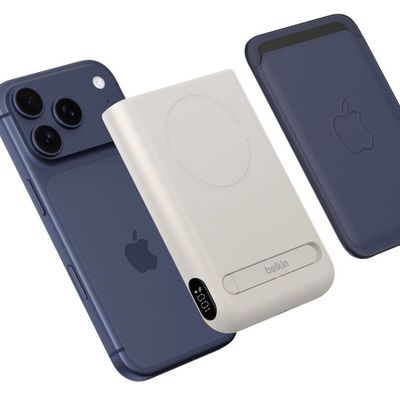
Belkin today announced a range of new charging and connectivity accessories at CES 2026, expanding its portfolio of products aimed at Apple device users. UltraCharge Pro Power Bank 10K with Magnetic Ring The lineup includes new Qi2 and Qi2.2 wireless chargers, magnetic power banks, a high-capacity laptop battery, and USB-C productivity accessories, with an emphasis on higher charging...

Top Rated Comments

WhoDaKat Avatar
87 months ago
Unfortunately the New York Times article you reference did not share our complete statement, nor explain the risks to children had Apple not acted on their behalf.

Honestly this kind of irks me at the NYT. How do you write an article on something like this and leave out part of the companies statement that at best exonerates them and at worst at least explains their actions. The NYT is supposed to have journalistic integrity. Way to feed fuel to "someones" fire. I'd support a complete ban from the App Store when any app can access my kids location without permission.
Score: 56 Votes (Like | Disagree)
edolecki Avatar
87 months ago
Makes sense.
Score: 50 Votes (Like | Disagree)
Apple_Robert Avatar
87 months ago
Good job, Apple. I knew the article was poorly written and slanted to paint an inaccurate picture of, and actions from Apple.
Score: 40 Votes (Like | Disagree)
ouimetnick Avatar
87 months ago
That's a really well written and explained response Phil provided. I agree with them 100% on this decision.
Score: 37 Votes (Like | Disagree)
warp9 Avatar
87 months ago
Meanwhile, at Facebook:

ALL YOUR KID ARE BELONG TO US.
Score: 33 Votes (Like | Disagree)
mariusignorello Avatar
87 months ago
Unfortunately the New York Times article you reference did not share our complete statement, nor explain the risks to children had Apple not acted on their behalf.

Honestly this kind of irks me at the NYT. How do you write an article on something like this and leave out part of the companies statement that at best exonerates them and at worst at least explains their actions. The NYT is supposed to have journalistic integrity. Way to feed fuel to "someones" fire. I'd support a complete ban from the App Store when any app can access my kids location without permission.
Doesn’t matter what topic the NYT “journalists” cover. They can’t stick to the facts and provide a true report of the story. Their bias bleeds into everything they write.
Score: 23 Votes (Like | Disagree)