A rare Apple Macintosh prototype from 1983, featuring the "Twiggy disk" drive, is expected to sell for over $100,000 at auction (via New Atlas).
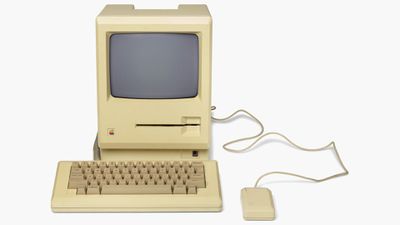
The piece of Apple history is set to go under the hammer at Bonhams in New York. The Macintosh prototype, model #M0001, is one of the few surviving pre-production units from 1983.
This version of the Macintosh originally used a 5.25-inch floppy disk drive known internally as the "Twiggy" drive. It proved to be unreliable, leading Apple co-founder Steve Jobs to order the destruction of the remaining pre-production units before the final commercial release. The use of this drive sets it apart from the first commercially available Macs, which would ultimately ship in 1984 with the more compact 3.5-inch floppy disk system.
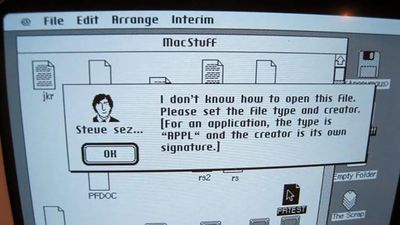
This particular prototype not only survived Jobs's directive but remains in very good condition. Included with the unit are several other prototype accessories, including a keyboard with a handwritten serial number, a prototype version of Apple's M01000 mouse featuring a unique connector, and a dual-density Twiggy diskette labeled "Mac Word." The prototype's software adds further intrigue to the lot; it runs early, unfinished versions of key Macintosh applications, and some of the notifications and instructions in the system are attributed to Steve Jobs himself.
The Bonhams auction is expected to reach a final selling price of $80,000 to $120,000. Given the rarity of Twiggy Mac prototypes and the historical interest surrounding Apple's early products, it is possible the final sale price could exceed expectations and become one of the most expensive Apple computers ever sold. A similar Twiggy model sold at auction in 2019 was fully functional and achieved a record price of $150,075. The auction is set to run from October 13 to October 23.
Monday November 3, 2025 5:54 am PST by Joe Rossignol
Following more than a month of beta testing, Apple released iOS 26.1 on Monday, November 3. The update includes a handful of new features and changes, including the ability to adjust the look of Liquid Glass and more.
Below, we outline iOS 26.1's key new features.
Liquid Glass Toggle
iOS 26.1 lets you choose your preferred look for Liquid Glass.
In the Settings app, under Display...
Thursday November 6, 2025 11:12 am PST by Joe Rossignol
Apple today updated its trade-in values for select iPhone, iPad, Mac, and Apple Watch models. Trade-ins can be completed on Apple's website, or at an Apple Store.
The charts below provide an overview of Apple's current and previous trade-in values in the U.S., according to its website. Maximum values for most devices either decreased or saw no change, but the iPad Air received a slight bump.
...
Wednesday November 5, 2025 11:57 am PST by Juli Clover
The smarter, more capable version of Siri that Apple is developing will be powered by Google Gemini, reports Bloomberg. Apple will pay Google approximately $1 billion per year for a 1.2 trillion parameter artificial intelligence model that was developed by Google.
For context, parameters are a measure of how a model understands and responds to queries. More parameters generally means more...
Thursday November 6, 2025 2:45 pm PST by Juli Clover
Apple is promoting the new Liquid Glass design in iOS 26, showing off the ways that third-party developers are embracing the aesthetic in their apps. On its developer website, Apple is featuring a visual gallery that demonstrates how "teams of all sizes" are creating Liquid Glass experiences.
The gallery features examples of Liquid Glass in apps for iPhone, iPad, Apple Watch, and Mac. Apple...
Apple is planning to launch at least 15 new products in 2026, according to Bloomberg's Mark Gurman.
Gurman outlined what to expect from Apple in 2026 in the latest edition of his "Power On" newsletter. He said the company is heading "into one of its most pivotal years in recent memory," with the rollout of major new Apple Intelligence features, intense regulatory pressure on the App Store,...
Monday November 3, 2025 1:11 pm PST by Juli Clover
Apple today released iOS 26.1, the first major update to the iOS 26 operating system that came out in September, iOS 26.1 comes over a month after iOS 26 launched. iOS 26.1 is compatible with the iPhone 11 series and later, as well as the second-generation iPhone SE.
The new software can be downloaded on eligible iPhones over-the-air by going to Settings > General >...
Thursday November 6, 2025 4:37 am PST by Tim Hardwick
Apple in iOS 26.2 will disable automatic Wi-Fi network syncing between iPhone and Apple Watch in the European Union to comply with the bloc's regulations, suggests a new report.
Normally, when an iPhone connects to a new Wi-Fi network, it automatically shares the network credentials with the paired Apple Watch. This allows the watch to connect to the same network independently – for...
We're officially in the month of Black Friday, which will take place on Friday, November 28 in 2025. As always, this will be the best time of the year to shop for great deals, including popular Apple products like AirPods, iPad, Apple Watch, and more. In this article, the majority of the discounts will be found on Amazon.
Note: MacRumors is an affiliate partner with some of these vendors. When ...
I personally find this a lot more interesting than one of those unopened first gen iPhones, way rarer and cooler and you can at least use it! And yes, for some reason both can go for over $100,000 these days which is quite absurd either way.
LOVE seeing news and discussions on the Classic stuff! Makes me want to boot up my 512k and do some nostalgia gaming. And wow, I haven't seen TWIGGY mentioned in ages!
Neat to see how much this fetches, and if it goes someplace that can be enjoyed by more than just one rich family.
I makes sense Steve Jobs ditch the 5-1/4, because the 3-1/2 had double the storage capacity ( 720 KB ). Later the Double Density Drives doubled that to 1.44MB.
Hardly anyone owned a Hard Drive (10 MB Winchester); way too expensive for the regular user.
Yes, those were the days... but I don't want to go back!
The original disks were 1DD: single-sided, double-density 400K. The Mac Plus in 1986 introduced 2DD: double-sided, double-density 800K disks. The high-density HD format (1.44MB) came later on, in 1989.