The iOS 17.1 update that Apple is set to release in the near future addresses an issue that "may cause display image persistence," according to Apple's feature notes for the software.
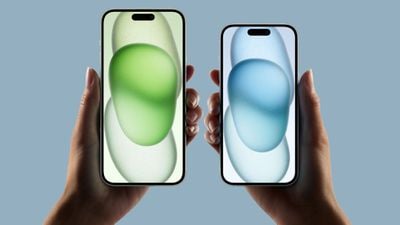
Since the launch of the iPhone 15 models, there have been sporadic reports of severe screen burn-in impacting the new devices. There was speculation that it might be a hardware issue with the OLED display, but based on the iOS 17.1 update, Apple has found and addressed a software problem that mimicked screen burn-in.
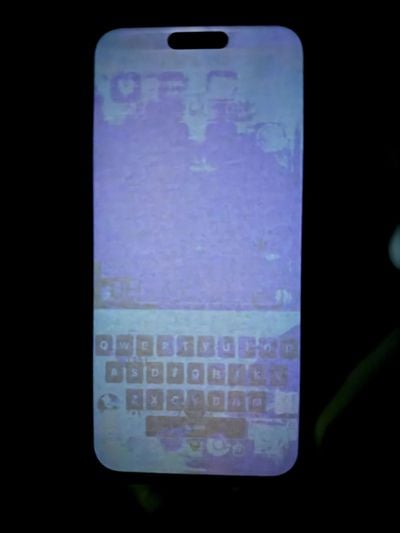
Image via MacRumors reader Josh
While most of the reports of display problems were coming from iPhone 15 users, there were also some users with iPhone 13 Pro and iPhone 12 Pro devices that saw similar issues, which is likely why Apple's release notes do not mention the iPhone 15 specifically.
Those who have noticed "burn-in" on their iPhones should update to iOS 17.1 to ensure that it solves the problem.
The iOS 17.1 update also addresses a number of other bugs. It fixes an issue that could cause the Significant Location privacy setting to reset when transferring or pairing an Apple Watch for the first time, plus it addresses a bug that could cause custom and purchased ringtones not to appear as options for a text tone.
There is a fix for an issue that could cause the iPhone keyboard to be less responsive, and Apple says that it has added crash detection optimizations for the iPhone 14 and iPhone 15 models to further refine how the iPhones respond when a vehicle crash event is detected.
Tuesday February 10, 2026 4:27 pm PST by Juli Clover
Apple is planning to launch new MacBook Pro models as soon as early March, but if you can, this is one generation you should skip because there's something much better in the works.
We're waiting on 14-inch and 16-inch MacBook Pro models with M5 Pro and M5 Max chips, with few changes other than the processor upgrade. There won't be any tweaks to the design or the display, but later this...
Wednesday February 11, 2026 10:07 am PST by Juli Clover
Apple today released iOS 26.3 and iPadOS 26.3, the latest updates to the iOS 26 and iPadOS 26 operating systems that came out in September. The new software comes almost two months after Apple released iOS 26.2 and iPadOS 26.2.
The new software can be downloaded on eligible iPhones and iPads over-the-air by going to Settings > General > Software Update.
According to Apple's release notes, ...
Tuesday February 10, 2026 6:33 am PST by Joe Rossignol
It has been a slow start to 2026 for Apple product launches, with only a new AirTag and a special Apple Watch band released so far. We are still waiting for MacBook Pro models with M5 Pro and M5 Max chips, the iPhone 17e, a lower-cost MacBook with an iPhone chip, long-rumored updates to the Apple TV and HomePod mini, and much more.
Apple is expected to release/update the following products...
Tuesday February 10, 2026 1:51 pm PST by Joe Rossignol
Apple plans to announce the iPhone 17e on Thursday, February 19, according to Macwelt, the German equivalent of Macworld.
The report said the iPhone 17e will be announced in a press release on the Apple Newsroom website, so do not expect an event for this device specifically.
The iPhone 17e will be a spec-bumped successor to the iPhone 16e. Rumors claim the device will have four key...
Apple acquired Canadian graph database company Kuzu last year, it has emerged.
The acquisition, spotted by AppleInsider, was completed in October 2025 for an undisclosed sum. The company's website was subsequently taken down and its Github repository was archived, as is commonplace for Apple acquisitions.

Kuzu was "an embedded graph database built for query speed, scalability, and easy of ...
Weird, I was assured by so many on these forums that this was an existential problem for Apple that would prompt a massive global recall and be the end of the company.
you can't fix "burn in" with a software update lmao. it's obviously an issue with the graphics processor (if it's really been fixed).
It could very well be a software bug that is not related to the graphics processor. Modern OLED displays utilize software algorithms to mitigate screen burn by essentially keeping track of how long individual sub-pixels are lit, and at what intensity. This allows them to adjust nearby pixel luminance to account for the degradation that the pixels have encountered from normal use, and continue to produce a clean image on a display that would otherwise have screen burn. My guess is that there was a bug in the display driver firmware that caused these algorithms to overcompensate for the amount of usage that these screens were seeing, essentially causing it to over adjust the luminance of certain pixels resulting in what looked like real screen burn when these compensation values were utilized by the display driver.