Apple's Vision Pro Headset Uses 'Optic ID' Iris Scanning Authentication
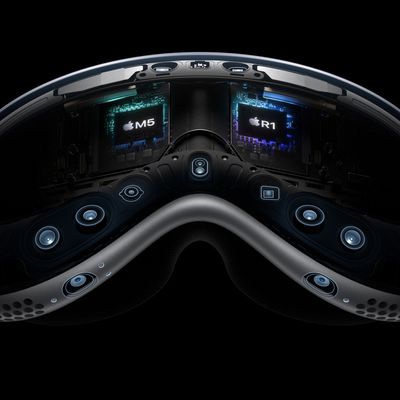
The Vision Pro headset that Apple announced today will have a unique biometric authentication method, employing iris scanning for the first time. Optic ID uses cameras in the headset to scan the eye, much like Face ID scans the face.
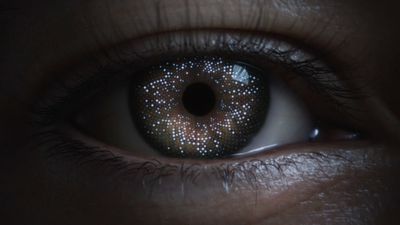
It is, in fact, almost identical to Face ID, but it uses the unique layout of a person's iris to verify identity.
Optic ID can be used to unlock the headset, authorize purchases, and unlock passwords, much like Face ID and Touch ID. Optic ID data is encrypted, stays on device, and is stored in the Secture Enclave processor so it can never be accessed by Apple or third-party developers.
The headset has numerous privacy features in addition to Optic ID. There is a visual indicator when the on-device camera is being used to record 3D video, and all eye input is isolated so apps and websites aren't able to determine where you're looking. Camera data is processed at the system level, so apps also aren't able to see your surroundings from the multitude of cameras.
Popular Stories
Apple is working on a "completely revamped" Vision Pro headset that could go in any of four directions and likely won't arrive before late 2028 or early 2029, according to Bloomberg's Mark Gurman.
Writing in his latest Power On newsletter, Gurman said Apple's Vision team is exploring four concepts for the device, codenamed N224, including designs that offload internal components in a similar ...
Apple on Monday announced Remnants, an immersive horror film that will be released exclusively on the Vision Pro on Friday, October 16.
The film will be in the Apple Immersive Video format, meaning it will be a 3D video recorded in 8K resolution with a 180-degree field of view and Spatial Audio.
Apple shared a short video of people reacting to the film while wearing the Vision Pro....
Alongside new betas of iOS 27.2, iPadOS 27.2, and macOS Golden Gate 27.2, Apple has released the third betas of watchOS 27.2, tvOS 27.2, and visionOS 27.2. The betas come two weeks after Apple released the second betas.
Registered developers can download the betas through the Settings app on each device.
With iOS 27.2 and watchOS 27.2, Apple is testing the new Health app that it showed...