Apple Discontinues Full-Sized HomePod to Focus on HomePod Mini
Apple has discontinued the standard HomePod to focus exclusively on the HomePod mini, reports TechCrunch. First introduced four years ago, Apple's larger HomePod has never sold well because of its high price tag.
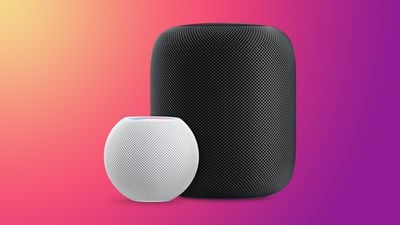
Apple hoped that the HomePod's high-quality sound would give it an edge over competing products, but sales of the HomePod have always been lackluster with so many more affordable options on the market. Apple has been selling the HomePod for $299, but it was originally priced at $350. The HomePod mini is available for $99.
The HomePod mini offers all of the features of the HomePod in a smaller and less expensive package. Many reviews praised the HomePod mini for its sound quality relative to its size, and while it won't quite match the sound available from the HomePod, it features the same Siri integration, Apple Music support, and HomeKit controls.
In a statement, Apple said that the HomePod will continue to be available while supplies last through the Apple Online Store and Apple retail stores.
HomePod mini has been a hit since its debut last fall, offering customers amazing sound, an intelligent assistant, and smart home control all for just $99. We are focusing our efforts on HomePod mini. We are discontinuing the original HomePod, it will continue to be available while supplies last through the Apple Online Store, Apple Retail Stores, and Apple Authorized Resellers. Apple will provide HomePod customers with software updates and service and support through Apple Care.
On Thursday, many tech sites noticed that the full-sized space gray HomePod was out of stock in the United States, but it was believed to be just a stock shortage. As it turns out, it was because Apple no longer plans to sell the HomePod.
The space gray HomePod can likely be purchased from third-party retailers, but it is no longer available from Apple, while the HomePod in white continues to be available for purchase as of right now.

Popular Stories
Apple today confirmed to Reuters that it has acquired Q.ai, an Israeli startup that is working on artificial intelligence technology for audio.
Apple paid close to $2 billion for Q.ai, according to sources cited by the Financial Times. That would make this Apple's second-biggest acquisition ever, after it paid $3 billion for the popular headphone and audio brand Beats in 2014.
Q.ai has...
Apple today introduced its first two physical products of 2026: a second-generation AirTag and the Black Unity Connection Braided Solo Loop for the Apple Watch.
Read our coverage of each announcement to learn more:Apple Unveils New AirTag With Longer Range, Louder Speaker, and More
Apple Introduces New Black Unity Apple Watch BandBoth the new AirTag and the Black Unity Connection Braided...
Alongside iOS 26.2.1, Apple today released an updated version of iOS 12 for devices that are still running that operating system update, eight years after the software was first released.
iOS 12.5.8 is available for the iPhone 5s and the iPhone 6, meaning Apple is continuing to support these devices for 13 and 12 years after launch, respectively. The iPhone 5s came out in September 2013,...
Update: Apple Creator Studio is now available.
Apple Creator Studio launches this Wednesday, January 28. The all-in-one subscription provides access to the Final Cut Pro, Logic Pro, Pixelmator Pro, Motion, Compressor, and MainStage apps, with U.S. pricing set at $12.99 per month or $129 per year.
A subscription to Apple Creator Studio also unlocks "intelligent features" and "premium...
On an earnings call with equity analysts today, Apple CEO Tim Cook responded to fast-rising RAM and SSD storage chip prices in the supply chain.
Prices for RAM and NAND storage chips are surging lately due to high demand from companies building out AI servers, resulting in supply constraints.
Cook said that rising memory chip prices had a "minimal impact" on Apple's gross margin in the...