ProRAW is a RAW format for iPhone that also takes advantage of all of the computational photography features that Apple builds into the iPhone. As Mann explains, it combines the computations necessary for accurate imaging with user control over preference parameters like white balance, noise reduction, sharpening, and more.
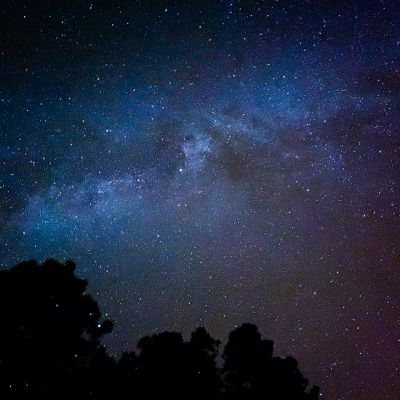
To test the new ProRAW feature, Mann used the iPhone 12 Pro Max to shoot a meteor shower at night. He took the same photo in both ProRAW and standard mode and edited the photos in Lightroom. The ProRAW version captures more detail in the sky, highlighting the stars that were erased by noise reduction in the standard image.

Standard HEIC image on left, ProRAW image on right
Mann includes a video on the benefits of ProRAW when it comes to HDR scenes that have bright sunlight and shadows, as well as the expanded color range. Images shot in ProRAW are 12-bit color, allowing for more nuanced shades and a significant improvement in color depth.
With 12-bit color, 14 stops of dynamic range, and dramatically more creative control, Apple ProRAW is a massive leap forward in professional imaging with iPhone. I'm now comfortable relying on my iPhone 12 Pro to capture a strong photograph in virtually any light conditions because I know I'm able to custom tailor the processing to my taste, instead of relying on computational generalizations designed for most users.
According to Mann, shooting in ProRAW makes the most sense in extreme scenarios where Apple's general algorithms are unable to do all the work. Indoor mixed lighting, extreme low light, and super high dynamic range images have the potential to benefit from ProRAW settings.
Mann points out that ProRAW files must be edited and are not ready to be shared straight out of the camera, and the feature is not available in Portrait or Panoramic mode. Mann has additional tips on shooting in ProRAW in his full piece on the new feature.
Tuesday February 10, 2026 4:27 pm PST by Juli Clover
Apple is planning to launch new MacBook Pro models as soon as early March, but if you can, this is one generation you should skip because there's something much better in the works.
We're waiting on 14-inch and 16-inch MacBook Pro models with M5 Pro and M5 Max chips, with few changes other than the processor upgrade. There won't be any tweaks to the design or the display, but later this...
Wednesday February 11, 2026 10:07 am PST by Juli Clover
Apple today released iOS 26.3 and iPadOS 26.3, the latest updates to the iOS 26 and iPadOS 26 operating systems that came out in September. The new software comes almost two months after Apple released iOS 26.2 and iPadOS 26.2.
The new software can be downloaded on eligible iPhones and iPads over-the-air by going to Settings > General > Software Update.
According to Apple's release notes, ...
Tuesday February 10, 2026 6:33 am PST by Joe Rossignol
It has been a slow start to 2026 for Apple product launches, with only a new AirTag and a special Apple Watch band released so far. We are still waiting for MacBook Pro models with M5 Pro and M5 Max chips, the iPhone 17e, a lower-cost MacBook with an iPhone chip, long-rumored updates to the Apple TV and HomePod mini, and much more.
Apple is expected to release/update the following products...
Tuesday February 10, 2026 1:51 pm PST by Joe Rossignol
Apple plans to announce the iPhone 17e on Thursday, February 19, according to Macwelt, the German equivalent of Macworld.
The report said the iPhone 17e will be announced in a press release on the Apple Newsroom website, so do not expect an event for this device specifically.
The iPhone 17e will be a spec-bumped successor to the iPhone 16e. Rumors claim the device will have four key...
Apple acquired Canadian graph database company Kuzu last year, it has emerged.
The acquisition, spotted by AppleInsider, was completed in October 2025 for an undisclosed sum. The company's website was subsequently taken down and its Github repository was archived, as is commonplace for Apple acquisitions.
Kuzu was "an embedded graph database built for query speed, scalability, and easy of ...
I agree. If you're a photographer or simply really into photography (or heck, even just night shots), why spend $1400 on a phone when the same amount (or easily less) on a DSLR will yield far, far better results.
I have several dSLRs, an Arca-Swiss 4x5, and an iPhone which I've been using exclusively for the past five years. It's always with me in my shirt pocket, ready at an instant to make photographs. That's why. Below is a recent photo.
Can't wait to get 14.3 loaded on my 12 Pro for ProRaw. That will likely open up a ton of opportunities for me.
Looks great! But I am scared my relatives will enable this only to complain half a year later how they cannot open their photos on their toshiba laptops or printing stations at the super market ? just like HEIC
I agree. If you're a photographer or simply really into photography (or heck, even just night shots), why spend $1400 on a phone when the same amount (or easily less) on a DSLR will yield far, far better results.
I live in a rural area and have a great view of the sky. I would love to have the time to learn more about night photography and take some great shots. We have the most awesome views of the moon a few times every single month.
Well because even photographers aren't going to have their pro cameras with them all the time but still find themselves with interesting opportunities. I'm not a pro photographer, but I shoot with a Nikon and some expensive glass and also have a much more compact Ricoh GRIII, which is great, but I still find myself in a lot of situations where my iPhone is all I've got, so having it be capable of taking better photos, and editing them later in Lightroom, is very appealing.