Qualcomm Wins Appeal in FTC Antitrust Lawsuit - MacRumors
Skip to Content

Qualcomm Wins Appeal in FTC Antitrust Lawsuit

Qualcomm today scored a major victory in its ongoing antitrust battle with the FTC, winning an appeal that will prevent the San Diego company from having to renegotiate its licensing agreements with smartphone makers.
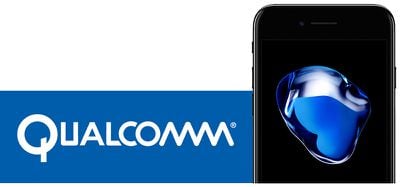
qualcomm iphone 7
Back in May 2019, the Federal Trade Commission won an antitrust lawsuit against Qualcomm, with the court ruling that Qualcomm's "no license, no chips" model that allowed Qualcomm to refuse to provide chips to companies without a patent license, violated federal antitrust laws. The ruling required Qualcomm to renegotiate all of its licensing terms with customers in good faith.

According to Bloomberg, the federal appeals court today said that the judge in the original case was wrong to side with the FTC, and the court vacated the order mandating that Qualcomm re-establish its licensing deals with companies like Apple.

The court said that the original ruling went "beyond the scope" of antitrust law and that Qualcomm's licensing practices are not anticompetitive because Qualcomm is "under no antitrust duty to license rival chip suppliers." If Qualcomm has breached obligations to license patents under fair and reasonable terms (FRAND), the issue needs to be brought up under patent law, not antitrust law.

In a statement, the FTC called the court's ruling "disappointing" and said that it will be considering options going forward. The FTC can appeal the decision, but if it stands, it will end Qualcomm's years-long legal battle over its chip licensing deals.

Qualcomm general counsel and executive vice president Don Rosenberg told Bloomberg that the ruling validates Qualcomm's business model.

"The court of appeals unanimous reversal, entirely vacating the district court decision, validates our business model and patent licensing program and underscores the tremendous contributions that Qualcomm has made to the industry."

Qualcomm's fight with the FTC ran concurrent with its legal battle with Apple. The Qualcomm vs. Apple dispute spanned years, but was resolved last year when the two companies reached a settlement and agreed to drop all litigation.

Apple had accused Qualcomm of unfair licensing deals and overcharging for the iPhone components that it supplied to Apple, but Apple dropped the case because it has no other source for 5G modems for its iPhones. Apple tried using Intel modem chips in its devices and did so successfully for a few years, but Intel ultimately could not produce the chips Apple needed and ended up selling its modem chip business.

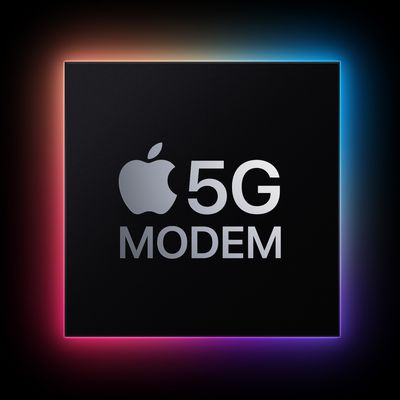
Apple purchased Intel's smartphone modem business for $1 billion, and in the future, intends to manufacture its own modem chips. For now, though, Apple continues to be reliant on Qualcomm and this year's iPhone 12 models will be equipped with Qualcomm modem chips.
Popular Stories

Aston Martin CarPlay Ultra Screen

Apple Says CarPlay Ultra is Coming to These Vehicle Brands

Thursday May 21, 2026 11:53 am PDT by
Last year, Apple launched CarPlay Ultra, the long-awaited next-generation version of its CarPlay software system for vehicles. Nearly a year later, CarPlay Ultra is still limited to Aston Martin's latest luxury vehicles, but that should change fairly soon. In May 2025, Apple said many other vehicle brands planned to offer CarPlay Ultra, including Hyundai, Kia, and Genesis. CarPlay Ultra...
Apple Event Logo

Apple to Release These 15 New Products Later This Year

Friday May 22, 2026 6:36 am PDT by
April and May have been relatively slow months for Apple this year, but there is a lot to look forward to heading into WWDC 2026 and beyond. Apple is expected to release at least 15 more products later this year, with some of them held up until the more personalized version of Siri launches. Beyond the usual annual updates to iPhones and Apple Watches in September, Apple's all-new smart...
MacBook Pro Low Angle Wide Lens 2

MacBook Pro OLED Display Production Clears Key Hurdle

Thursday May 21, 2026 1:41 am PDT by
Apple's first OLED MacBook Pro models have cleared a major manufacturing hurdle, with panel supplier Samsung Display having reportedly achieved yields above 90 percent on its Gen 8.6 OLED production line. According to Korean publication The Elec, some individual process stages are now reaching yields as high as 95 percent, a level that the display industry considers "golden yield" territory ...

Top Rated Comments

jayducharme Avatar
75 months ago
Apple dropped the case ('https://www.macrumors.com/2019/04/16/apple-qualcomm-settlement/') because it has no other source for 5G modems for its iPhones
And yet Congress thinks Apple is a monopoly?
Score: 8 Votes (Like | Disagree)
cmaier Avatar
75 months ago

Which is completely stupid too.

It’s like saying Disney World is a monopoly because it only has Disney content.
And McDonald’s stubbornly refuses to let me sell my own hamburgers in their restaurants. They also refuse to allow me to sell Big Macs out of my garage. Monopoly!
Score: 6 Votes (Like | Disagree)
GeoStructural Avatar
75 months ago
I agree with the court’s decision. I think Qualcomm is entitled to charge royalties and license fees for patents and technologies that they are actively developing and improving.

Apple charges royalties for using the Lightning connector, a proprietary cable that relies on 20-year old usb protocols just for greed... so why defend Apple and condemn Qualcomm? I think the latter has more merit.


And yet Congress thinks Apple is a monopoly?
They are not saying that Apple is a monopoly, they are saying the App Store is.
Score: 6 Votes (Like | Disagree)
cmaier Avatar
75 months ago

I did not say you "own" the operating system. I said you pay to use it. No other operating system ever restricts users’ freedom like iOS. On Windows, Linux, macOS, and Android, you can just write an app, compile it and run it (and you can freely distribute it to others). On iOS, you have to pay Apple $99 just to distribute your app, which unreasonably burdens free and open-source softwares (they could have distributed their products with much lower costs (zero cost via GitHub) and no less rigorous review).
There are many operating systems that restrict your freedom well beyond iOS. Good luck installing apps on the OS in your car. Or installing unblessed apps on your average smart tv.

And $99 is not the charge to distribute your app. The $99 fee includes support, tooling, etc.

In any event your points are off-topic. You don’t have a “right” to install whatever you want on an ios device, because when you bought it and first set it up you agreed to a contract that says otherwise, as a condition of your license to use the software built into the device.
Score: 4 Votes (Like | Disagree)
75 months ago

And yet Congress thinks Apple is a monopoly?
When you purchase an iPhone, you agree to pay for the hardware, the operating system and various Apple services (for example, iCloud). Your property right over your iPhone gives you a right to run whatever apps you see fit that can run on your iPhone, and you did not relinquish that right by purchasing an iPhone in the first place, or by agreeing to the terms of Apple's App Store. Apple's current practices severely infringe your freedom (and developers' freedom). Apple abused its control over App Store to maximize its profits, rather to provide a reasonably-regulated marketplace for users and developers, so you could not have agreed to App Store's restrictions.

Responding to another comment about McDonald's:
You can cook your burger and eat it. In fact, you can cook your burgers and sell them to others across the street McDonald's sits on. You can eat burgers at any other restaurant. McDonald's did not say, if you live in this neighborhood, you cannot cook your own burger, you cannot sell your burger to others, you can only eat McDonald's burgers.
Score: 3 Votes (Like | Disagree)
75 months ago


They are not saying that Apple is a monopoly, they are saying the App Store is.
Which is completely stupid too.

It’s like saying Disney World is a monopoly because it only has Disney content.
Score: 3 Votes (Like | Disagree)