

Apple recently joined the Alliance for Open Media as a founding member, according to an updated member list first noticed by CNET.
The Alliance for Open Media, according to its website, was formed to "define and develop media codecs, media formats, and related technologies to address marketplace demand for an open standard for video compression and delivery over the web."
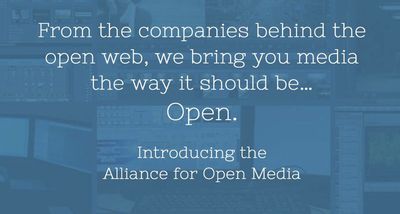
The Alliance is developing a royalty-free video codec known as AOMedia Video 1 (AV1), which is designed to compress video before it's stored or sent over a network. Apple's move to join the Alliance for Open Media is notable because implementing such technology requires it to be widely supported, and Apple was one of the only major companies not participating.
AV1 continues to be a work in progress, with the Alliance for Open Media planning to release the first version of in the near future. Mozilla supports an early version of AV1 and has said that it reduces file sizes by 25 to 35 percent compared to HEVC, which Apple implemented support for in macOS High Sierra and iOS 11.
Other members of the Alliance for Open Media include Amazon, Cisco, Facebook, ARM, Google, IBM, Intel, Microsoft, Mozilla, Netflix, Hulu, NVIDIA, and more.

















Top Rated Comments
Hopefully this means that AV1 will be supported on every major platform, avoiding the need to support different codecs for different devices and operating systems.
AV1 will hopefully kill two birds with one stone. Content for customers and savings for the companies in the alliance.
I can't think of much reason anyone would ever need an 8K TV unless they're putting a movie theatre into their house. I found some charts online that show that an 85" 8K TV requires you to be about 3ft away to see the full benefit, while an 85" 4K TV requires you to be about 6ft away. Most people sit 6ft or more from their TV unless they're in a tiny apartment or dorm room, in which case an 85" TV probably would be overkill and might not even fit on a wall.
The main reason that we're seeing 8K this year is because they've run out of useful things to add to 4K TVs. We've got HDR. We've got the deep black levels. We've got the resolution. We've got the thinness and width. For anyone waiting to get 4K, right after CES this year would be a great time to buy. If you want a higher end 4K TV with excellent color and contrast at a larger size without completely breaking the bank, wait until after CES 2019 when things will really start coming down in price. That's my plan. New products debut after CES and old stuff goes on sale. I'm hoping to get a pencil thin OLED/QLED HDR in the 70"+ range for under $1500 either in late January/early February 2019 when there are Super Bowl sales or in March/April when the new models come out and the old models are discounted. Depends whether the Super Bowl sales are good enough.