iPhone supplier Japan Display has come up with a plan to battle the increasing popularity of organic light-emitting diode (OLED) panel manufacturing, without needing to delve into the costly practice of creating OLED panels itself. According to a new report by The Wall Street Journal, the supplier has figured out a way to manufacture flexible liquid crystal display (LCD) panels using technology and processes it already has at its disposal.

Set to begin mass production in 2018, Japan Display's flexible LCD panels are said to be built with a layer of plastic instead of glass. "While not as flexible as OLED," the company's chief operating officer, Shuji Aruga, mentioned that the panels are bendable enough to manufacture smartphones with the same screen design as Samsung's Galaxy Edge series.
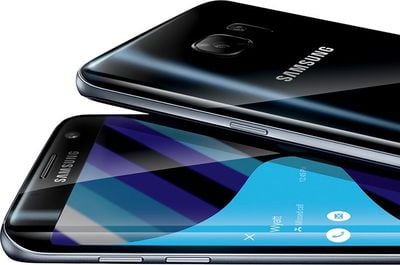
galaxys7edge
According to people familiar with the matter, Apple has already begun looking at the flexible LCD panels for iPhone models launching in 2018 and beyond.

Japan Display officials said some smartphone makers, which they declined to name, have agreed to adopt the bendable LCD in the next few years. The company also hopes to sell the displays for other uses such as laptop computers and car dashboards.

“Mass production is planned from 2018, and we wouldn’t do that without demand from our clients,” said Mr. Aruga. Japan Display’s major clients, according to its financial statements, include Apple and Huawei Technologies Co.

Bendable displays could help revive growth in a smartphone market that is beginning to get saturated. People familiar with the matter have said Apple is looking at the displays for possible future iPhone models.

In addition to its plan to adapt LCD screens into flexible panels, Japan Display has previously acknowledged interest in OLED production, stating in late 2015 a goal to begin mass production of OLED panels by the spring of 2018. Last November, the supplier was said to be in "advanced talks" with the government-backed fund Innovation Network Corp. of Japan to receive around ¥75 billion ($662 million) in financing.

The bailout was said to be both for improving Japan Display's LCD technology, and potentially mass-producing its own OLED panels. Still, analysts looking at the move think that Japan Display "may not have the funds to pursue both technologies," so it's unclear at this point which panel technology the supplier will ultimately decide to stick with in the future.

For Apple, it's been long-rumored that at least one model of the 2017 iPhone 8 will come with an OLED screen -- supplied by Samsung -- which typically have sharper color contrast and brighter colors compared to LCD screens. Japan Display's domestic rival Sharp is currently expected to provide Apple with OLED panels as well, but not until mid-2018.


Related Forum: iPhone

Top Rated Comments

decimortis Avatar
118 months ago
I didn't think the primary benefit of OLED was its flexibility. I'd always thought it was its superior contrast levels and energy usage that put it above LCD. Am I wrong in thinking this?
Score: 5 Votes (Like | Disagree)
billybobthornton Avatar
118 months ago
"What is everyone else doing? Ok let's do that!"
- Tim Cook
Score: 4 Votes (Like | Disagree)
mactactic Avatar
118 months ago
Apple has to fall again , before they
Fire Tim Cook !!!
Score: 3 Votes (Like | Disagree)
JM Avatar
118 months ago
Yes, because plastic screens are the way to go. Glass just doesn't get enough scratches for my tastes.
Score: 3 Votes (Like | Disagree)
Avieshek Avatar
118 months ago
Really, Apple wouldn't learn it's lesson until Apple have it's Doomsday once-and-for-all.
Score: 2 Votes (Like | Disagree)
Sevanw Avatar
118 months ago
Lol, when you're only option is to wait on other people's innovations before you can go ahead with your own designs, you'll never be a leader. This is no longer the early era of smartphones. A time where Apple dominated form and function.
Score: 2 Votes (Like | Disagree)

Popular Stories

Apple Logo Black

Apple Just Made Its Second-Biggest Acquisition Ever After Beats

Thursday January 29, 2026 10:07 am PST by
Apple today confirmed to Reuters that it has acquired Q.ai, an Israeli startup that is working on artificial intelligence technology for audio. Apple paid close to $2 billion for Q.ai, according to sources cited by the Financial Times. That would make this Apple's second-biggest acquisition ever, after it paid $3 billion for the popular headphone and audio brand Beats in 2014. Q.ai has...
imac video apple feature

Apple Unveils First New Products of 2026

Monday January 26, 2026 1:55 pm PST by
Apple today introduced its first two physical products of 2026: a second-generation AirTag and the Black Unity Connection Braided Solo Loop for the Apple Watch. Read our coverage of each announcement to learn more:Apple Unveils New AirTag With Longer Range, Louder Speaker, and More Apple Introduces New Black Unity Apple Watch BandBoth the new AirTag and the Black Unity Connection Braided...
iPhone 5s

iPhone 5s Gets New Software Update 13 Years After Launch

Monday January 26, 2026 3:56 pm PST by
Alongside iOS 26.2.1, Apple today released an updated version of iOS 12 for devices that are still running that operating system update, eight years after the software was first released. iOS 12.5.8 is available for the iPhone 5s and the iPhone 6, meaning Apple is continuing to support these devices for 13 and 12 years after launch, respectively. The iPhone 5s came out in September 2013,...
Apple Creator Studio

Apple's Next Launch is Today

Tuesday January 27, 2026 2:39 pm PST by
Update: Apple Creator Studio is now available. Apple Creator Studio launches this Wednesday, January 28. The all-in-one subscription provides access to the Final Cut Pro, Logic Pro, Pixelmator Pro, Motion, Compressor, and MainStage apps, with U.S. pricing set at $12.99 per month or $129 per year. A subscription to Apple Creator Studio also unlocks "intelligent features" and "premium...
apple silicon 1 feature

Apple Responds to Skyrocketing RAM and Storage Chip Prices

Thursday January 29, 2026 2:40 pm PST by
On an earnings call with equity analysts today, Apple CEO Tim Cook responded to fast-rising RAM and SSD storage chip prices in the supply chain. Prices for RAM and NAND storage chips are surging lately due to high demand from companies building out AI servers, resulting in supply constraints. Cook said that rising memory chip prices had a "minimal impact" on Apple's gross margin in the...