Apple has been criticized in South Korea for its mobile app refund policy which game developers say removes them from the process and is regularly being abused.

Apple controls the App Store payment refund process for paid-for apps and determines whether to give refunds to consumers. According to The Korea Times, because Apple does not provide information about who has been issued a refund, developers have no other choice but to manually track down users and check if they continue to use the charged content they have already received the refunds for.
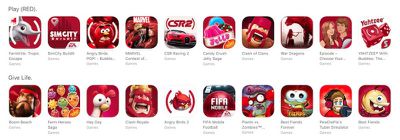
Korea App Store
Apple says it does not provide information about users who have requested a refund in order to protect consumer rights. But some users have reportedly abused the loophole in Apple's refund policy to purchase charged content multiple times, request refunds and continue to consume the content without actually paying for it. According to The Korea Times, some of the abusers even run profitable businesses to operate the refund process on others' behalf.

Mobile game companies in the country are said to be taking their own measures to counteract Apple, which has so far remained silent on the issue. Korean game development studio Flint said it had independently tracked down 300 users who they suspected of abusing the App Store refund policy, and pledged to "root out the abusers" by requesting judicial authorities for an investigation.

Next Floor, distributor of Korean game Destiny Child, also complained about the difficulties in dealing with abusers without Apple's help.

"We are regulating those who abuse the payment process and damage other users under our management policy," the company said. "Unlike other application stores, Apple does not provide refund information to the game companies and we are having difficulties in promptly counteracting the problem."

Mobile game studio Nexon and Longtu Korea said it had asked Apple for the lists of users who requested refunds several times, but the company did not respond. "I cannot understand Apple's policy in that it does not provide the list of people who abuse the system even when it is already causing problems in the market," said a source from the studio.

By contrast, Google's app store refund policy states that users can receive refunds on charged mobile content only once if they request it within two hours after payment.

Top Rated Comments

Anonymous Freak Avatar
119 months ago
It took me a while to figure out what the big deal was.

It's not that people buy a $1.99 game, then get a refund and keep playing.

It's that people buy $100 in in-game "currency" using an in-app purchase, then get a refund, and keep the $100 of in-game "currency". Then do this again. And again. And again.

Oh, you want to have the best fort in Clash of Clans? $100 in in-game gold, and you can do it quickly! Then get a refund on that in-game gold. Want to get good Pokemon faster? $100 in in-game gold and you can lure more Pokemon to you (for a long time.) Then get a refund on that in-game gold.
Score: 7 Votes (Like | Disagree)
Anonymous Freak Avatar
119 months ago
So... Commenters, we don't need to be specifying "Korean developers" or calling them out by their nationality. This is a problem to *ALL* nationality of developers, it just happens that this article was in a Korean newspaper, so the developers they interviewed are Korean. Saying things like "These Korean developers whining about..." or "I wish these Korean companies would..." is unnecessarily adding nationality (and by proxy race) in to a complaint. Would you have made the same comment if the developers had been from California? Or Texas? Would you have specified "These Californian developers..." or "I wish these Texan companies..."?

If not, then leave "Korean" off the description you post. Their "Koreanness" has nothing to do with the issue.
Score: 6 Votes (Like | Disagree)
SuprUsrStan Avatar
119 months ago
It took me a while to figure out what the big deal was.

It's not that people buy a $1.99 game, then get a refund and keep playing.

It's that people buy $100 in in-game "currency" using an in-app purchase, then get a refund, and keep the $100 of in-game "currency". Then do this again. And again. And again.

Oh, you want to have the best fort in Clash of Clans? $100 in in-game gold, and you can do it quickly! Then get a refund on that in-game gold. Want to get good Pokemon faster? $100 in in-game gold and you can lure more Pokemon to you (for a long time.) Then get a refund on that in-game gold.
Not quite true. In clash of clans, if you request a refund in $100 worth of gems, the game takes the gems spent from you and you end up with thousands of gems in debt. You can still earn gems the normal way but it goes to offset that negative gem count.

Don't know how clash of clans can do this but Koreans can't figure out what the refund was for...
Score: 5 Votes (Like | Disagree)
minimo3 Avatar
119 months ago
To be consistent Apple should have the same policy for their stores - so I can buy an iPhone/MacBook then call to request a refund without returning it. I'm sure there'll only be a "small" number of people abusing it ;)
Score: 4 Votes (Like | Disagree)
aneftp Avatar
119 months ago
I hate in app purchases. I disable them from my settings.

So pretty simple. Get rid of in app purchases. Than they wouldn't have an issue tracking down people who ask for refund. One time fee payment for full game.
Score: 4 Votes (Like | Disagree)
nicho Avatar
119 months ago
And what exactly are people "stealing" by "returning" 100 gold coins in an app - a couple bytes of database space?

I operate my own small business, a small hardware device with an online system connected - getting in on the "smart home" craze. Manufacturing is outsourced, so we don't have to deal with manufacturing shrink, we just pay a per-unit contracted cost. The online service, as with any of these games, is practically zero cost-per-unit. If someone cancels a service, or asks for a refund (which we always offer). Yes, hardware space and bandwidth cost money, but there is no "direct cost" per-user.

Hardware-wise, in the past month, we've had $2388 which I'd classify as shrink at retail price, $912 at cost price. That includes:

- 1 unit damaged in warehouse
- 3 units lost by couriers shipping to customer
- 4 "change of mind" hardware returns that couldn't be re-sold
- 1 unit that was bought via PayPal with a stolen credit card (we had to swallow the cost)
- 3 units that were returned as being faulty, which we determined was fraudulent - 1 had a smashed screen which couldn't have happened during qa/shipping (impact mark), one which was obviously dropped and cracked but otherwise seemed to work fine, and 1 which was returned because apparently only the accessories were in the box, not the unit itself (even though we could see the unit was online, and connected to our service - not for long though!)

At cost price, for us that was around 0.9% shrink vs revenue, and around 1.4% vs per-item profit margins (not taking into account operating costs here). That's something we have to budget for - we *know* it's going to happen, and we take that into account. 100% of our shrink costs come from hardware, not software. Out of that, only a third of shrink was down to "fraud".

Saying shrink can't happen with a digital product is silly. Of course it's going to happen. If you're dealing with people, at some point you're going to deal with fraud. Fact of life. The only difference is the physical cost behind it doesn't scale the same way as with physical products.

Here's two examples:

1. Company A sells a video streaming service for $10/month. Someone purchases a subscription uses a stolen credit card, and watches 50 films. The credit card company (rightfully) does a chargeback 14 days later, and the company cancels the service. A movie averages at 1.5GB, using 75GB bandwidth. They pay AWS $0.06/GB for bandwidth, which equates to $4.50. They also have to pay the rights holders $0.10 per viewing as part of their agreement. That's $5, meaning that the total cost of the fraud is $9.50 - that's $9.50 worth of shrink.

2. Company B offers a mobile video game for free on the App Store, and sells packs of "100 gold coins" for $5. When a user buys coins, they can use them to buy items in the store - the transaction is purely in the game, and the only result of buying the coins is a database entry to tell the game "hey, user X bought 100 coins". Somebody buys 100 packs of coins for $500, buying all sorts of virtual items for their character, again, all database entries. The user claims their child accidentally bought the coins, and Apple refunds the $500. Company B hasn't lost money, other than perhaps a couple of cent in bandwidth costs. Shrink is effectively 0.

That's why I don't understand them chasing so much - unless there is a physical per-unit cost behind it, it's really not worth it. So what if someone buys a game or coins and returns them, they've lost a sale, sure, but they haven't lost money.


you work for company A and i'm another customer. i don't give a flying f*** if Fred next door can or can't watch the latest Star Wars movie because of his fraudulent dealings with you. it literally has no material affect on the outside world.

you work for company B and i'm a customer on the same server as Fred. While you haven't lost money, what you've done is enabled Fred to gain an unfair advantage over me and many others who have not bought the coins and got the stuff for free. of course, we don't know that he hasn't paid for them - perhaps he's just a mr moneybags. but word gets out, the big spenders get upset that people competing with them are doing so by fraud and a ********* goes down on the game's message boards. shrink isn't measurable in terms of lost sales - yet - but is high in terms of lost reputation and goodwill. it could well have a material effect an order of magnitude higher than company A's issues going forward.

comparing a video streaming service which serves one end user at a time, to a MMO game where the actions of one gamer affect the others is silly.
Score: 3 Votes (Like | Disagree)

Popular Stories

iphone 17 models

No iPhone 18 Launch This Year, Reports Suggest

Thursday January 1, 2026 8:43 am PST by
Apple is not expected to release a standard iPhone 18 model this year, according to a growing number of reports that suggest the company is planning a significant change to its long-standing annual iPhone launch cycle. Despite the immense success of the iPhone 17 in 2025, the iPhone 18 is not expected to arrive until the spring of 2027, leaving the iPhone 17 in the lineup as the latest...
apple intelligence black

Report: Apple's AI Strategy Could Finally Pay Off in 2026

Tuesday December 30, 2025 9:01 am PST by
Apple's restrained artificial intelligence strategy may pay off in 2026 amid the arrival of a revamped Siri and concerns around the AI market "bubble" bursting, The Information argues. The speculative report notes that Apple has taken a restrained approach with AI innovations compared with peers such as OpenAI, Google, and Meta, which are investing hundreds of billions of dollars in data...
apple fitness 2026 1

Apple Teases 'Something Big' Coming Soon to Apple Fitness+

Tuesday December 30, 2025 2:11 pm PST by
The Apple Fitness+ Instagram account today teased that the service has "big plans" for 2026. In a video, several Apple Fitness+ trainers are shown holding up newspapers with headlines related to Apple Fitness+. What's Apple Fitness+ Planning for the New Year? Something Big is Coming to Apple Fitness+ The Countdown Begins. Apple Fitness+ 2026 is Almost Here 2026 Plans Still Under ...
iphone 17 pro dark blue 1

iPhone 17 Pro and Pro Max Users Report Static Speaker Noise While Charging

Tuesday December 30, 2025 10:39 am PST by
iPhone 17 Pro and Pro Max owners are having trouble with the speakers of their devices, and have complained about a static or hissing noise that occurs when the iPhone is charging. There are multiple discussions about the issue on Reddit, the MacRumors forums, and Apple's Support Community, where affected users say there is a noticeable static noise "like an old radio." Some people report...
maxresdefault

Hands-On With a Rough iPhone Fold Mockup

Monday December 29, 2025 10:55 am PST by
Apple is rumored to be introducing a foldable iPhone in September 2026, and since it will bring the biggest form factor change since the iPhone was introduced in 2007, curiosity about the design is high. A 3D designer created an iPhone Fold design based on rumors, and we printed it out to see how it compares to Apple's current iPhones. Subscribe to the MacRumors YouTube channel for more ...
maxresdefault

Where's the New Apple TV?

Monday December 22, 2025 11:30 am PST by
Apple hasn't updated the Apple TV 4K since 2022, and 2025 was supposed to be the year that we got a refresh. There were rumors suggesting Apple would release the new Apple TV before the end of 2025, but it looks like that's not going to happen now. Subscribe to the MacRumors YouTube channel for more videos. Bloomberg's Mark Gurman said several times across 2024 and 2025 that Apple would...
Mac Pro Feature Blue

What's Happening With the Mac Pro?

Wednesday December 31, 2025 9:59 am PST by
Apple hasn't updated the Mac Pro since 2023, and according to recent rumors, there's no update coming in the near future. In fact, Apple might be finished with the Mac Pro. Bloomberg recently said that the Mac Pro is "on the back burner" and has been "largely written off" by Apple. Apple apparently views the more compact Mac Studio as the ideal high-end pro-level desktop, and it has almost...
macbook air march 2020

Apple Says Final Intel MacBook Air and Apple Watch Series 5 Now 'Vintage'

Wednesday December 31, 2025 8:39 am PST by
Apple today added the final 13-inch MacBook Air powered by Intel processors, the Apple Watch Series 5, and additional products to its vintage products list. The iPhone 11 Pro was also added to the list after the iPhone 11 Pro Max was added back in September. The full list of products added to Apple's vintage and obsolete list today: MacBook Air (Retina, 13-inch, 2020) iPhone 8 Plus 128GB ...