Tim Cook: Component Cost Breakdowns on Apple Products Are Nowhere Close to Being Accurate
During today's Q2 2015 earnings call, Apple CEO Tim Cook noted that Apple Watch margins are lower than the company average, and on a followup question about those margins in the context of the Apple Watch Edition's high price, Cook commented on the inaccuracy of estimated cost breakdowns on Apple products.
"I haven't seen [them for Apple Watch], but generally there are cost breakdowns around our products that are much different than the reality. I've never seen one that is anywhere close to being accurate," Cook said. He went on to say that the Apple Watch's functionality is "absolutely incredible" with a lot of new features and innovative technology.
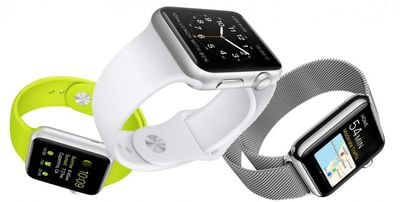
We haven't seen cost breakdowns on the components of the Apple Watch hinting at a possible base unit price that would reveal Apple's profit margin, but such component breakdowns are often shared by analysts following device teardowns. The iPhone 6 and 6 Plus, for example, were estimated to have a parts and labor cost of approximately $200, resulting in a 69 percent gross profit margin based on the device's $649 base selling price.
iPhone 5s component cost was estimated to begin at $199, and iPad Air component cost was estimated to begin at $274. All of these estimates, which come from IHS iSuppli, include only part costs, leaving out other expenses like research and development, software creation, marketing, and distribution, which may explain Cook's comments on inaccuracy.
According to Cook, it's "intuitive" that Apple Watch margins would be lower than the company average during the first quarter, as the first quarter of any new product is "a learning period." Cook declined to provide guidance beyond the current quarter, but Apple Watch profit margins could improve in the future as component costs drop as they do over time with any new technology.
Popular Stories
You'd think things would be slowing down heading into the holidays, but this week saw a whirlwind of Apple leaks and rumors while Apple started its next cycle of betas following last week's release of iOS 26.2 and related updates.
This week also saw the release of a new Apple Music integration with ChatGPT, so read on below for all the details on this week's biggest stories!
Top Stories
i...
Apple hasn't updated the Apple TV 4K since 2022, and 2025 was supposed to be the year that we got a refresh. There were rumors suggesting Apple would release the new Apple TV before the end of 2025, but it looks like that's not going to happen now.
Subscribe to the MacRumors YouTube channel for more videos.
Bloomberg's Mark Gurman said several times across 2024 and 2025 that Apple would...
Next year's iPhone 18 Pro and iPhone 18 Pro Max will be equipped with under-screen Face ID, and the front camera will be moved to the top-left corner of the screen, according to a new report from The Information's Wayne Ma and Qianer Liu.
As a result of these changes, the report said the iPhone 18 Pro models will not have a pill-shaped Dynamic Island cutout at the top of the screen....
Since the beginning of December, Apple has been pushing iPhone users who opted to stay on iOS 18 to install iOS 26 instead. Apple started by making the iOS 18 upgrades less visible, and has now transitioned to making new iOS 18 updates unavailable on any device capable of running iOS 26.
If you have an iPhone 11 or later, Apple is no longer offering new versions of iOS 18, even though there...
There has been a whirlwind of rumors over the last few days, sourced from leaked internal software designed for the iPhone and the Mac, and news sites like The Information. Below, we have a quick recap of everything we've heard this week, which serves as a guide to Apple's product plans in 2026 and beyond.
We've organized the info by likely release date, though there are some products that...
Apple is significantly increasing its reliance on Samsung for iPhone memory as component prices surge, according to The Korea Economic Daily.
Apple is said to be expanding the share of iPhone memory it sources from Samsung due to rapidly rising memory prices. The shift is expected to result in Samsung supplying roughly 60% to 70% of the low-power DRAM used in the iPhone 17, compared with a...