Following a lengthy lawsuit that pitted Sirius XM Radio against members of classic rock band The Turtles in a fight over royalties for music recordings made before 1972, new class action lawsuits have been filed against Apple, Sony, Google, and Rdio over their streaming music services (via The Recorder). As noted by Law360, Beats Music has also been hit with a suit.

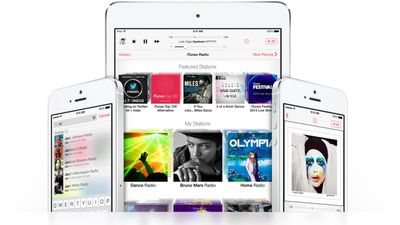
According to the suits, filed yesterday by Zenbu Magazines Inc., streaming services like iTunes Radio, Beats, and Google Play Music have been making money off of pre-1972 music recordings without paying any royalties to the owners of the original recordings.
itunes_radio_hero2
Zenbu owns the copyrights to many songs in question and is represented by The Law Office of Jack Fitzgerald in San Diego. The lawsuit seeks to create a certified "class of all owners of recordings made before February 15, 1972, whose recordings appear on streaming services."

While musical compositions have been protected under U.S. copyright law since 1831, sound recordings were only added to the federal copyright act in 1972. That's meant that the holders of copyrights to pre-1972 compositions—largely music publishers—have been paid royalties for public performances while those holding the copyrights to recordings—largely record labels—have not.

As noted by The Recorder, last year a judge in Los Angeles decided to extend ownership rights for pre-1972 recordings to include public performances. Similarly, in that case of Sirius XM versus owners of the sound recordings made by The Turtles in the 1960s, U.S. District Judge Philip Gutierrez ruled against Sirius.

The lawsuits come at a time when Apple is working behind the scenes for an upcoming relaunch of the Beats Music streaming service, rumored to include integration into iTunes and iOS in general. "The streaming services don't have a good idea of what their total liability is going to be," noted Santa Clara law professor Tyler Ochoa, with the lawsuits against the numerous streaming music services "inevitable", following the Sirius XM case.

Due to the growing popularity of streaming services worldwide, Ochoa sees some of the companies perhaps pulling those pre-1972 songs to avoid further liability, with record labels falling in line with their own lawsuits against the services for better royalty deals.
Top Rated Comments

gjveltink Avatar
144 months ago
I would be sad, if music before 1972 would be left out in the future!
But that would be hard to imagine: e.g. the entire Beatles catalogue!


My thoughts about music made before 1972, though, is that recording equipment was pretty horrible. I can't stand listening to anything recorded before the mid 80's, and even as late as '02 some artists were still using horrible equipment to record.

???
That's all a very personal opinion.

Personally, I have a very hard time listening to modern day, all electronic music, especially on headphones. Horrible, at least to my ears!

I'd prefer lo-fi sixties recordings of real instruments with tape hiss and all, any time.

Score: 15 Votes (Like | Disagree)
lars666 Avatar
144 months ago
My thoughts about music made before 1972, though, is that recording equipment was pretty horrible. I can't stand listening to anything recorded before the mid 80's, and even as late as '02 some artists were still using horrible equipment to record.
Are you serious? You should listen to some gold old Blue Note recordings, for starters, or Muddy Waters' simply INCREDIBLE sounding album "The Folk Singer" (with a nice equipment it sounds as if he's playing next to you in your living room), and discover how they put almost everything recorded to day to shame, especially in times of the loudness war.
Score: 13 Votes (Like | Disagree)
ptb42 Avatar
144 months ago

The USA has rules around date of publication that bestow copyright for 95 or 120 years and those lengths have been growing as fast as time has passed. Projecting forward corporate assets like movies will likely receive infinite copyright protection.

It keeps growing, because Disney has enough Congressmen in their pocket.

Copyright terms always seem to get extended, just before their copyright on Mickey Mouse is about to expire.

How Mickey Mouse Keeps Changing Copyright Law (http://artlawjournal.com/mickey-mouse-keeps-changing-copyright-law/)

Score: 3 Votes (Like | Disagree)
Yvan256 Avatar
144 months ago
Copyrights

The original length of copyright in the United States was 14 years (http://en.wikipedia.org/wiki/Copyright), and it had to be explicitly applied for. If the author wished, they could apply for a second 14‑year monopoly grant, but after that the work entered the public domain, so it could be used and built upon by others.

Now it's been extended so many times that copyrights now last almost as much as the average life span in modern countries and the fact that works should be public domain after the copyright period is over is something that most people don't even know about.
Score: 3 Votes (Like | Disagree)
wikiverse Avatar
144 months ago
In Canada copyright is now life of the author plus 50 years.
In the UK and USA it's life plus 70.

The USA has rules around date of publication that bestow copyright for 95 or 120 years and those lengths have been growing as fast as time has passed. Projecting forward corporate assets like movies will likely receive infinite copyright protection.

I think copyright should be based solely on public release. If you never make it public then it's the property of you and your heirs forever. The moment you exhibit or sell your work the clock starts ticking and you've got X years to make something from it. Whether you're alive or dead when that X years is up should be irrelevant.

I think X should be approximately 40 years, but I'm willing to listen to reasons why it should be longer/shorter.

Copyright should last for the lifespan of the author... At least.

When it is in the 'public domain' people will then start using it to make a profit, without returning anything back to the person that created it. It's only fair that as long as they're alive they should receive some recognition for their work.

The exception to this would by movies, which have dozens of investors and creators and cost tens of millions of dollars to make. Then a specific period (say, 50 years) should be in effect. Given that it takes most films 20+ years to make a profit (if they ever do), that gives them a reasonable period to make money and would likely cover the lifespan of most of the creators.
Score: 2 Votes (Like | Disagree)
sailmac Avatar
144 months ago
If they have to pay royalties moving forward I think the streaming service providers will be able to adjust and keep moving along.

If they have to pay royalties retroactively I think it will be messy and some of the providers will emerge from the mess better than others.

I have approximately 13,000 music tracks in my library. Roughly 8% are 1972 or earlier. A few of my all-time favorites are from that era.

If it came to be that older tracks were no longer streamed (lately I'm mostly using iTunes Radio) it wouldn't ruin the experience, but I do think I would notice the absence of certain familiar and popular tracks.

I anticipate money will change hands and this will eventually get sorted out.
Score: 2 Votes (Like | Disagree)

Popular Stories

maxresdefault

Apple Shows Off a Key Reason to Upgrade to the iPhone 17

Saturday February 7, 2026 9:26 am PST by
Apple today shared an ad that shows how the upgraded Center Stage front camera on the latest iPhones improves the process of taking a group selfie. "Watch how the new front facing camera on iPhone 17 Pro takes group selfies that automatically expand and rotate as more people come into frame," says Apple. While the ad is focused on the iPhone 17 Pro and iPhone 17 Pro Max, the regular iPhone...
apple wallet drivers license feature iPhone 15 pro

Apple Says These 7 U.S. States Plan to Offer iPhone Driver's Licenses

Monday February 9, 2026 6:24 am PST by
In select U.S. states, residents can add their driver's license or state ID to the Apple Wallet app on the iPhone and Apple Watch, and then use it to display proof of identity or age at select airports and businesses, and in select apps. The feature is currently available in 13 U.S. states and Puerto Rico, and it is expected to launch in at least seven more in the future. To set up the...
Apple Logo Zoomed

Apple Expected to Launch These 10+ Products Over the Coming Months

Tuesday February 10, 2026 6:33 am PST by
It has been a slow start to 2026 for Apple product launches, with only a new AirTag and a special Apple Watch band released so far. We are still waiting for MacBook Pro models with M5 Pro and M5 Max chips, the iPhone 17e, a lower-cost MacBook with an iPhone chip, long-rumored updates to the Apple TV and HomePod mini, and much more. Apple is expected to release/update the following products...
14 inch MacBook Pro Keyboard

New MacBook Pros Could Now Arrive in March

Sunday February 8, 2026 6:02 am PST by
New MacBook Pro models with the M5 Pro and M5 Max chips could arrive as soon as Monday, March 2, according to Bloomberg's Mark Gurman. In today's "Power On" newsletter, Gurman said that the release of new MacBook Pro models is tied to the release of macOS Tahoe 26.3. The launch is said to be slated for as early as the week of March 2. He added that the M4 Pro and M4 Max models on sale today...
m5 macbook pro deal

Why You Shouldn't Buy the Next MacBook Pro

Tuesday February 10, 2026 4:27 pm PST by
Apple is planning to launch new MacBook Pro models as soon as early March, but if you can, this is one generation you should skip because there's something much better in the works. We're waiting on 14-inch and 16-inch MacBook Pro models with M5 Pro and M5 Max chips, with few changes other than the processor upgrade. There won't be any tweaks to the design or the display, but later this...