New Video Gives Inside Look at Corning's Gorilla Glass Research Facility
Corning, producer of Gorilla Glass, has been a long time partner of Apple. Its ultra tough Gorilla Glass has been used in several generations of iPhones and iPads, including the recent iPad Air 2 and the iPhone 6 and iPhone 6 Plus.
While Corning has published several videos that show how its Gorilla Glass is produced and tested, uBreakiFix recently visited the company's Gorilla Glass facility in Corning, New York, and has created a set of videos explaining how Gorilla Glass works and showing off some of the equipment that Corning uses to test Gorilla Glass.
The first video explains the details behind Corning's ion exchange glass strengthening procedure and its focus on "damage resistance," which sets Gorilla Glass apart from its competitors. It also shows tests between Gorilla Glass and regular glass, where Gorilla Glass significantly outperforms standard glass.
In the second video, uBreakiFixCo goes behind the scenes at Corning's Gorilla Glass research and testing facility to show off Corning's testing procedures and the toughness of Gorilla Glass. Gorilla Glass is able to withstand far more pressure and scratching than standard glass, which is one of the reasons why it's so popular with manufacturers, including Apple.
In November, Corning introduced the latest iteration of Gorilla Glass,
Gorilla Glass 4. This next-generation Gorilla Glass is even more resistant than previous versions to glass shattering drops and it is able to survive 80 percent of face-down falls onto rough surfaces.
Corning's Gorilla Glass 4 is already shipping to manufacturers and should Apple choose to go with Gorilla Glass for its next-generation iPhones rather than sapphire as once again rumored, Gorilla Glass 4 could very well make an appearance in iPhones in 2015.
Popular Stories
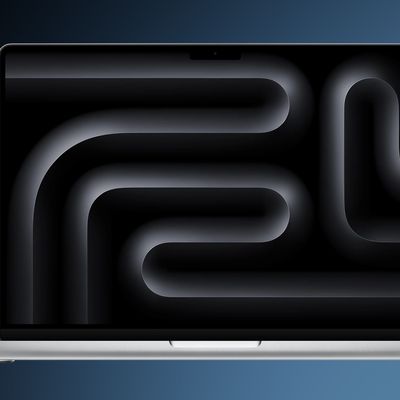
Apple is planning to launch new MacBook Pro models as soon as early March, but if you can, this is one generation you should skip because there's something much better in the works.
We're waiting on 14-inch and 16-inch MacBook Pro models with M5 Pro and M5 Max chips, with few changes other than the processor upgrade. There won't be any tweaks to the design or the display, but later this...
Wednesday February 11, 2026 10:07 am PST by
Juli CloverApple today released iOS 26.3 and iPadOS 26.3, the latest updates to the iOS 26 and iPadOS 26 operating systems that came out in September. The new software comes almost two months after Apple released iOS 26.2 and iPadOS 26.2.
The new software can be downloaded on eligible iPhones and iPads over-the-air by going to Settings > General > Software Update.
According to Apple's release notes, ...
It has been a slow start to 2026 for Apple product launches, with only a new AirTag and a special Apple Watch band released so far. We are still waiting for MacBook Pro models with M5 Pro and M5 Max chips, the iPhone 17e, a lower-cost MacBook with an iPhone chip, long-rumored updates to the Apple TV and HomePod mini, and much more.
Apple is expected to release/update the following products...
Apple plans to announce the iPhone 17e on Thursday, February 19, according to Macwelt, the German equivalent of Macworld.
The report said the iPhone 17e will be announced in a press release on the Apple Newsroom website, so do not expect an event for this device specifically.
The iPhone 17e will be a spec-bumped successor to the iPhone 16e. Rumors claim the device will have four key...
Apple acquired Canadian graph database company Kuzu last year, it has emerged.
The acquisition, spotted by AppleInsider, was completed in October 2025 for an undisclosed sum. The company's website was subsequently taken down and its Github repository was archived, as is commonplace for Apple acquisitions.
Kuzu was "an embedded graph database built for query speed, scalability, and easy of ...