Hackers Involved in Locking and Ransoming Apple Devices in Australia Arrested
Two weeks ago, hackers hijacked several iOS and Mac devices in Australia, remotely locking them via iCloud and demanding a ransom from the owner to get the device unlocked.
"Device locked by Oleg Pliss," read the hijacker's message, along with a demand for $50 to $100. Quite a few users were affected and while early speculation suggested iCloud may have been hacked, Apple confirmed that iCloud was not compromised, and that hackers had instead gained access to Apple IDs and passwords, likely through other site breaches where they used similar credentials.

The two hackers behind the attacks have now been detained by Russian authorities, reports The Sydney Morning Herald.
The hackers - aged 17 and 23 - were detained in the course of "operational activities" by the Russian Interior Ministry, Russia's Ministry of Internal Affairs said. They are both residents of the Southern Administrative District of Moscow and one has already been tried before, it said.
According to Russian site MKRU [Google Translate), the two hackers were caught after appearing on camera withdrawing a victim's ransom money from an ATM. The site also confirms the hackers gained access to Apple IDs and passwords via phishing pages and social engineering techniques, then used that information to lock devices. Russian users were also affected, which led to the investigation.
One method of obtaining login information involved a pre-owned account filled with movies and music that was sold to an unsuspecting victim. Once the person linked their own details with the account, it was vulnerable to being hijacked.
During the attacks, users who had passcodes enabled on their devices were able to bypass the hack, but those who had not previously set a passcode were out of luck, requiring a full reinstall of iOS. Apple recommends using a passcode with iOS devices, as well as two-step authentication, which can help thwart attacks like this one.
Popular Stories
Apple today introduced its first two physical products of 2026: a second-generation AirTag and the Black Unity Connection Braided Solo Loop for the Apple Watch.
Read our coverage of each announcement to learn more:Apple Unveils New AirTag With Longer Range, Louder Speaker, and More
Apple Introduces New Black Unity Apple Watch BandBoth the new AirTag and the Black Unity Connection Braided...
Apple today introduced the second-generation AirTag, with key features including longer range for tracking items and a louder speaker.
For those who are not familiar, the AirTag is a small accessory that you can attach to your backpack, keys, or other items. Then, you can track the location of those items in the Find My app on the iPhone, iPad, Mac, Apple Watch, and iCloud.com.
The new...
Alongside iOS 26.2.1, Apple today released an updated version of iOS 12 for devices that are still running that operating system update, eight years after the software was first released.
iOS 12.5.8 is available for the iPhone 5s and the iPhone 6, meaning Apple is continuing to support these devices for 13 and 12 years after launch, respectively. The iPhone 5s came out in September 2013,...
2026 promises to be yet another busy year for Apple, with the company rumored to be planning more than 20 product announcements over the coming months.
Beyond the usual updates to iPhones, iPads, Macs, and Apple Watches, Apple is expected to release its all-new smart home hub, which was reportedly delayed until the more personalized version of Siri is ready. Other unique products rumored for ...
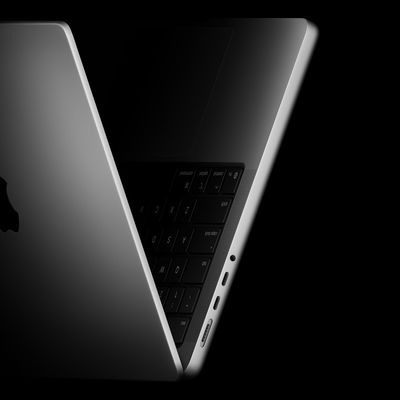
Apple plans to release new MacBook Pro, MacBook Air, Mac Studio, and Studio Display models in the first half of this year, according to Bloomberg's Mark Gurman.
In his Power On newsletter today, Gurman added that redesigned MacBook Pro models with an OLED touch screen "should be hitting toward the end of 2026," meaning that the MacBook Pro line would be upgraded twice this year.
First up...