Apple Said to Be Stopping Use of TLC NAND Flash in iPhone 6 and 6 Plus After Reported Issues
Apple will switch from using TLC (triple-level cell) NAND flash to MLC (multi-level cell) NAND flash in the iPhone 6 and iPhone 6 Plus after users have experienced crashing and boot loop issues with the higher capacity versions of both devices, reports BusinessKorea.
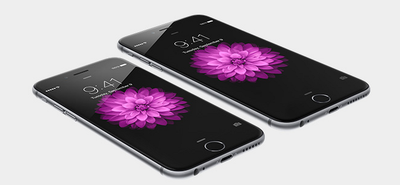
Sources have told the paper that flash memory firm Anobit, which Apple acquired in 2011, is to blame for the manufacturing defects. Apple will reportedly switch to MLC NAND flash for the 64GB iPhone 6 and the 128GB iPhone 6 Plus, and will also address crashing and boot loop issues with the release of iOS 8.1.1. Apple has used MLC NAND flash before, in previous-generation iPhones.
TLC NAND flash is a type of solid-state NAND flash memory that stores three bits of data per cell. It can store three times as much data as single-level cell (SLC) that stores one bit of data, and 1.5 times as much as multi-level cell (MLC) solid-state flash memory that stores two bits of data. On top of that, TLC flash is more affordable. However, it is also slower than SLC or MLC in reading and writing data.
Apple released its first iOS 8.1.1 beta to developers earlier this week, although the company did not specify whether the included bug fixes addressed boot loop and crashing issues on the iPhone 6 and iPhone 6 Plus. Users who are experiencing an unusual amount of boot loops and crashes with their iPhone 6 or iPhone 6 Plus are recommended to bring their devices back to an Apple Retail Store for a replacement.
Popular Stories
Bloomberg's Mark Gurman has high expectations for Apple's first foldable iPhone.
In his Power On newsletter today, he said the foldable iPhone will be "the most significant overhaul in the iPhone's history."
"iPhone 4, iPhone 6 and iPhone X were clearly a big deal, but this is a whole new design," he said.
Like Samsung's Galaxy Z Fold 7, the foldable iPhone will reportedly open up like ...
March has been an incredibly busy month for Apple, with the company unveiling more than 10 new products and accessories. We said hello to the MacBook Neo at the start of the month, and we bid farewell to the Mac Pro at the end of it.
Nevertheless, there is still a lot more to come this year.
Beyond the usual annual updates to iPhones and Apple Watches, Apple's all-new smart home hub is...
Apple is expected to release two new iPhone apps this year, including an Apple Business app and a Siri app with chatbot-like functionality.
With the Apple Business app, employees at businesses using the new Apple Business platform will be able to install apps for work, view contact information for colleagues, and request support. Apple Business is launching on April 14, and it replaces Apple ...
Popular Stories
Bloomberg's Mark Gurman has high expectations for Apple's first foldable iPhone.
In his Power On newsletter today, he said the foldable iPhone will be "the most significant overhaul in the iPhone's history."
"iPhone 4, iPhone 6 and iPhone X were clearly a big deal, but this is a whole new design," he said.
Like Samsung's Galaxy Z Fold 7, the foldable iPhone will reportedly open up like ...
March has been an incredibly busy month for Apple, with the company unveiling more than 10 new products and accessories. We said hello to the MacBook Neo at the start of the month, and we bid farewell to the Mac Pro at the end of it.
Nevertheless, there is still a lot more to come this year.
Beyond the usual annual updates to iPhones and Apple Watches, Apple's all-new smart home hub is...
Apple is expected to release two new iPhone apps this year, including an Apple Business app and a Siri app with chatbot-like functionality.
With the Apple Business app, employees at businesses using the new Apple Business platform will be able to install apps for work, view contact information for colleagues, and request support. Apple Business is launching on April 14, and it replaces Apple ...