Studio Display and Studio Display XDR
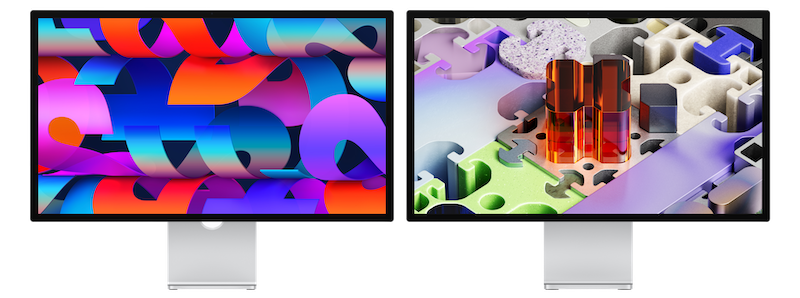
Apple's 27-inch 5K LCD display and 27-inch 5K mini-LED display.
Ask MacRumors
Should You Buy the Studio Display?
The Studio Display 2 and Studio Display XDR were introduced in March 2026, which means now is a good time to buy. Apple does not refresh its display lineup often, and the Studio Display went four years before getting a refresh in 2026.
There used to be a single Studio Display model, but now there are two, with the XDR version serving as a replacement for the now-discontinued Pro Display XDR. The standard 27-inch Studio Display features a high-resolution 5K Retina LCD display with a built-in camera, speaker system, and microphone array.
The 27-inch Studio Display XDR features a 5K mini-LED display with all of the same features, but it also includes HDR and an upgraded 120Hz refresh rate. The Studio Display starts at $1,599, while the Studio Display XDR starts at $3,299. There are also upgrades like a matte nano-texture display.
Apple doesn't make any other displays, so if $1,599 is out of your budget, you will need to consider an external display from another brand.
Studio Display and Studio Display XDR
Contents
Apple updated the Studio Display in March 2026, combining the Studio and XDR lineups into one. There are two Studio Display models, one that's a followup to the original Studio Display and one that serves as an update to the Pro Display XDR.
Both of the Studio Display options measure in at 27 inches and have the same design as the prior-generation Studio Display, but there is a marked difference in display quality.
Priced starting at $1,599, the Studio Display features a 27-inch 5K Retina display with a resolution of 5120 x 2880 at 218 pixels per inch. It supports up to 600 nits brightness so it's not as bright as the XDR model, and it offers P3 Wide color for vivid, true-to-life colors and True Tone to match the white balance of the display to the lighting in the room. It is limited to a 60Hz refresh rate.
Priced starting at $3,299, the Studio Display XDR has a 27-inch 5K Retina XDR display that uses a mini-LED backlight with 2304 dimming zones. It also features a resolution of 5120 x 2880 at 218 pixels per inch. It supports up to 1000 nits brightness for standard viewing, and 2000 nits peak brightness for HDR. It supports P3 Wide color and True Tone, plus it has a 120Hz refresh rate and Adaptive Sync. HDR, a higher refresh rate, and mini-LED set it apart from the standard Studio Display.
Both Studio Display models were designed with glass that has low reflectivity, but there is a $300 upgrade for nano-texture glass that minimizes glare in workspaces with bright lighting.
The Studio Display and Studio Display XDR feature slim black bezels all the way around, along with an iMac-style aluminum stand with 30 degrees of adjustable tilt (−5° to +25°). The base stand is included in the price of the display, but with the Studio Display, an extra $400 gets you an upgraded tilt-and height adjustable stand that offers the same tilt but also 105mm of height adjustability. The Studio Display XDR includes the tilt-and height adjustable stand at no additional cost. Both displays have a VESA mount adapter option that lets the display be used in portrait or landscape orientation.
The Studio Display measures in at 18.8 inches tall, 24.5 inches wide, and 6.6 inches deep. It weighs 13.9 pounds. The tilt and height adjustable stand adds three extra pounds and a bit more depth and height, while the VESA mount version is less tall and lighter because of the lack of an included stand.
The Studio Display XDR features the same height and width, but it is 8.4 inches deep and it is heavier at 18.7 pounds.
At the back of each display, there are four total ports. There is one upstream Thunderbolt 5 port with 96W host charging on the Studio Display and 140W on the Studio Display XDR, one downstream Thunderbolt 5 port for connecting high-speed accessories or additional displays, and two USB-C ports for connecting peripherals, storage, and networking devices.
The Studio Display models have a built-in A-series chip to power the camera and audio systems. The displays are equipped with a 12-megapixel ƒ/2.4 Ultra Wide camera that has a 122-degree field of view. The Ultra Wide camera facilitates Center Stage, a feature that is designed to keep you centered in the frame as you move around during video calls, and it supports Desk View.
Spatial Audio for cinematic sound is included, and the displays have a built-in Hey Siri feature. The A-series chip powers a high-fidelity six-speaker sound system, which is equipped with four force-cancelling woofers and two high-performance tweeters. To go along with the speakers, there is a three-microphone array for high-quality audio.
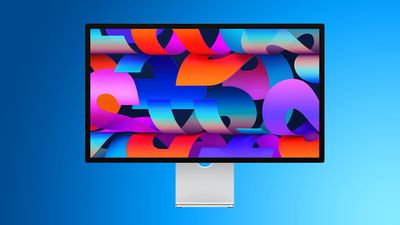
The Studio Display and Studio Display XDR are compatible with Mac models that have an Apple silicon chip, as well as newer iPad Pro and iPad Air models. Full 120Hz support on the Studio Display XDR requires an M2 Pro, M2 Max, M2 Ultra, M3 Pro, M3 Max, M3 Ultra, M4 Pro, M4 Max, M5, M5 Pro, or M5 Max chip.
Note: See an error in this roundup or want to offer feedback? Send us an email here.
How to Buy
The Studio Display and Studio Display XDR are available from the online Apple Store, Apple retail stores, and other retailers.
Apple is selling the Studio Display for $1,599, with nano-texture glass and upgraded stand available as add-ons. The Studio Display XDR is priced at $3,299, with nano-texture glass available for an additional fee. The Studio Display XDR with VESA mount is priced starting at $2,899.
Apple began selling refurbished versions of the Studio Display in June 2026. Refurbished versions of the Studio Display XDR became available in July 2026.
Reviews
Reviewers weren't terribly impressed with the Studio Display because it is almost identical to the prior-generation model, but the Studio Display XDR received praise for its mini-LED display and because it's more affordable than the Pro Display XDR it replaces.
The Verge says the Studio Display XDR display is a "great improvement" over the prior Pro Display XDR model due to the mini-LED backlight, though at this cost, it's only ideal for pros because there are more affordable options for general use. Images and text are "crisp and clear," with minimal light bleed thanks to dimming control, though light bleed is worse than with OLED technology, and viewing angles aren't as wide.
Presets are accurate, and the Studio Display XDR was able to maintain up to 2,000 nits peak brightness. It's "very bright at a normal desk sitting distance." The built-in speakers are loud enough for listening to music, watching videos, and taking calls, and the 12-megapixel camera provides clear video.
YouTuber Marques Brownlee said the Studio Display XDR is "better in every single way" than the Pro Display XDR because it's brighter with improved contrast and less blooming, plus it has an extra Thunderbolt port.
Since the Studio Display XDR has a 120Hz refresh rate, it pairs better with the MacBook Pro that has the same refresh rate. "This is about as good as it gets" for a display to use with a MacBook Pro. Brownlee said that Apple doesn't appear to be solely targeting professionals with the Studio Display XDR since it's a small market, with the display serving as more of a mixed use product.
There are no displays to compare the Studio Display XDR with because no other companies currently make 27-inch 5K mini-LED displays with a 120Hz refresh rate.
PetaPixel said the Studio Display XDR's build quality is "phenomenal," but the site wasn't a fan of the integrated power cable, the sharp edges on the stand, or the thick bezels around the display.
The Studio Display XDR was color accurate across presets at all brightness levels, but the display was only able to get gamut coverage up to 86 percent with Adobe RGB profiles. PetaPixel also saw some "slightly higher than acceptable contrast deviation" at the upper right corner of the XDR, but most human eyes won't be able to see a difference.
HDR content looked spectacular with no "stutter or judder" and limited haloing, but contrast and black levels did not measure up to OLED because mini-LED is still LED. PetaPixel pointed out that few companies are making displays that are super bright, HDR compatible, extremely color accurate, and with Thunderbolt 5 support.
More reviews of the Studio Display XDR can be found in our review roundup.
Design
The Studio Display and Studio Display XDR are both 27-inch displays, like the prior-generation Studio Display model. They are essentially identical to the prior-generation Studio Display, featuring slim black bezels at the top, bottom, and sides of the display.
A camera is located in the top bezel, and the casing and stand are made of silver aluminum, matching Apple's silver aluminum Macs like the Mac Studio. A hole in the stand is available for cable routing, and there are several ports at the back for connecting peripherals and your Mac.
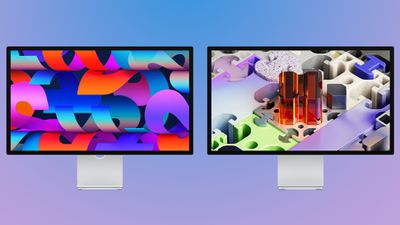
Both models are 18.8 inches tall and 24.5 inches wide, with total height and footprint varying based on the stand. The standard tilt-adjustable stand for the Studio Display is 6.6 inches deep, while the tilt- and height-adjustable version is 8.1 inches deep.
The Studio Display XDR comes with a tilt- and height-adjustable stand by default, and it measures in at 8.4 inches deep. With the tilt- and height-adjustable stand, both models can be extended to 23 inches in height. The regular Studio Display weighs 13.9 pounds, while the Studio Display XDR weighs 18.7 pounds.
Stand Options
There are three total stand options that can be purchased for the Studio Display, and two stands for the Studio Display XDR. The standard display mount is tilt-adjustable and provides 30 degrees of tilt, ranging from −5° to +25°.
For an extra $400, Apple offers an upgraded tilt- and height-adjustable stand for the Studio Display, but it is the default stand for the Studio Display XDR. It has the same tilt range, but adds a total of 105mm height adjustment.
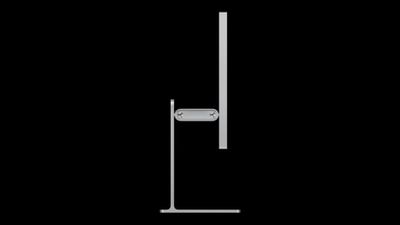
Those who prefer to use their own mounting solution can get the VESA mount adapter at no additional cost, and the VESA mount adapter is compatible with 100 x 100mm VESA stands or mounts. With the VESA option, the Studio Display and Studio Display XDR can be used in either landscape or portrait mode.
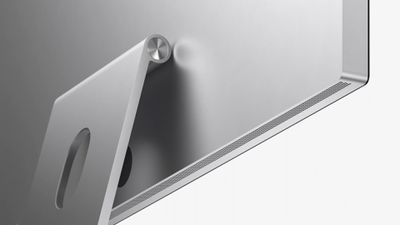
Apple dropped the price for the Studio Display XDR with VESA mount a few weeks after the device launched. It used to be the same price as the version with a stand, but now it is $400 less at $2,899.
Apple retail stores and Apple Authorized Service Providers can change out the stand of a Studio Display after purchase, swapping in the VESA mount or the tilt and height-adjustable stand for a fee, but it is not something that can be done at home.
Display Quality
Both the Studio Display and the Studio Display XDR are 27-inch 5K displays with a resolution of 5120 by 2880 at 218 pixels per inch, but the underlying technology differs between the two.
The Studio Display uses LED backlighting technology, while the Studio Display XDR has a mini-LED backlight with 2304 dimming zones and HDR support. The Studio Display XDR has a 1,000,000:1 contrast ratio, and it's brighter with more vivid colors and deeper blacks. Mini-LED backlighting also cuts down on issues like halo and blooming.
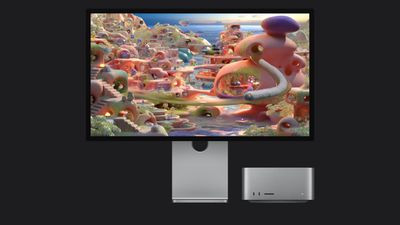
While the Studio Display is limited to 600 nits brightness and a 60Hz refresh rate, the Studio Display XDR offers up to 1000 nits SDR brightness, 2000 nits peak HDR brightness, and a 120Hz refresh rate with Adaptive Sync.
The 120Hz refresh rate is provides smoother motion for video editing, streaming video, browsing the web, and more. Adaptive Sync allows the Studio Display XDR to adjust to varying frame rates between 47Hz and 120Hz. Like the Pro Display XDR that came before it, the Studio Display XDR is a pro-level reference display designed for those in film, video, design, and gaming, and it comes with calibration and a wider range of reference modes than the Studio Display.
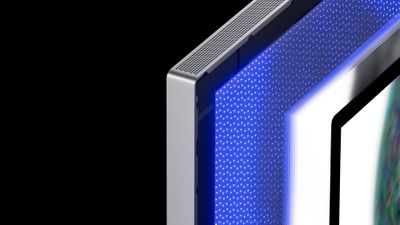
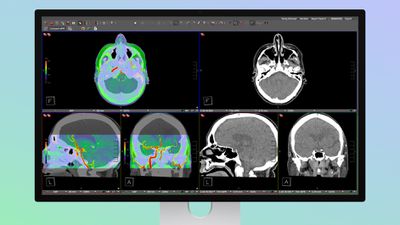
Apple added a DICOM medical imaging mode so that the Studio Display XDR can be used for diagnostic radiology, and it has received FDA approval for medical imaging use.
Both displays support 1 billion colors and offer P3 and Adobe RGB color gamuts. True Tone technology allows the white balance of the display to adjust to the ambient lighting in the room for a more natural look that's easier on the eyes.
Apple engineered the Studio Display and Studio Display XDR with low reflectivity, but for situations where there is a lot of glare, there's also a nano-texture matte glass option.
Nano-Texture Glass
Nano-texture glass is glass that is etched at the nanometer level to cut down on reflectivity and glare, unlike a standard matte display that uses a coating to scatter light. Apple's nano-texturing process offers a matte look able to maintain contrast while scattering light to reduce glare as much as possible. Nano-texture glass is an upgrade, and it costs an additional $300 on the Studio Display and Studio Display XDR.
Nano-texture glass requires Apple's special polishing cloth when it's cleaned, and these models ship with a polishing cloth in the box.
A-Series Chip
The Studio Display and Studio Display XDR are equipped with A-series chips that power the Center Stage camera, speakers and Spatial Audio, and other features. The Studio Display has an A19 chip, while the Studio Display XDR has an A19 Pro chip.
There are also Apple-designed timing controllers in the displays. The timing controller in the Studio Display XDR powers the 2304 local dimming zones, the 120Hz refresh rate, and Adaptive Sync.
Camera
The Studio Display is equipped with a 12-megapixel ƒ/2.4 Ultra Wide camera similar to the cameras that are used in Apple's iPad models. The camera has a 122-degree field of view, and it also offers Center Stage support.
Center Stage is designed to keep users perfectly framed on screen during video calls. With the wider field of view, the camera can zoom in as appropriate and follow people around the room as they move, with the A-series chip powering the feature that pans around to ensure the user stays in the shot.
When other people join in on a call, the camera is able to detect them, and it will zoom out to fit everyone into the view. Center Stage is designed for FaceTime, but it also works with third-party video apps like Zoom and Skype.
There's also a "Desk View" feature that shows other people on the video call a video of your face and an overhead view of your desk, which is ideal for tutorials and instructional calls.
Speakers
Along with a 12-megapixel camera, the Studio Display and Studio Display XDR have a high-fidelity six-speaker system with four force-cancelling woofers and two high-performance tweeters for excellent sound quality.
The speakers offer wide stereo sound and there's also a three-microphone array for video and phone calls, with the speakers offering a high signal-to-noise ratio and directional beamforming to cut down on the noise that's nearby.
Thanks to the A-series chip in each display, there's support for Spatial Audio when playing music or video with Dolby Atmos for an immersive, surround sound audio experience.
Ports and Connectivity
There are a total of four ports on the back of the Studio Display and Studio Display XDR, including two Thunderbolt 5 ports and two USB-C ports.
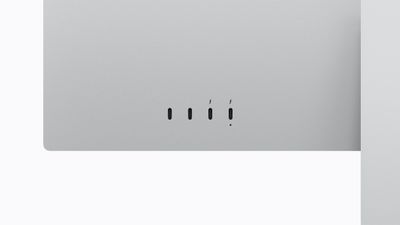
The Studio Display XDR has one upstream Thunderbolt 5 port for a host machine with up to 140W charging, while the Studio Display's upstream Thunderbolt 5 port supports 96W charging.
Both displays have an additional Thunderbolt 5 port for connecting high-speed accessories or daisy-chaining additional displays, and there are two 10Gb/s USB-C ports for peripherals, storage, and networking.
Apple includes a 1-meter Thunderbolt 5 cable with the Studio Display and Studio Display XDR, and longer cables can be purchased separately.