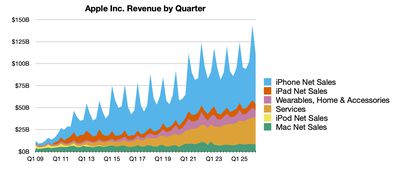
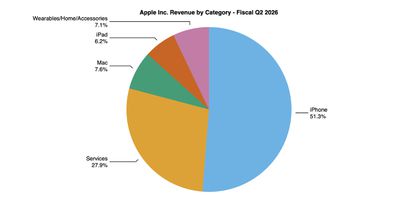
Apple today announced financial results for the second fiscal quarter of 2026, which corresponds to the first calendar quarter of the year.
For the quarter, Apple posted revenue of $111.2 billion and net quarterly profit of $29.6 billion, or $2.01 per diluted share, compared to revenue of $95.4 billion and net quarterly profit of $24.8 billion, or $1.65 per diluted share, in the year-ago quarter. Services revenue again reached an all-time high during the quarter, while company revenue, earnings per share, and iPhone revenue all set March quarter records.
Gross margin for the quarter was 49.3 percent, compared to 47.1 percent in the year-ago quarter. Apple's board of directors also authorized an additional $100 billion for share repurchases and declared an increased dividend payment of $0.27 per share, up from $0.26 per share. The dividend is payable May 14 to shareholders of record as of May 11.
"Today Apple is proud to report our best March quarter ever, with revenue of $111.2 billion and double-digit growth across every geographic segment," said Tim Cook, Apple's CEO. "iPhone achieved a March quarter revenue record, fueled by such extraordinary demand for the iPhone 17 lineup. During the quarter, Services achieved yet another all-time record, and we were excited to introduce remarkable new products to our strongest lineup ever. That included the addition of the iPhone 17e and the M4-powered iPad Air, along with the launch of MacBook Neo, which is captivating customers all around the world."
Apple will provide live streaming of its fiscal Q2 2026 financial results conference call at 2:00 pm Pacific, and MacRumors will update this story with coverage of the conference call highlights.
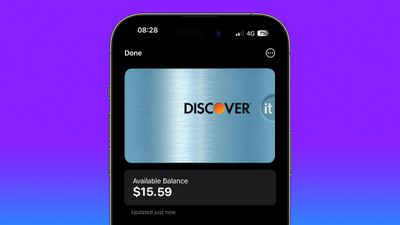
Discover is planning to eliminate some of the Apple Wallet integrations that it introduced in 2023, according to letters that cardholders are receiving. As of June 4, 2026, Discover users will no longer be able to see their total card balance and transaction history in the iPhone's Wallet app, or use the Pay with Rewards feature in Apple Pay.
Apple has a Connected Cards feature that allows credit cards from participating companies to display balances and recent transactions when they're added to the Wallet app. Discover has supported the feature for nearly three years, as have many UK banks, but other credit card companies in the U.S. did not add support.
Pay with Rewards, which is also being eliminated, allows Discover cardholders use their cashback bonuses toward Apple Pay purchases.
Discover says that while several Apple Pay features are being eliminated, Discover users will still be able to use the Discover card to make Apple Pay purchases in retail locations and online. Here's a full list of the changes Discover is making:
Enrollment Cancellation - If applicable, your enrollment in Connected Account and Pay with Rewards with Apple Pay from Discover will be canceled on June 4, 2026.
Access to Information - You will continue to have full access to your account, rewards, balances, transactions and payments on Discover.com, the Discover mobile app, and on your monthly statements. Starting June 4, 2026, you will no longer have access to such details within your Apple Wallet. You will continue to see your Apple Pay transactions in your wallet.
Pay with Rewards - Starting June 4, 2026, you will no longer be able to use rewards to cover an Apple Pay purchase directly at digital checkout. Your options for redeeming your Discover rewards otherwise remain the same.
Terms - Connected Accounts and Pay with Rewards with Apple Pay cancellation does not affect any other terms of your Discover accounts and agreements. Eligibility, service, and cancellation are subject to the Apple Pay terms.
It is not clear if these features are being eliminated because Apple is ending the integrations, or because Discover is opting out. The changes will go into effect on June 4, 2026.
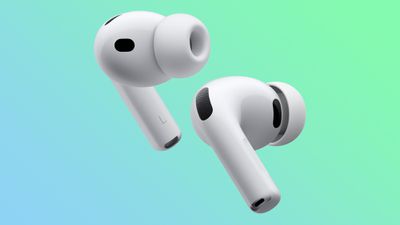
Apple today released new firmware for the AirPods Pro 3. The firmware has a version number of 8B40, up from 8B39.
There is no word on what's included in the new firmware, but Apple has a support document with limited notes. Most updates are limited to bug fixes and performance improvements.
To get the updated firmware, make sure your AirPods Pro are in range of your iPhone, iPad, or Mac and are connected via Bluetooth.
From there, connect your Apple device to Wi-Fi, put your AirPods in the Charging Case, and connect the Charging Case to power. Keep the case closed and wait at least 30 minutes for the firmware update to install. After that, check the version number and repeat the process if the update hasn't been installed.
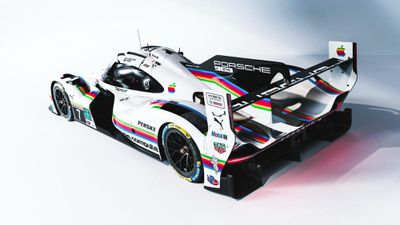
Porsche today announced a new collaboration with Apple that will see two Porsche 963 vehicles outfitted with an Apple Computer-inspired wrap in round four of the IMSA WeatherTech SportsCar Championship at Laguna Seca. The event is set to take place on Sunday, May 3.
Porsche says that the one-time design is meant to celebrate the 75th anniversary of Porsche Motorsport and the 50th anniversary of Apple's founding. The wrap pays homage to the Porsche 935 K3, which competed in the 1980 season and raced at Le Mans.
In a statement, Apple Music, Sports, and Beats Vice President Oliver Schusser said that Apple is proud to once again partner with Porsche.
We've enjoyed a longstanding relationship with Porsche, going back to 1980 when a Porsche race car first carried the Apple logo. That moment marked the beginning of a shared passion for innovation and creativity that continues to define our collaboration today. As Apple celebrates its 50th anniversary, we're proud to once again partner with Porsche on a design that pays tribute to that original 1980 livery.
Porsche Motorsport Vice President Thomas Laudenbach said Porsche and Apple are both "icons that stand for innovation and continuous development by experts in Zuffenhausen, Weissach and Cupertino."
The Laguna Seca Raceway is located 80 miles south of the Apple Park campus, and the fourth round is set to last for two hours and 40 minutes. The No. 6 Porsche 963 will be shared by France's Kévin Estre and Belgium's Laurens Vanthoor, while the No. 7 car will be shared by France's Julien Andlauer and Brazil's Felipe Nasr. The No. 7 vehicle currently leads the IMSA championship standings after winning the opening two rounds at Daytona and Sebring.
Mother's Day is coming up on Sunday, May 10, and for those who want to order flowers, Apple has a $20 discount available.
Apple Pay users in the U.S. can get $20 off a purchase from 1-800-Flowers when spending $49.99 or more on a Mother's Day flower bouquet and other select merchandise. The discount is available through May 9 with the promo code APPLEPAY.
To get the deal, iPhone users will need to make a purchase on the 1-800-Flowers website and pay with Apple Pay.
Apple also has a Mother's Day gift guide on its website with suggestions for those who want to get their mom a Mac, iPhone, iPad, or AirPods.
Earlier this week, 9to5Mac's Benjamin Mayo reported on an apparent charging issue affecting at least some of Apple's latest iPhone models.
In short, Mayo said that when he attempted to charge his iPhone Air with a USB-C cable just seconds after the device ran out of battery, it failed to turn on and did not display the usual red battery icon that indicates charging is occurring.
Mayo subsequently realized that several users have posted about this issue across websites such as Reddit and iFixit Answers, but it is unclear what the root cause is or how widespread it is. Apple has yet to publicly comment on the matter, and the issue does not appear to be fixed in the latest iOS 26.4.1 and iOS 26.4.2 software releases.
As far as I can tell, I also experienced this issue with my iPhone 17 Pro Max earlier this month. While staying at a hotel, I accidentally forgot to charge the device one night, leading it to shut off on me when I woke up the next morning. Naturally, I plugged in a USB-C cable, but the screen remained black with no battery icon for many minutes. At the time, I thought that maybe the hotel's outlets were not working correctly, but I knew something was up after I tried a variety of different outlets and chargers without success.
Just like Mayo, I was eventually able to get my iPhone to turn on by placing it on a MagSafe charger and waiting about 10 to 15 minutes. In my case, it was a MagSafe battery pack from Anker that I carry with me while traveling.
A few Reddit users said the standard iPhone 17 model is also impacted.
All in all, it would appear that the new iPhones have a hit-or-miss charging problem when they fully run out of battery, but there is no guarantee that everyone will experience it. With the issue now receiving attention on 9to5Mac and MacRumors, hopefully Apple is made aware and provides a fix in an upcoming iOS version.
In a social media post this week, Bloomberg's Mark Gurman reiterated that Apple is planning to release new AirPods with cameras "for Siri."
Last month, Gurman said these AirPods will likely be priced above the current AirPods Pro 3, which Apple sells for $249. As a result, he said Apple is likely considering using "AirPods Ultra" branding for the camera-equipped AirPods.
"AirPods Ultra" would not have typical cameras for capturing photos and videos. Instead, Gurman previously reported that the earbuds will be equipped with infrared cameras that use computer vision to feed data about a user's surroundings to Siri. The cameras should help to enhance the Visual Intelligence feature on the iPhone 15 Pro and newer.
This would be similar to the infrared camera built into the Face ID system on iPhones.
In June 2024, Apple supply chain analyst Ming-Chi Kuo said AirPods with cameras would potentially enable "in-air gesture control." In his post this week, however, Gurman said he does not expect the AirPods to support hand gestures.
It was initially rumored that the camera-equipped AirPods would be a higher-end AirPods Pro 3 configuration, much like the AirPods 4 are available in variants with or without active noise cancellation. However, it is increasingly sounding like the earbuds will instead be "AirPods Ultra" positioned above the AirPods Pro entirely.
Macworld's Filipe Espósito recently reported that Apple plans to release an "iPhone Ultra" and a "MacBook Ultra" within the next year, so "AirPods Ultra" would be part of a trio of new "Ultra" devices. Apple already uses "Ultra" branding for the Apple Watch Ultra, CarPlay Ultra, and the M1 Ultra to M3 Ultra series of chips.
It is not entirely clear when the "AirPods Ultra" will arrive, but September of this year is a possibility if Apple plans to announce them alongside the "iPhone Ultra," its long-rumored foldable iPhone. A redesigned "MacBook Ultra" with an OLED display and touch-screen capabilities is expected to follow by early 2027.
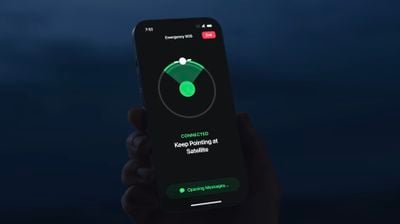
Apple remains the top manufacturer of satellite-capable smartphones globally, with such devices projected to reach 46% of all smartphone shipments by 2030, according to a new report from Counterpoint Research.
The firm's Smartphone Satellite Connection Report finds that Apple kickstarted the satellite phone trend when it partnered with Globalstar to bring Emergency SOS via satellite to the iPhone 14 in 2022 and has maintained a clear lead since. Samsung leads the Android ecosystem, while Huawei and Google also follow a proprietary approach. Other Android players, including Xiaomi, OPPO, HONOR, and vivo, have aligned with the 3GPP non-terrestrial network (NTN) standard to enable broader scalability and interoperability.
The market is currently dominated by the premium segment, with the lack of compelling everyday use cases limiting broader adoption. 3GPP Release 17 supports only SOS messaging and basic location sharing. Release 18 is expected to expand adoption further across premium brands, but mass-market penetration in the mid-price segment is not anticipated until Release 19.
Qualcomm leads among Android vendors with its Snapdragon X80 and X85 modems, with MediaTek, Samsung, Google, and Huawei all increasing competition. North America is the leading region for adoption, driven by carrier partnerships including T-Mobile with SpaceX, AT&T with AST Mobile, and Rogers with SpaceX, alongside Apple's Globalstar arrangement. Amazon's acquisition of Globalstar is seen as a notable development, potentially opening new connectivity-as-a-service revenue streams.
Counterpoint expects Apple, Google, and Samsung to lead in overall market penetration toward 2030, with Android brands targeting entry-level and mid-range price points seeing slower uptake. Apple recently agreed a new satellite deal with Amazon following its acquisition of Globalstar, and has several new satellite features in development, including Maps via satellite, photos in Messages via satellite, and a satellite API for third-party apps.
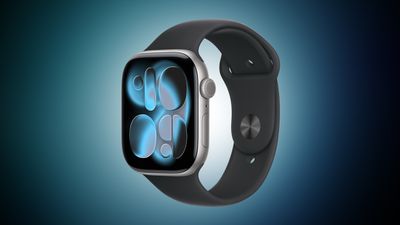
Amazon this week has all-time low prices on the Apple Watch Series 11, with up to $130 off numerous models of the smartwatch. This sale includes nearly every aluminum model of the Series 11 on sale at a record low price, plus new steep markdowns on cellular models.
Note: MacRumors is an affiliate partner with Amazon. When you click a link and make a purchase, we may receive a small payment, which helps us keep the site running.
You can get the 42mm GPS Apple Watch Series 11 for $299.00, down from $399.00, and the 46mm GPS model for $329.00, down from $429.00. On Amazon, you'll find four of both the 42mm and 46mm GPS models on sale at these all-time low prices.
A new highlight of Series 11 deals is on the 46mm cellular model, which has hit $399.00, down from $529.00. This is a big $130 discount on the cellular Apple Watch, and it's available in three colors. You'll also find $100 off the 42mm cellular model right now.
Head to our full Deals Roundup to get caught up with all of the latest deals and discounts that we've been tracking over the past week.
Deals Newsletter
Interested in hearing more about the best deals you can find in 2026? Sign up for our Deals Newsletter and we'll keep you updated so you don't miss the biggest deals of the season!
Apple's AirTag item tracker turns five years old today, with the $29 accessory having spent half a decade as the best-selling item tracker in the world.
The AirTag launched on April 30, 2021, alongside the M1iMac, a new iPad Pro, and a new Apple TV 4K. The coin-shaped accessory has a polished stainless steel back, IP67 water resistance, and a U1 Ultra Wideband chip that powers Precision Finding, a feature that combines haptic, visual, and audio feedback to guide users to a lost item's precise location with the iPhone 11 and later.
Setup works by bringing the tag close to an iPhone, with each AirTag appearing in the Items tab of the Find My app. The Find My network, which relies on Bluetooth signals from nearby Apple devices to relay location data, allows a lost item to be tracked even when out of direct range. The AirTag is priced at $29 for a single tag or $99 for a four-pack, with free engraving available.
Reports of the AirTag being misused for stalking and vehicle theft surfaced within months of launch, with its small size, low price, and the breadth of the Find My network making it an attractive tool for bad actors. Apple released a statement in February 2022 saying incidents of misuse were "rare; however, each instance is one too many," and introduced setup warnings making clear that using an AirTag to track people without consent is a crime in many regions.
A class-action lawsuit filed in California in December 2022, later expanded to include more than three dozen plaintiffs, alleged that the product's accuracy and affordability made it well-suited for misuse, and a federal judge allowed certain claims to move forward in March 2024. Apple and Google later aligned on cross-platform specifications so that Android users receive automatic unwanted tracking alerts alongside iPhone users.
Despite the controversy, Apple says the AirTag became its best-selling item tracking accessory, citing user stories of recovering lost luggage, bicycles, and bags in the years since launch.
Apple released the second-generation AirTag in January 2026. The updated model features a second-generation Ultra Wideband chip with Precision Finding working from up to 50% farther away, an upgraded Bluetooth chip, and a speaker 50% louder than the original. For the first time, Precision Finding also works with Apple Watch Series 9 models and later. A teardown revealed that the speaker magnet is more firmly secured in the second-generation model, making it harder to remove, a modification that had previously been used to silence unwanted tracking alerts. Pricing remains $29 for a single tag and $99 for a four-pack.
YouTube's picture-in-picture mode on the iPhone and iPad is expanding to more users worldwide, YouTube said today. Picture-in-picture (PiP) will be rolling out globally, so it will no longer be limited to those in the U.S. and Premium subscribers.
Non-Premium users worldwide will be able to use PiP for longform, non-music content on iOS and Android. This has already been available in the U.S. and to Premium subscribers globally, so there will be no change for those users.
Premium Lite members can still use PiP for longform, non-music content, and Premium members can use PiP for music and non-music content.
Picture-in-picture shrinks a video into a small player that can be used alongside other apps. To use PiP, swipe up to exit the YouTube app, and the video will continue to play in a small window that can be moved anywhere on the display.
The PiP changes are rolling out "in the coming months," according to YouTube.
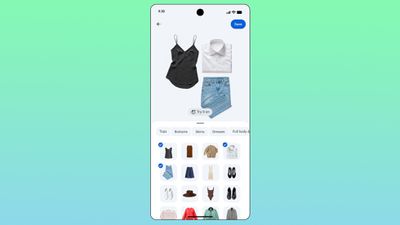
Google Photos is getting a new wardrobe planning feature that will help you decide what to wear. AI will pull in images of clothing from the Google Photos library, organizing clothing items into a digital closet. You will be able to put items together to create outfits, and even virtually try them with a digital avatar on to see how they'll look.
The Google Photos app will show all items of clothing in a new Wardrobe section in the Collections tab. Clothing can also be viewed in specific categories like tops or bottoms. Items of clothing can be mixed and matched to create outfits, and the results can be shared with friends or saved to a digital moodboard.
In the popular 1995 comedy Clueless, main character Cher Horowitz has an iconic digital wardrobe that Google seems to be making a reality with Google Photos. Cher uses a touchscreen computer to swipe through the clothes in her wardrobe, pairing different tops and bottoms to create an outfit. A built-in "Dress Me" button tells her if two items go together, and if they do, she can preview the clothes on a digital version of herself.
Google's version of the Clueless virtual wardrobe will be coming to Google Photos this summer. Google says it will be available to Android users first, and then iOS users.
Apple is developing a set of AI smart glasses to rival products like the Meta Ray-Bans, and MacRumors has learned a few more details about Apple's work on the device from an inside source.
The AI glasses will include two cameras. A high-resolution camera will be included for capturing photos and videos that can be shared on social media and used like iPhone photos. A second lower-resolution wide-angle lens will read hand gestures and provide visual input for Siri.
Apple uses hand gesture-based input for the Vision Pro, and rumors suggest the AirPods Pro will be updated with low-resolution cameras and support for gestures as well. Apple appears to be leaning into gesture support, and it's an ideal input method when no screen is available to interact with.
While future versions of the smart glasses could include an integrated display for augmented reality features, the first version will have no display at all. Apple will not include a screen, LiDAR, 3D cameras, or other similar technology because such features are too energy-intensive.
Battery life is a major constraint because Apple needs to keep the glasses slim and lightweight. Battery size is the bottleneck behind the hardware decisions that Apple is making, and it's why Apple is opting for a stripped-down feature set.
According to recent rumors, Apple is testing multiple styles for the smart glasses, with plans to use acetate. Acetate is a lightweight plant-based material that's more flexible than plastic.
Apple's smart glasses will incorporate the smarter version of Siri that Apple plans to introduce in iOS 27. The device will be able to take photos, record video, and make phone calls, plus users will be able to interact with Siri to ask questions about what's around them. The feature set will be similar to the features available in the Meta Ray-Bans that Apple is aiming to compete with.
Rumors suggest Apple could preview the glasses later this year, with a launch to follow in 2027, though it's also possible we won't see them announced until 2027.
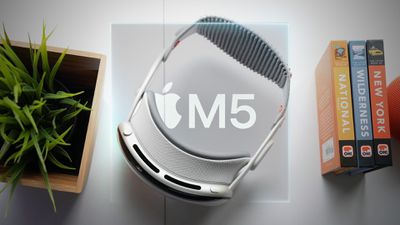
Apple has all but given up on the Vision Pro after the M5 model failed to revitalize interest in the device, MacRumors has learned. Apple updated the Vision Pro with a faster M5 chip and a more comfortable band in October 2025, but there were no other hardware changes, and consumers still weren't interested.
The Vision Pro has been criticized for its high price tag and its uncomfortable weight. The device is over 1.3 pounds, and even with the more comfortable Dual Knit Band that Apple added to redistribute weight, it continues to be hard to wear for long periods of time. The M5 chip added a 120Hz refresh rate, 10 percent more rendered pixels, and around 30 additional minutes of battery life, but the price tag stayed at $3,499, and it ended up not selling well.
The Vision Pro has been unpopular since it first launched, and Apple only sold around 600,000 units in total. Insider sources told MacRumors that Apple has received an unusually high percentage of returns, far exceeding any other modern Apple product.
Apple has apparently stopped work on the Vision Pro and the Vision Pro team has been redistributed to other teams within Apple. Some former Vision Pro team members are working on Siri, which is not a surprise as Vision Pro chief Mike Rockwell has been leading the Siri team since March 2025.
There have been mixed rumors about a new Vision Pro over the last couple of years, with Apple rumored to be working on a lighter-weight Vision Air that's much cheaper, but the project was stopped last year. If Apple finds a way to create a much cheaper, more comfortable VR headset in the future, the Vision Pro line could be revived, but right now, the company has no plans to launch a new model. Apple has not discontinued the Vision Pro and is continuing to sell the M5 model.
Instead of continuing to experiment with virtual reality, Apple is working on smart glasses that will eventually incorporate augmented reality capabilities, but the first version will be similar to the Ray-Ban Meta smart glasses with AI and no integrated display.
Apple has not been able to use the technology developed for the Vision Pro in its smart glasses because that tech draws too much power for a smaller, lighter device.
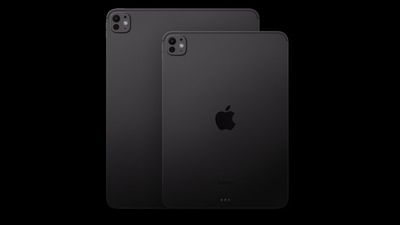
Apple has reportedly abandoned plans for a foldable "iPad Ultra" following years of disappointing sales performance for the iPad Pro.
The claim predominantly comes from the Weibo leaker known as "Instant Digital," who posted the remark in response to a question about whether the iPad would join a rumored "Ultra" series of Apple devices. Instant Digital listed the Apple Watch Ultra, M-series Ultra chips, "iPhone Ultra," and "MacBook Ultra" with an OLED display as products in the pipeline, but explicitly excluded the iPad from that group, citing weak market performance for the iPad Pro. They added that Apple now has "no plans" to release an iPad Ultra.
The iPad Pro's sales struggles are well documented. In October 2024, it was reported that shipment projections for the M4 iPad Pro had been significantly cut after weaker-than-expected demand following its launch earlier that year. DSCC analyst Ross Young lowered his full-year 2024 forecast from up to 10 million units to just 6.7 million, with shipments of the 13-inch model projected to fall by more than 50% and 90% in the third and fourth quarters respectively.
Young attributed the sluggish reception in part to the high price point, with the 11-inch model starting at $999 and the 13-inch at $1,299, levels that deter buyers who view tablets as secondary devices alongside a smartphone or laptop. iPad revenue has declined for three consecutive years, and the category accounted for just 6.73% of Apple's total revenue in 2025.
In his latest "Power On" newsletter, Bloomberg's Mark Gurman said that Apple has been developing a 20-inch foldable iPad, describing the project as a priority for Senior Vice President of Hardware Engineering and future Apple CEO John Ternus. Gurman noted, however, that the device "may end up being a wacky experiment that doesn't see the light of day, according to several people who have worked on it."
The rumored foldable iPad has a long and troubled development history. Last October, it emerged that engineering challenges tied to weight, features, and display technology had pushed Apple's target launch from 2028 to 2029 or later. The device was reportedly being developed with a large Samsung OLED display, with Apple focused on minimizing the visible crease, just like the upcoming foldable iPhone.
Prototype units reportedly weighed around 3.5 pounds, making them heavier than a 14-inch MacBook Pro and nearly three times the weight of a 13-inch iPad Pro. The device could have been priced as high as $3,900, roughly triple the $1,299 starting price of the 13-inch iPad Pro.
There has also been uncertainty about how the product would be categorized. In March, Gurman noted that a "gigantic" foldable iPad would challenge Apple's tradition of keeping the Mac and iPad as separate product lines, with some internally describing it as a foldable iPad and others as an all-display MacBook. When closed, the device reportedly resembles a Mac, with an aluminum shell and no exterior display. The design is said to be similar to Huawei's MateBook Fold, an 18-inch foldable tablet currently priced at $3,400.
The reports come against a backdrop of Apple's rumored plans to expand its "Ultra" branding across multiple product lines. At least three Ultra devices are believed to be in the pipeline for this year alone: a foldable iPhone Ultra priced at around $2,000, AirPods Ultra with cameras for Visual Intelligence, and a MacBook Ultra featuring a touch-enabled OLED display priced up to 20% above the current MacBook Pro lineup. A source speaking to Macworld subsequently corroborated the iPhone Ultra and MacBook Ultra names.
Apple already applies the "Ultra" moniker to Apple Watch Ultra, M-series Ultra chips, and CarPlay Ultra. An iPad Ultra might seem like a natural fit for a family of higher-end, more experimental hardware at the top of each lineup, but with the iPad Pro already struggling to find buyers at its current price point, the question of whether sufficient demand exists for an even more expensive iPad may be answering itself.
Apple is planning to integrate Apple Intelligence and Siri into more of its apps in iOS 27, including the Camera app, reports Bloomberg. The iOS 27 Camera app will have a dedicated Siri mode that will be available alongside the existing Photo, Video, Portrait, and Panorama modes. When in Siri mode, the existing Camera app shutter button will feature the Apple Intelligence logo, letting users know the Siri features are available.
Siri mode will incorporate Visual Intelligence, making the feature more accessible. Right now, Visual Intelligence is activated by long pressing the Camera Control button, and it is a gesture that many people may not even be aware of.
In addition to being relocated to the Camera app with Siri branding, Visual Intelligence is also being updated with new features. It will be able to scan a nutrition label on food items to log the dietary information, plus users will be able to use it to add contact details for someone directly to the Contacts app.
MacRumorsfirst discovered signs of the Visual Intelligence features in Apple code in mid-April. Here's a bit more on what we found:
Nutrition - Users will be able to scan nutrition labels on food packaging for calorie and macronutrient tracking using the Health app.
Contacts - Visual Intelligence will let users scan phone numbers and addresses on business cards and other print media, adding the information to the Contacts app.
Wallet - In the Wallet app, Visual Intelligence will capture information from physical event tickets and membership cards, generating digital versions.
Existing Visual Intelligence features will continue to be available, and it will be able to identify objects like plants and animals, add events to the Calendar app, and send visual information to ChatGPT and Google image search. Users will also be able to access the revamped Visual Intelligence through the Camera Control button, but it will open up to the Siri interface in the Camera app instead of the standalone Visual Intelligence experience that we have now.
Apple will introduce iOS 27 at the Worldwide Developers Conference that's set to begin on June 8, 2026.
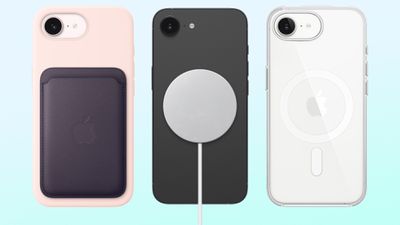
A leaker claims Apple is currently embroiled in an internal debate over whether MagSafe should remain a standard iPhone feature.
The Weibo leaker known as "Instant Digital" says that when MagSafe was first introduced, the mood inside Apple was reportedly aggressive about its expansion. MagSafe for the iPhone was introduced with the iPhone 12 lineup in 2020, bringing a ring of magnets to the back of the device for snap-on charging and accessory attachment. The ecosystem has since expanded significantly, with dozens of third-party wallets, cases, stands, and chargers built around the standard.
There were purportedly even plans to bring built-in MagSafe magnets to the iPad lineup, something the leaker previously hinted at, though those plans never materialized. Bloomberg's Mark Gurman first reported in 2021 that Apple was testing a glass-backed iPad Pro that would support wireless charging, specifically noting that MagSalfe was under consideration. A follow-up report in early 2022 suggested Apple had prototyped an iPad Pro with a large glass Apple logo that would serve as the wireless charging area, an approach aimed at avoiding the fragility of an all-glass back. Neither design made it to a shipping product. The rumors resurfaced in late 2023, with reports suggesting that the then-upcoming iPad Pro could include MagSafe support, based on information from sources familiar with Apple's magnet suppliers. The redesigned M4 iPad Pro that launched in 2024 still shipped without the feature.
Now, Instant Digital claims that confidence around MagSafe has given way to uncertainty. The leaker says Apple is weighing the costs of including MagSafe magnets in the iPhone against the strength of the accessory ecosystem that has grown up around the feature, though the nature of the debate and what any change might look like remains unclear.
The iPhone 16e launched without MagSafe, making it the first new iPhone in years to omit it. Many iPhone 16e owners, as well as users of older iPhones without built-in magnets, turned to third-party cases with embedded magnet rings as a workaround, though the experience is generally considered to be inferior to native MagSafe support. The decision nonetheless drew criticism, and Apple reversed course with the iPhone 17e, restoring MagSafe support when the device launched earlier this year.
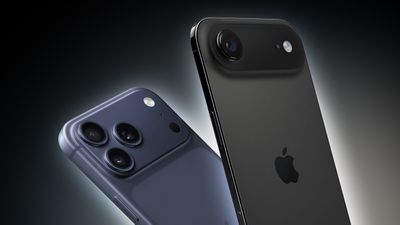
There is no indication that MagSafe is at imminent risk of disappearing from the iPhone lineup. However, the upcoming foldable "iPhone Ultra" may be a different story. Dummy models of the device show no visible indentations for the internal magnet array that MagSafe requires, suggesting the feature could be absent at launch. The iPhone Ultra is rumored to be just 4.5mm thin when unfolded, and it is thought that the device may simply be too slim to accommodate the magnets. If that proves accurate, the iPhone Ultra would be both the most expensive iPhone ever, with a starting price rumored at around $2,000, and the first new high-end model to ship without MagSafe since the iPhone 11 Pro.
While the wording of Instant Digital's post is somewhat ambiguous, it raises the possibility that Apple could be at least considering pulling MagSafe from its standard iPhone models, potentially making it exclusive to higher-end devices. Recent reports suggest that the standard iPhone 18 is being downgraded to cut costs.
An alternative scenario could see Apple scale back its in-device MagSafe implementation, relying more heavily on cases with embedded magnets to provide compatibility, as many iPhone 16e users already do. Given that Qi2, the open wireless charging standard now widely adopted across the industry, is built directly on MagSafe's magnet ring specification, a full removal of the feature from the entire iPhone lineup seems unlikely.
Note: MacRumors is an affiliate partner with Amazon. When you click a link and make a purchase, we may receive a small payment, which helps us keep the site running.
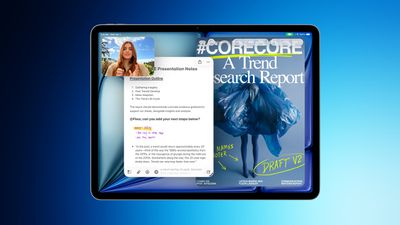
Specifically, Amazon has up to $90 off the 11-inch M4 iPad Air and up to $100 off the 13-inch M4 iPad Air. All of these discounts have been automatically applied and do not require a coupon code or a Prime membership.
The new iPad Air features the M4 chip, C1X modem, and N1 networking chip, which brings support for Wi-Fi 7 and Bluetooth 6. In terms of design, the 2026 models are identical to the 2025 iPad Air tablets, with an edge-to-edge display, slim bezels, and aluminum chassis.
If you're on the hunt for more discounts, be sure to visit our Apple Deals roundup where we recap the best Apple-related bargains of the past week.
Deals Newsletter
Interested in hearing more about the best deals you can find in 2026? Sign up for our Deals Newsletter and we'll keep you updated so you don't miss the biggest deals of the season!
Apple's first foldable iPhone, with a book-style design featuring a ~5.5-inch outer display and a ~7.8-inch inner display with a minimal crease down the middle.






 Note: MacRumors is an affiliate partner with Amazon. When you click a link and make a purchase, we may receive a small payment, which helps us keep the site running.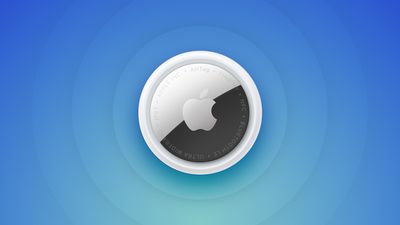



 Note: MacRumors is an affiliate partner with Amazon. When you click a link and make a purchase, we may receive a small payment, which helps us keep the site running.