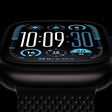
Apple Watch Series 11's Increased 24-Hour Battery Life Has a Catch

Apple's claim that the Apple Watch Series 11 offers 24 hours of battery life has drawn scrutiny as closer examination of Apple's own testing data reveals that the increase from the Series 10's 18-hour rating is largely attributable to changes in testing methodology rather than a major hardware change.
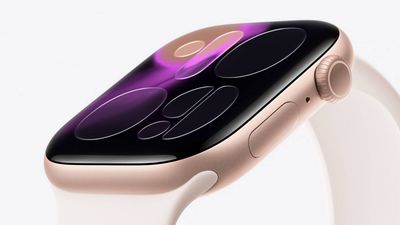
series 11
Apple lists the Apple Watch Series 11 as capable of lasting up to 24 hours on a single charge, a notable increase over the Series 10's 18-hour claim, which had been the company's published standard since the launch of the original Apple Watch in 2015.

As spotted by a user on the MacRumors forums, the primary difference between the two test scenarios in Apple's official documentation is the inclusion of sleep tracking in the Series 11's evaluation. Apple states that the 24-hour figure is based on 300 time checks, 90 notifications, 15 minutes of app use, a 60-minute workout with music playback, and six hours of sleep tracking. The comparable Series 10 test lists the same parameters but does not include sleep tracking.

While Apple does not break down the exact battery drain of each activity, sleep tracking is generally a low-power feature, allowing older Apple Watch models to be worn overnight without fully depleting their charge. Many users have pointed out that Apple Watches have long exceeded the company's stated 18-hour battery life in real-world use, with most users comfortably achieving overnight tracking. This suggests that the six-hour increase is primarily a result of Apple adding sleep tracking to its official scenario, rather than a significant increase in real-world battery life.

Apple also publishes Low Power Mode battery life estimates, which further demonstrate only modest changes. The Series 11 is rated for 38 hours of battery life in Low Power Mode, compared to the Series 10's 36-hour rating. Here, Apple's footnotes indicate that the Series 11 test used lower levels of activity: 530 time checks, 160 notifications, and 26 minutes of app usage, versus 600 time checks, 180 notifications, and 30 minutes of app use for the Series 10. Both tests included a 60-minute workout and six hours of sleep tracking. The reduced activity assumptions make it difficult to directly compare figures, but even Apple's own hourly calculation achieves only an approximate 8% improvement.

The Apple Watch Series 11 does feature slightly larger batteries across its range of case sizes. According to official safety documentation, battery capacities for Series 11 models range from 1.245 to 1.403 watt-hours, depending on case size, compared to 1.118 to 1.266 watt-hours for Series 10 models. This represents a roughly 7% to 10% increase in capacity, far less than the 33% jump implied by Apple's move from an 18-hour to a 24-hour claim.
Related Roundup: Apple Watch 11
Buyer's Guide: Apple Watch (Neutral)

Popular Stories

Apple Logo Zoomed

Tim Cook Teases Plans for Apple's Upcoming 50th Anniversary

Thursday February 5, 2026 12:54 pm PST by
Apple turns 50 this year, and its CEO Tim Cook has promised to celebrate the milestone. The big day falls on April 1, 2026. "I've been unusually reflective lately about Apple because we have been working on what do we do to mark this moment," Cook told employees today, according to Bloomberg's Mark Gurman. "When you really stop and pause and think about the last 50 years, it makes your heart ...
iOS 26

iOS 26.3 and iOS 26.4 Will Add These New Features to Your iPhone

Tuesday February 3, 2026 7:47 am PST by
While the iOS 26.3 Release Candidate is now available ahead of a public release, the first iOS 26.4 beta is likely still at least a week away. Following beta testing, iOS 26.4 will likely be released to the general public in March or April. Below, we have recapped known or rumored iOS 26.3 and iOS 26.4 features so far. iOS 26.3 iPhone to Android Transfer Tool iOS 26.3 makes it easier...
imac video apple feature

Apple Makes Its Second-Biggest Acquisition Ever

Tuesday February 3, 2026 12:45 pm PST by
Apple recently acquired Israeli startup Q.ai for close to $2 billion, according to Financial Times sources. That would make this Apple's second-biggest acquisition ever, after it paid $3 billion for the popular headphone maker Beats in 2014. This is also the largest known Apple acquisition since the company purchased Intel's smartphone modem business and patents for $1 billion in 2019....
wwdc sans text feature

Apple Rumored to Announce New Product on February 19

Thursday February 5, 2026 12:22 pm PST by
Apple plans to announce the iPhone 17e on Thursday, February 19, according to Macwelt, the German equivalent of Macworld. The report, citing industry sources, is available in English on Macworld. Apple announced the iPhone 16e on Wednesday, February 19 last year, so the iPhone 17e would be unveiled exactly one year later if this rumor is accurate. It is quite uncommon for Apple to unveil...
Finder Siri Feature

Why Apple's iOS 26.4 Siri Upgrade Will Be Bigger Than Originally Promised

Friday February 6, 2026 3:06 pm PST by
In the iOS 26.4 update that's coming this spring, Apple will introduce a new version of Siri that's going to overhaul how we interact with the personal assistant and what it's able to do. The iOS 26.4 version of Siri won't work like ChatGPT or Claude, but it will rely on large language models (LLMs) and has been updated from the ground up. Upgraded Architecture The next-generation...

Top Rated Comments

canyonblue737 Avatar
21 weeks ago
There are leaked specs showing about an 11 percent larger battery in the Series 11 and about 6 percent in the Ultra 3. The Series 11 is being advertised with 33 percent more battery life which is 6 extra hours. The Ultra 3 is being advertised with 17 percent more battery life which is also about 6 extra hours. Most of these claims are not just from the battery increases but from a change in how Apple calculates battery life. They now assume 6 hours of sleep focus use as part of a normal day.

I was the original poster that Macrumors linked to. I want to be clear that I am not saying Apple is wrong to change their method. In a 24 hour period most people do sleep. The point is that the sudden jump in the numbers, especially the Series 11 claim, is not simply from a big efficiency gain or a huge new battery. To hit the advertised number you need a full 6 hours in sleep mode. It does not represent 6 more hours of awake style use with notifications and the screen on.
Score: 19 Votes (Like | Disagree)
G46&Fbnth5 Avatar
21 weeks ago

This makes no sense. Check your logic before posting.

The Series 11 is doing more work than the 10 (which gets to slack off with no sleep tracking), yet still manages to go 6 hours longer. If anything, this suggests the 11 is even more improved than stated.
This is the logic:

Series 10 is dead after the 18 hours test;

Series 11, after the 18 hours test, has approximately 5-10% of battery left, which is enough for 6 hours of sleep tracking or, probably, a couple of hours of normal usage.
Score: 14 Votes (Like | Disagree)
krspkbl Avatar
21 weeks ago
So there is a physically larger battery?

OK so it doesn't make up the 24 hours but I'll take any increase in battery life. I use sleep tracking so if it drains less during the night then that's a big improvement for me.
Score: 13 Votes (Like | Disagree)
xmach Avatar
21 weeks ago
This is good reporting. And frankly misleading at best from Apple's marketing department (ahemm... Greg Joswiak -- I don't think Phil Schiller would have tried to pull this kind of shzit).
Score: 12 Votes (Like | Disagree)
vabello Avatar
21 weeks ago
Yeah, my series 7 watch still lasts 24 hours with my use. I have it doing sleep tracking and my morning alarm. It gets charged in the morning while I’m getting ready and is good until the following morning.
Score: 10 Votes (Like | Disagree)
kolebee Avatar
21 weeks ago
Wow, this methodology generously allows six whole hours of sleep each 24h.
Score: 9 Votes (Like | Disagree)