Preview App on macOS Ventura Drops Support for PostScript Files
Starting with macOS Ventura, released this week, the built-in Preview app on Mac no longer supports PostScript (.ps) and Encapsulated PostScript (.eps) files, according to a new Apple support document. Preview can still be used to open these files on macOS Monterey and earlier. Apple did not provide a reason for the change.

Apple recommends using other third-party Mac apps that can view or convert PostScript files. It also remains possible to print .ps and .eps files by dragging them into a Mac's printer queue with these steps on macOS Ventura, according to Apple:
1. Choose Apple menu > System Settings, then click Printers & Scanners in the sidebar.
2. Click the the name of your printer on the right.
3. Click the Printer Queue button to open the printer queue window.
4. Drag the .ps or .eps file into the printer queue window.
Developed by Adobe in the 1980s, the .ps and .eps file formats were once widely used for desktop publishing/printing purposes. PostScript was the basis of rendering on the NeXT operating system, and was mostly replaced by the PDF format in Mac OS X.
Popular Stories
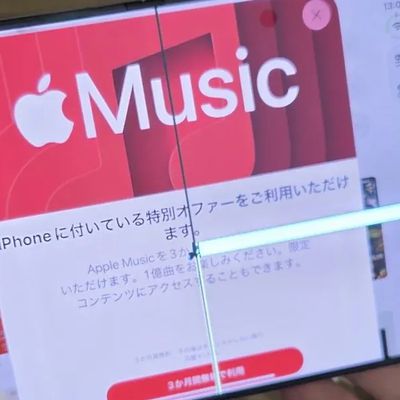
Some iPhone Duos are already experiencing hinge issues that cause display cracks, based on photos shared on Reddit and the MacRumors forums. Almost all of the display faults are right along the hinge, and most result in a line of bright pixels across one side of the screen.
An iPhone Duo owner in Australia said his device cracked after being opened fewer than 20 times, and there was no...
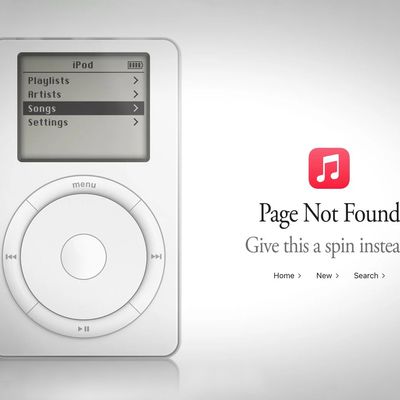
Apple Music has a 404 page easter egg on the web: a functional iPod that appears when you load a page that does not exist, such as music.apple.com/macrumors.
"Page Not Found," says Apple. "Give this a spin instead."
Apple is clever with this. If you navigate to music.apple.com/ipod instead, the page says "Looking for something?" instead of "Page Not Found."
The easter egg is only...
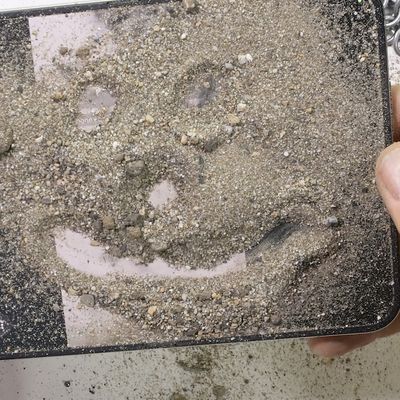
Apple's iPhone Duo has failed JerryRigEverything's latest durability test. Despite its IP68 dust-resistance rating, dust entered the hinge through several ingress points, overwhelming the magnets that hold the phone shut. The bend test then left a permanent green line across the inner display, before the screen became unresponsive.
The outer screen with Ceramic Shield 2 scratched at level 7...