Skip to Content

How the iPhone 14 Pro's Upgraded 48-Megapixel Camera is Expected to Work

It has once again been rumored that next year's iPhone 14 Pro models will feature an upgraded 48-megapixel primary camera (the "Wide" lens), compared to a 12-megapixel Wide lens on iPhone 13 Pro models, but it is not as simple as it might sound.
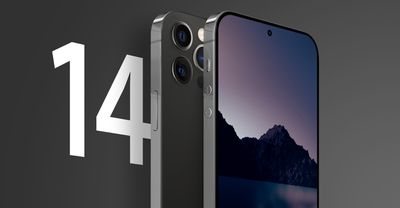
iPhone 14 Mock Roundup 2
In a research note earlier this year, analyst Ming-Chi Kuo said iPhone 14 Pro models may support both 48-megapixel and 12-megapixel output, which would likely be achieved with a process known as pixel binning. Already in use on some Android smartphones like Samsung's Galaxy S21 Ultra, pixel binning merges data from multiple smaller pixels on the camera's image sensor into one "super-pixel" for improved low-light sensitivity.

Pixel binning is beneficial because simply increasing a smartphone camera's megapixels while maintaining the same camera sensor size results in smaller pixels, which generally capture less light, leading to lower-quality low-light photos. Pixel binning would allow iPhone 14 Pro models to shoot high-resolution 48-megapixel photos in bright conditions and 12-megapixel photos in low-light conditions that are still of high quality.

On the Galaxy S21 Ultra, the device shoots 12-megapixel photos by default, with a toggle available in the camera app for shooting 108-megapixel photos. This is ideal for most users, as high-resolution photos have large file sizes that can use up lots of storage space. A single 108-megapixel photo shot with the Galaxy S21 Ultra can have a 16MB file size, for example, compared to the average 12-megapixel photo being around 2-3MB.

CNET's Stephen Shankland wrote a helpful explainer that goes into more detail on the technical aspects of pixel binning earlier this year.

Kuo expects the iPhone 14 Pro's new 48-megapixel Wide lens to support 8K video recording, up from 4K currently, and he said these high-resolution videos would be suitable for viewing on Apple's rumored AR/VR headset expected to launch next year.

Kuo ultimately believes that the camera quality of the iPhone 14 Pro models will "elevate mobile phone camera photography to a new level."


Related Forum: iPhone

Popular Stories

Multicolored Low Cost A18 Pro MacBook Feature

Apple Accidentally Leaks 'MacBook Neo'

Tuesday March 3, 2026 7:00 am PST by
Apple appears to have prematurely revealed the name of its rumored lower-cost MacBook model, which is expected to be announced this Wednesday. A regulatory document for a "MacBook Neo" (Model A3404) has appeared on Apple's website. Unfortunately, there are no further details or images available yet. While the PDF file does not contain the "MacBook Neo" name, it briefly appeared in a link...
MacBook Neo Feature Pastel 1

Apple Announces $599 'MacBook Neo' With A18 Pro Chip

Wednesday March 4, 2026 6:15 am PST by
Apple today announced the "MacBook Neo," an all-new kind of low-cost Mac featuring the A18 Pro chip for $599. The MacBook Neo is the first Mac to be powered by an iPhone chip; the A18 Pro debuted in 2024's iPhone 16 Pro models. Apple says it is up to 50% faster for everyday tasks than the bestselling PC with the latest shipping Intel Core Ultra 5, up to 3x faster for on-device AI workloads,...
MacBook Neo Feature Pastel 1

First MacBook Neo Benchmarks Are In: Here's How It Compares to the M1 MacBook Air

Thursday March 5, 2026 4:07 pm PST by
Benchmarks for the new MacBook Neo surfaced today, and unsurprisingly, CPU performance is almost identical to the iPhone 16 Pro. The MacBook Neo uses the same 6-core A18 Pro chip that was first introduced in the iPhone 16 Pro, but it has one fewer GPU core. The MacBook Neo earned a single-core score of 3461 and a multi-core score of 8668, along with a Metal score of 31286. Here's how the...

Top Rated Comments

55 months ago
I find it extremely funny how this article portrays pixel binning as an amazing advancement in photography when real photo/video professionals and enthusiasts absolutely hate the usage of pixel binning in the real professional cameras. in a real camera pixel binning would be a massive CON/limitation (it is a workaround for poor image sensor/processor performance) and now it appears there will be a drive to make it a PRO when used in smartphones.
Score: 17 Votes (Like | Disagree)
e1me5 Avatar
55 months ago
For sure it will be a quad bayer sensor and I am sure Apple will invent some new magic processes, but for these sensor sizes, a lower number of bigger pixels is better than a higher number of smaller ones for low light photography. Plus having more pixels in a quad bayer arrangement doesn't produce a sharper image. https://www.gsmarena.com/quad_bayer_sensors_explained-news-37459.php
Score: 7 Votes (Like | Disagree)
loteq Avatar
55 months ago
8k isn’t silly anymore than 4K was silly. It’s less useful vs 4K for basic videos just as 4K was less useful for people who have 1080 sets or low quality internet connections. Where 8k is def useful is in next gen applications for VR where you are able to get very close to a very big screen virtually and have 8k capable headsets which are coming as they mention in the Article. Also, most of you favourite YouTubers shoot in 8k for the editing flexibility. More people would do that as well if it was affordable. Personally. I want the highest res videos I can get of my kids. I love every detail.
Score: 7 Votes (Like | Disagree)
Ivanovitchk Avatar
55 months ago

Use of the term "Android smartphones" seems redundant. Are there any non-smartphones that run Android? Do you say iPhone smartphones?
pretty much all device classes have android ports, be it tablets, tvs, car infotainement systems, set top boxes, digital cameras, hell even PCs...

also Android is an OS, so the equivalent of your last sentence would be "iOS smartphones".
Score: 5 Votes (Like | Disagree)
55 months ago
Already looking forward to this, even though I don’t fully get it.
Score: 4 Votes (Like | Disagree)
55 months ago
Looking forward to this. Will be nice to finally get a bump in Megapixels. Even more excited if 8K video actually happens.
Score: 4 Votes (Like | Disagree)