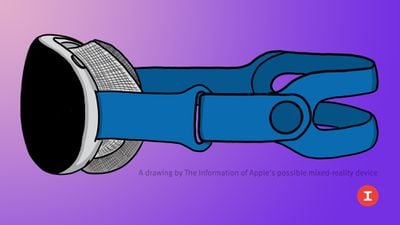
Apple's augmented reality headset will enter mass production in the second quarter of next year, with a launch expected between the third and fourth quarter of 2022, according to a translated report from the Taiwanese version of DigiTimes.
In June, Apple analyst Ming-Chi Kuooffered a similar timeline for Apple's AR headset, reporting it will launch sometime between April and June of next year. According to today's report, Apple's AR headset has completed its second phase of prototype testing, inching closer to being ready for primetime mass production.
The first iteration of Apple's AR headset may be a bit bulky in design, similar to the Oculus Rift headset, but a sleeker pair of "Apple Glasses" could launch a few years later. In recent years, Apple has been building up its AR platform, rolling out several AR-centric features on iOS and iPadOS, possibly paving the way for the "Apple Glasses."
Apple's AR headset isn't expected to be cheap in price, at least at the start. One report says that it will feature at least 15 camera modules, feature eye-tracking, possibly iris recognition, and could cost between $2,000 and $3,000.
Wednesday March 11, 2026 7:05 am PDT by Joe Rossignol
Starting today, the seven new Apple products that were announced last week are available at Apple Stores and beginning to arrive to customers.
The colorful MacBook Neo and all of the other new products are on display at most Apple Store locations around the world starting today. Apple Stores have inventory of the new products for both walk-in customers and Apple Store pickup, but...
Thursday March 12, 2026 6:10 am PDT by Joe Rossignol
Apple today announced that it will celebrate the company's 50th anniversary over the coming weeks, but it has yet to reveal any specific plans.
Apple was founded on April 1, 1976, so the company will turn 50 on April 1, 2026.
"While Apple is known for looking forward, this milestone offers a special moment to reflect on the journey that has brought the company here, to celebrate the...
We're only three months away from Apple's WWDC 2026 event, which will see the company unveil iOS 27. With the fully revamped version of Siri possibly delayed until September, iOS 27 is shaping up to be the update we wanted iOS 26 to be.
There will be new Apple Intelligence features, updates for the iPhone Fold, and more, with the latest rumors summarized below.
Foldable iPhone Features...
LOL! Who would buy it? Gamers certainly have plenty of other less expensive options. It's already been demonstrated that both VR and AR goggles are a niche market at best, and that most people (currently) have no need for them. What would the average user do with a $2000 set of Apple goggles? See what an Ikea table would look like in their dining room? I don't think so. Apple would have to turn their reality distortion field up to 11 in order to convince people that this is something they need.
Why? Apple isn’t a game developing company and they can barely keep Arcade alive with games from 10 years ago. What are you possibly going to do with it … measure your 40 Euro IKEA table with a 2k device? AR is a gimmick to me trying to fix an issue that doesn’t exist to simply exist itself. How often are you using the LIDAR scanner on your iPhone / iPad?