Skip to Content

Apple Launches Security Research Device Program to Give Bug Hunters Deeper OS Access to Find Vulnerabilities

Apple is today launching a new Apple Security Research Device Program that's designed to provide security researchers with special iPhones that are dedicated to security research with unique code execution and containment policies.
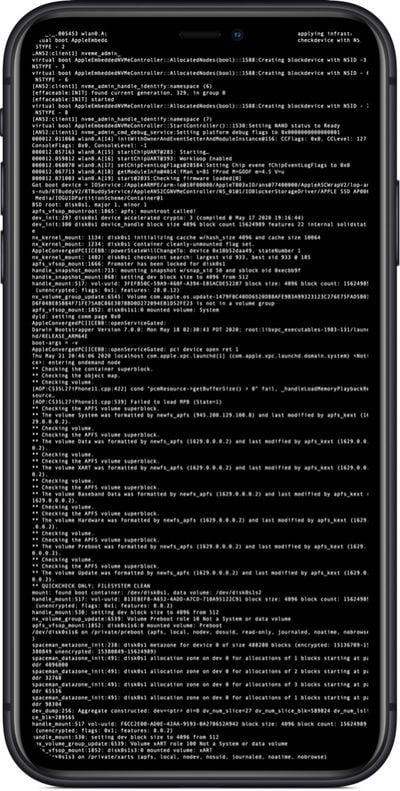
applesecuritydevice
Apple last year said it would be providing security researchers with access to "special" iPhones that would make it easier for them to find security vulnerabilities and weaknesses to make iOS devices more secure, which appears to be the program that's rolling out now.

The iPhones that Apple is providing to security researchers are less locked down than consumer devices and will make it easier to find serious security vulnerabilities.

Apple says the Security Research Device (SRD) offers shell access and can run any tools or entitlements, but other than that, it behaves similarly to a standard iPhone. SRDs are provided to security researchers on a 12-month renewable basis and remain Apple property. Bugs discovered with the SRD must be "promptly" reported to Apple or a relevant third-party.

If you use the SRD to find, test, validate, verify, or confirm a vulnerability, you must promptly report it to Apple and, if the bug is in third-party code, to the appropriate third party. If you didn't use the SRD for any aspect of your work with a vulnerability, Apple strongly encourages (and rewards, through the Apple Security Bounty) that you report the vulnerability, but you are not required to do so.

If you report a vulnerability affecting Apple products, Apple will provide you with a publication date (usually the date on which Apple releases the update to resolve the issue). Apple will work in good faith to resolve each vulnerability as soon as practical. Until the publication date, you cannot discuss the vulnerability with others.

Apple is accepting applications for the Security Research Device Program. Requirements include being in the Apple Developer Program, and having a track record finding security issues on Apple platforms.

Those that participate in the program will have access to extensive documentation and a dedicated forum with Apple engineers, with Apple telling TechCrunch that it wants the program to be a collaboration.

The Security Research Device Program will run alongside the bug bounty program, and hackers can file bug reports with Apple and receive payouts of up to $1 million, with bonuses possible for the worst vulnerabilities.

Popular Stories

MacBook Neo Feature Pastel 1

First MacBook Neo Benchmarks Are In: Here's How It Compares to the M1 MacBook Air

Thursday March 5, 2026 4:07 pm PST by
Benchmarks for the new MacBook Neo surfaced today, and unsurprisingly, CPU performance is almost identical to the iPhone 16 Pro. The MacBook Neo uses the same 6-core A18 Pro chip that was first introduced in the iPhone 16 Pro, but it has one fewer GPU core. The MacBook Neo earned a single-core score of 3461 and a multi-core score of 8668, along with a Metal score of 31286. Here's how the...
HomePod mini and Apple TV Sage

New Apple TV and HomePod Mini Are Still Missing, Here's Why

Thursday March 5, 2026 6:11 am PST by
Apple this week unveiled seven products, ranging from the iPhone 17e to the MacBook Neo, but new Apple TV and HomePod mini models were not among them. Given that there have been rumors about the next-generation Apple TV and HomePod mini since all the way back in late 2024, some customers are wondering why the devices have yet to launch, and the answer likely relates to Siri. In September, ...
MacBook Neo Feature Pastel 1

Apple Announces $599 'MacBook Neo' With A18 Pro Chip

Wednesday March 4, 2026 6:15 am PST by
Apple today announced the "MacBook Neo," an all-new kind of low-cost Mac featuring the A18 Pro chip for $599. The MacBook Neo is the first Mac to be powered by an iPhone chip; the A18 Pro debuted in 2024's iPhone 16 Pro models. Apple says it is up to 50% faster for everyday tasks than the bestselling PC with the latest shipping Intel Core Ultra 5, up to 3x faster for on-device AI workloads,...

Top Rated Comments

Vanilla35 Avatar
74 months ago


Attachment Image
Score: 12 Votes (Like | Disagree)

74 months ago
Every government in the world just joined the Apple Developer Program.
Score: 7 Votes (Like | Disagree)
tehabe Avatar
74 months ago
The big issue is, that Apple controls everything in this programme. Apple could decide not to fix an issue and nobody would know because only Apple decides when to release the information. That is btw the reason why Google's Project Zero won't join this programme, it is against their 90 days publication policy.
Score: 3 Votes (Like | Disagree)
74 months ago
Nice to see. Just keep making security better on it Apple.
Score: 2 Votes (Like | Disagree)
SecuritySteve Avatar
74 months ago

How is this different than the crash logs we already have in iOS?
There's a huge difference. Right now there's no way to inspect the file system to see if there was a successful breach, and crash logs only contain a stack trace and memory snapshot of application. With this kit you have full access to the device that normally would be protected. This lets you probe more sensitive areas such as Secure Enclave.

It also lets you do more detailed API testing and fuzzing as root on the iPhone, similar to what Google Project Zero's Ian Beer does.
Score: 2 Votes (Like | Disagree)
Saipher Avatar
74 months ago
This is great news!


Every government in the world just joined the Apple Developer Program.

Requirements include being in the Apple Developer Program, and having a track record finding security issues on Apple platforms.
I think we will be ok.
Score: 1 Votes (Like | Disagree)