Intel Restates Support for Apple During Transition to Apple Silicon
Apple on Monday confirmed its widely rumored plan to switch from Intel processors to custom silicon for its Macs, promising "incredible" performance and features.
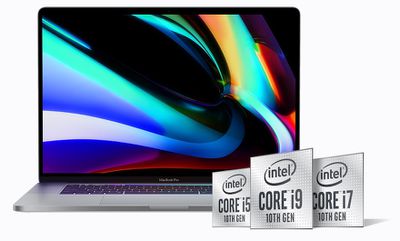
In a statement given to AppleInsider, Intel promised to continue supporting the Mac through its transition but insisted that its processors are still the best option for developers.
"Apple is a customer across several areas of business and we will continue to support them," said an Intel spokesperson.
"Intel remains focused on delivering the most advanced PC experiences and a wide range of technology choices that redefine computing. We believe Intel-powered PCs — like those based on our forthcoming Tiger Lake mobile platform — provide global customers the best experience in the areas they value most, as well as the most open platform for developers, both today and into the future."
Building on its industry-leading A-series chips for iPhones and iPads, Apple wants Macs with its custom silicon to have the highest performance with lower power usage. Apple says the vast majority of Mac apps can be quickly updated to be "universal" with support for both Intel-based Macs and those with Apple's custom silicon.
Apple said that it expects its first Mac with custom silicon to launch by the end of 2020, and it expects to transition its entire lineup within the next two years. "We plan to continue to support and release new versions of Mac OS for Intel-based Macs for years to come," said Apple CEO Tim Cook.
Developers can apply for a special Mac mini with an A12Z chip inside to help prepare their apps for Apple's custom silicon. This custom Mac mini will be running the macOS Big Sur beta and the latest version of Xcode.
On a related note, readers hoping to see imminent benchmarks of the Apple Silicon-powered Mac mini may be out of luck. Apple's terms and conditions for developers receiving the machines explicitly forbid benchmark tests on the Developers Transition Kit unless separately authorized by Apple.
Popular Stories
Apple today introduced its first two physical products of 2026: a second-generation AirTag and the Black Unity Connection Braided Solo Loop for the Apple Watch.
Read our coverage of each announcement to learn more:Apple Unveils New AirTag With Longer Range, Louder Speaker, and More
Apple Introduces New Black Unity Apple Watch BandBoth the new AirTag and the Black Unity Connection Braided...
Apple today introduced the second-generation AirTag, with key features including longer range for tracking items and a louder speaker.
For those who are not familiar, the AirTag is a small accessory that you can attach to your backpack, keys, or other items. Then, you can track the location of those items in the Find My app on the iPhone, iPad, Mac, Apple Watch, and iCloud.com.
The new...
Alongside iOS 26.2.1, Apple today released an updated version of iOS 12 for devices that are still running that operating system update, eight years after the software was first released.
iOS 12.5.8 is available for the iPhone 5s and the iPhone 6, meaning Apple is continuing to support these devices for 13 and 12 years after launch, respectively. The iPhone 5s came out in September 2013,...
Apple plans to release new MacBook Pro, MacBook Air, Mac Studio, and Studio Display models in the first half of this year, according to Bloomberg's Mark Gurman.
In his Power On newsletter today, Gurman added that redesigned MacBook Pro models with an OLED touch screen "should be hitting toward the end of 2026," meaning that the MacBook Pro line would be upgraded twice this year.
First up...
2026 promises to be yet another busy year for Apple, with the company rumored to be planning more than 20 product announcements over the coming months.
Beyond the usual updates to iPhones, iPads, Macs, and Apple Watches, Apple is expected to release its all-new smart home hub, which was reportedly delayed until the more personalized version of Siri is ready. Other unique products rumored for ...