The U.S. Supreme Court today declined to hear the University of Wisconsin's appeal in its patent fight with Apple, according to Reuters.
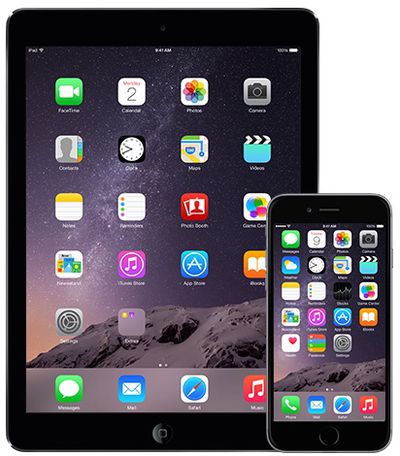
ipad iphone ios 8
In July 2017, a U.S. district court ordered Apple to pay $506 million to the University of Wisconsin's Alumni Research Foundation for infringing on a patent related to computer processing technology with its A7, A8, and A8X chips.

In September 2018, however, the U.S. Federal Circuit Court of Appeals threw out the damages that Apple had been ordered to pay, ruling that no reasonable juror could have been able to find infringement based on the evidence that was presented in the liability phase of the original 2015 trial.

The decision comes on the first day of the U.S. Supreme Court's 2019 term.

Top Rated Comments

gnasher729 Avatar
83 months ago
Just repeating from the previous round: Apple did something that is reasonably _similar_ to what the university had patented, but _not the same_. Definitely not the same. Not even sometimes the same. And since it's not the same, Apple never infringed on the university's patent, and therefore doesn't have to pay damages. Doing something that is similar to a patented invention is absolutely fine.
Score: 10 Votes (Like | Disagree)
cmaier Avatar
83 months ago

Didn’t Intel settle with WARF over this many years ago? Perhaps @cmaier could chime in on this?

Did they settle because it was easier/cheaper or did they settle because they felt they infringed and would likely lose in court?

Has WARF ever gone after ARM, Samsung or Qualcomm over these patents? If not, why go after Apples ARM compatible processors and not others? I have an idea...
WARF sued Intel and they settled.

Looking at the claims ,which are directed at load/store scheduling, seems to me possible that some ARM chips could infringe and others not. Seems like the scheduling microarchitecture isn't automatically determined by the instruction set architecture - you can do it lots of ways, or none at all. I have no idea what's in ARM's own reference designs though.

The issue is that Apple uses a hashing algorithm for memory load prediction where each entry is a load tag and a prediction. Each tag is a hash of the instruction address. Since it's a hash, the same tag can apply to many different instructions.

There is some claim language in the patent that the courts say require the tag to correspond to a "particular instruction." The courts say that since the tag could correspond to multiple instructions, it doesn't correspond to the "particular" instruction, and hence no infringement. Or something like that - I read the patent very quickly, so I could be missing something.
Score: 4 Votes (Like | Disagree)
cmaier Avatar
83 months ago

Setting the facts of the present case aside, the CAFC does this way too often, and it really bothers me. Whether or not there is infringement and how much is owed are facts, not legal questions, and in jury trials decisions of fact should be left to the jury unless there is some clearly inexplicable injustice occurring. But the CAFC has a pattern of overruling the jury at a much higher rate than is reasonable. It indicates they are perhaps making outcome-driven decisions, rather than fair rulings. There are countless legal articles using pretty inflammatory language about the CAFC, such as accusing the CAFC of being anti-jury or verdict killers.
Um, no.
Score: 3 Votes (Like | Disagree)
cmaier Avatar
83 months ago

Just repeating from the previous round: Apple did something that is reasonably _similar_ to what the university had patented, but _not the same_. Definitely not the same. Not even sometimes the same. And since it's not the same, Apple never infringed on the university's patent, and therefore doesn't have to pay damages. Doing something that is similar to a patented invention is absolutely fine.
Except for the Doctrine of Equivalents.
But yes.


Just goes to show that court judges are just people who can have different opinions
How does it show that? All the judges had the same opinion. They disagreed with the jury.
Score: 2 Votes (Like | Disagree)
realtuner Avatar
83 months ago
Didn’t Intel settle with WARF over this many years ago? Perhaps @cmaier could chime in on this?

Did they settle because it was easier/cheaper or did they settle because they felt they infringed and would likely lose in court?

Has WARF ever gone after ARM, Samsung or Qualcomm over these patents? If not, why go after Apples ARM compatible processors and not others? I have an idea...
Score: 1 Votes (Like | Disagree)
cmaier Avatar
83 months ago
I suppose I should be less flippant.

Obviously there are facts underpinning any finding of infringement, but whether or not a patent is infringed is a mixed question of law and fact. For example, what the words in the patent claim mean is a question of law, not of fact, and can only be determined by a judge. If a judge says “particular” means “the one” and a jury decides that “the ten” are the same as “particular,” it’s a good idea for a judge to say “nope.”

The CAFC serves a very important purpose of bringing some degree of uniformity to how the patent laws are interpreted. Otherwise, each judge could do things differently, and people would go around forum shopping to get the judge/court they want.

And, in this case, the supreme court seems to have agreed with the CAFC, at least to the extent they didn’t think the CAFC got anything so fundamentally wrong that required the Supreme Court to get involved.
Score: 1 Votes (Like | Disagree)

Popular Stories

maxresdefault

Apple Shows Off a Key Reason to Upgrade to the iPhone 17

Saturday February 7, 2026 9:26 am PST by
Apple today shared an ad that shows how the upgraded Center Stage front camera on the latest iPhones improves the process of taking a group selfie. "Watch how the new front facing camera on iPhone 17 Pro takes group selfies that automatically expand and rotate as more people come into frame," says Apple. While the ad is focused on the iPhone 17 Pro and iPhone 17 Pro Max, the regular iPhone...
apple wallet drivers license feature iPhone 15 pro

Apple Says These 7 U.S. States Plan to Offer iPhone Driver's Licenses

Monday February 9, 2026 6:24 am PST by
In select U.S. states, residents can add their driver's license or state ID to the Apple Wallet app on the iPhone and Apple Watch, and then use it to display proof of identity or age at select airports and businesses, and in select apps. The feature is currently available in 13 U.S. states and Puerto Rico, and it is expected to launch in at least seven more in the future. To set up the...
m5 macbook pro deal

Why You Shouldn't Buy the Next MacBook Pro

Tuesday February 10, 2026 4:27 pm PST by
Apple is planning to launch new MacBook Pro models as soon as early March, but if you can, this is one generation you should skip because there's something much better in the works. We're waiting on 14-inch and 16-inch MacBook Pro models with M5 Pro and M5 Max chips, with few changes other than the processor upgrade. There won't be any tweaks to the design or the display, but later this...
Apple Logo Zoomed

Apple Expected to Launch These 10+ Products Over the Coming Months

Tuesday February 10, 2026 6:33 am PST by
It has been a slow start to 2026 for Apple product launches, with only a new AirTag and a special Apple Watch band released so far. We are still waiting for MacBook Pro models with M5 Pro and M5 Max chips, the iPhone 17e, a lower-cost MacBook with an iPhone chip, long-rumored updates to the Apple TV and HomePod mini, and much more. Apple is expected to release/update the following products...
iOS 26

Apple Releases iOS 26.3 and iPadOS 26.3

Wednesday February 11, 2026 10:07 am PST by
Apple today released iOS 26.3 and iPadOS 26.3, the latest updates to the iOS 26 and iPadOS 26 operating systems that came out in September. The new software comes almost two months after Apple released iOS 26.2 and iPadOS 26.2. The new software can be downloaded on eligible iPhones and iPads over-the-air by going to Settings > General > Software Update. According to Apple's release notes, ...