Apple Settles Lawsuit With Biometric Sensor Company Valencell That Accused it of Stealing Technology for Apple Watch
Biometric sensor company Valencell has reportedly settled a three-year-old lawsuit against Apple that accused the tech giant of stealing its technology for Apple Watch.
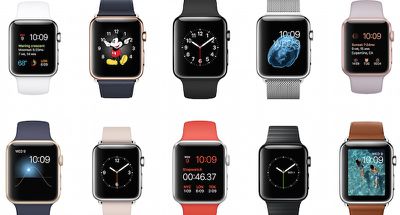
Valencell filed the patent infringement lawsuit against Apple back in January 2016 at the U.S. District Court for the Eastern District of North Carolina.
The lawsuit accused the Cupertino-based company of infringing on four of its patents, all related to heart rate sensing technology, as well as deceptive trade practices and breach of contract, following dealings Apple had with Valencell before the launch of the Apple Watch.
However, citing a Valencell source, well-connected endurance tech blog the5krunner reports that "Valencell's case against Apple has now been settled and neither is able to further comment."
Valencell originally claimed Apple solicited technical information and know-how under the false pretense of a licensing agreement for its PerformTek technology, despite having no real intention of actually licensing it.
The biometric company also accused Apple of deciding it was more financially beneficial to risk infringing on Valencell's patents than to license them, claiming that the practice was "consistent with the statement by Apple CEO Steve Jobs that Apple has 'always been shameless about stealing great ideas.'"
Valencell had requested a preliminary and permanent injunction preventing future acts of infringement, as well as damages and an ongoing royalty rate for licensing purposes should a permanent injunction not be granted.
Valencell provides the optical heart rate monitoring and other biometric sensors in many third party devices. The company filed a similar lawsuit against Fitbit in January 2016, but that case is said to be still ongoing.
(Thanks, Neil!)
Update: MacRumors has confirmed the lawsuit was settled in September 2018. A copy of the dismissal is embedded below.
Popular Stories
Apple is planning to launch new MacBook Pro models as soon as early March, but if you can, this is one generation you should skip because there's something much better in the works.
We're waiting on 14-inch and 16-inch MacBook Pro models with M5 Pro and M5 Max chips, with few changes other than the processor upgrade. There won't be any tweaks to the design or the display, but later this...
Wednesday February 11, 2026 10:07 am PST by
Juli CloverApple today released iOS 26.3 and iPadOS 26.3, the latest updates to the iOS 26 and iPadOS 26 operating systems that came out in September. The new software comes almost two months after Apple released iOS 26.2 and iPadOS 26.2.
The new software can be downloaded on eligible iPhones and iPads over-the-air by going to Settings > General > Software Update.
According to Apple's release notes, ...
It has been a slow start to 2026 for Apple product launches, with only a new AirTag and a special Apple Watch band released so far. We are still waiting for MacBook Pro models with M5 Pro and M5 Max chips, the iPhone 17e, a lower-cost MacBook with an iPhone chip, long-rumored updates to the Apple TV and HomePod mini, and much more.
Apple is expected to release/update the following products...
Apple plans to announce the iPhone 17e on Thursday, February 19, according to Macwelt, the German equivalent of Macworld.
The report said the iPhone 17e will be announced in a press release on the Apple Newsroom website, so do not expect an event for this device specifically.
The iPhone 17e will be a spec-bumped successor to the iPhone 16e. Rumors claim the device will have four key...
Apple acquired Canadian graph database company Kuzu last year, it has emerged.
The acquisition, spotted by AppleInsider, was completed in October 2025 for an undisclosed sum. The company's website was subsequently taken down and its Github repository was archived, as is commonplace for Apple acquisitions.
Kuzu was "an embedded graph database built for query speed, scalability, and easy of ...