Skip to Content

Software Safeguards Coming to Protect Against Potentially Dangerous USB-C Cables

by

The USB Implementers Forum (USB-IF) today announced the launch of the USB Type-C Authentication specification, a software protocol that will serve as a line of defense protecting USB-C products from non-compliant USB-C cables that are potentially able to damage a device.

With the USB Type-C Authentication specification, computers and other devices with USB-C ports will be able to confirm the authenticity of a USB device or USB charger, verifying elements like certification status and power flow, along with ensuring no malware is present.
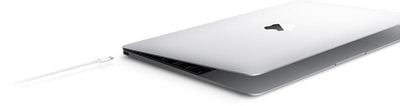
Retina-MacBook-USB-C

Using this protocol, host systems can confirm the authenticity of a USB device or USB charger, including such product aspects as the descriptors/capabilities and certification status. All of this happens right at the moment a wired connection is made - before inappropriate power or data can be transferred.

USB Type-C Authentication empowers host systems to protect against non-compliant USB Chargers and to mitigate risks from maliciously embedded hardware or software in USB devices attempting to exploit a USB connection

The USB Type-C Authentication specification comes after some non-compliant USB-C cables were able to damage electronic devices. Google engineer Benson Leung spent weeks testing USB-C cables sold by Amazon after a third-party cable he bought destroyed his Chromebook Pixel, making it his mission to highlight the risks of non-compliant cables.

Leung's work led Amazon to ban third-party retailers from offering USB-C cables that do not adhere to the standard specifications issued by the USB-IF, and it's also led to the creation of the protections announced today.

Key characteristics of the USB Type-CTM Authentication solution include:

- A standard protocol for authenticating certified USB Type-CTM Chargers, devices, cables and power sources
- Support for authenticating over either USB data bus or USB Power Delivery communications channels
- Products that use the authentication protocol retain control over the security policies to be implemented and enforced
- Relies on 128-bit security for all cryptographic methods
- Specification references existing internationally-accepted cryptographic methods for certificate format, digital signing, hash and random number generation

Apple began using USB-C with the Retina MacBook, choosing the standard because it allows both data and power transfer through a single connector. USB-C is appealing for its universality, but because USB-C cables can transfer more power than traditional USB connectors, non-compliant or faulty equipment can damage electronic devices by providing too much power.

The Retina MacBook already has safeguards built in to protect it from non-compliant cables, but the new USB Type-C Authentication feature will offer another layer of protection should Apple choose to implement it. Current machines will only charge from third-party USB-C power adapters if they comply with the USB Power Delivery specification, and if too much power is detected, the USB-C ports on the MacBook will shut down.

While the Retina MacBook is the only product that currently offers USB-C functionality, Apple may choose to offer USB-C ports in additional machines in upcoming updates scheduled to take place across 2016.
Top Rated Comments

129 months ago
A problem that only exists because companies insist on combining charging cables and data cables into one.

Reminds me the story of the space pen. NASA realized that regular ballpoint pens don't work in zero gravity, so they spent some enormous amount of resources on R&D to design a pressurized ink cartridge that can write upside down and in zero gravity, what we call the space pen. The Russians just used a pencil.

Sometimes the simplest solution is the best one. Dedicated power port. Done.
http://www.snopes.com/business/genius/spacepen.asp
Score: 11 Votes (Like | Disagree)
CarlJ Avatar
129 months ago
Reminds me the story of the space pen. NASA realized that regular ballpoint pens don't work in zero gravity, so they spent some enormous amount of resources on R&D to design a pressurized ink cartridge that can write upside down and in zero gravity, what we call the space pen. The Russians just used a pencil.
Aside from this story being known to be false (someone already provided the snopes link, Fisher paid for the development themselves, so no tax dollars were harmed), a pencil is a terrible idea in space - you'll invariably end up with random bits of graphite (if not also sharpener shavings and eraser dross) floating around the capsule, getting into places where they ought not to be - especially troubling given that graphite is electrically conductive and could damage, you know, those electronic circuits you're depending on for life support, navigation, landing, and other such mundane activities.

This suggests a quote that isn't fake:

"For every complex problem there is an answer that is clear, simple, and wrong." -- H. L. Mencken
Score: 7 Votes (Like | Disagree)
129 months ago
Yes I know the story is not literally true. That doesn't mean it's not a nice and colorful anecdote to go along with the idea that the simplest solution is sometimes the best one.
It would be if it weren't the case that, in the story you shared, the simplest solution was not the best one.
Score: 6 Votes (Like | Disagree)
129 months ago
A problem that only exists because companies insist on combining charging cables and data cables into one.

Sometimes the simplest solution is the best one. Dedicated power port. Done.
Would you advocate that solution for smartphones as well?

Before non-Apple (smart)phones switched to some version of USB (and even then it took a while until micro USB emerged as a standard), the plethora of different charging plugs and parameters for phones were a royal pain, in regard to not being able to use other people's chargers and in perfectly good chargers ending up in landfills when one bought a new phone which came with a different type of charger. Standardisation of chargers then coincided with the need to transfer large-ish amounts of data to phones and that locked in the combination of data and charging in one port.
Score: 3 Votes (Like | Disagree)
You are the One Avatar
129 months ago
Do you take the RED cable or the BLUE cable?

Score: 3 Votes (Like | Disagree)
Gudi Avatar
129 months ago
A problem that only exists because companies insist on combining charging cables and data cables into one.
How dare they! Don't they know data and power are both just electricity? Hundreds of millions of iPods, iPhones and iPads work fine with two cables, one for data and one for power. Now suddenly those silly engineers want to change a proven concept.
Reminds me the story of the space pen. NASA realized that regular ballpoint pens don't work in zero gravity, ...
Reminds me of this one time, when someone on the internet came up with a story which had nothing to do with the topic at hand.
Score: 2 Votes (Like | Disagree)

Popular Stories

MacBook Neo Feature Pastel 1

First MacBook Neo Benchmarks Are In: Here's How It Compares to the M1 MacBook Air

Thursday March 5, 2026 4:07 pm PST by
Benchmarks for the new MacBook Neo surfaced today, and unsurprisingly, CPU performance is almost identical to the iPhone 16 Pro. The MacBook Neo uses the same 6-core A18 Pro chip that was first introduced in the iPhone 16 Pro, but it has one fewer GPU core. The MacBook Neo earned a single-core score of 3461 and a multi-core score of 8668, along with a Metal score of 31286. Here's how the...
MacBook Neo Feature Pastel 1

Apple Announces $599 'MacBook Neo' With A18 Pro Chip

Wednesday March 4, 2026 6:15 am PST by
Apple today announced the "MacBook Neo," an all-new kind of low-cost Mac featuring the A18 Pro chip for $599. The MacBook Neo is the first Mac to be powered by an iPhone chip; the A18 Pro debuted in 2024's iPhone 16 Pro models. Apple says it is up to 50% faster for everyday tasks than the bestselling PC with the latest shipping Intel Core Ultra 5, up to 3x faster for on-device AI workloads,...
Multicolored Low Cost A18 Pro MacBook Feature

Apple Accidentally Leaks 'MacBook Neo'

Tuesday March 3, 2026 7:00 am PST by
Apple appears to have prematurely revealed the name of its rumored lower-cost MacBook model, which is expected to be announced this Wednesday. A regulatory document for a "MacBook Neo" (Model A3404) has appeared on Apple's website. Unfortunately, there are no further details or images available yet. While the PDF file does not contain the "MacBook Neo" name, it briefly appeared in a link...