Skip to Content

Get an Inside Look at Apple's Early Field Failure Analysis Program Ahead of the iPhone 6 Launch

by

Ahead of the iPhone 6's launch, Adam Satariano of BloombergBusinessweek has shared some details on Apple's early field failure analysis (EFFA) program, designed to solve potential iPhone issues quickly and efficiently. The EFFA Program, which is run by Apple's AppleCare team, has been in place since the late 1990s.

As outlined by Satariano, shortly after any iPhone release, the EFFA program sees couriers shuttling defective units received from returns to a testing room in Cupertino, where they are inspected by iPhone engineers in an attempt to fix problems in a timely manner. As soon as a fix is in place, it's deployed across the company's global supply chain.
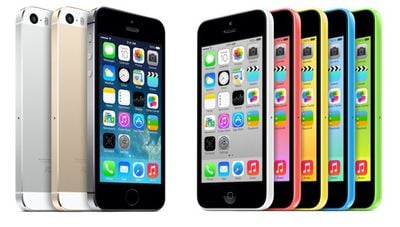
iphone_5s_5c.jpg

"They take them apart to diagnose what's happening right then and there," says Mark Wilhelm, who helped lead Apple's returns program. [...]

Often, they jury-rig a hardware fix, then coordinate a solution across Apple's global supply chain. Sometimes the problems can't be solved quickly--remember Apple Maps leading people astray. "Every day they don't recognize a problem, they are potentially manufacturing more bad products," says Michael Fawkes, the former head of supply chain for Hewlett-Packard (HPQ).

With the EFFA program, engineers in Cupertino learn of a potential problem as soon as a return is made in a retail store, and the serial numbers of each device allow the company to track defective devices down to "individual workers on an assembly line."

An example of EFFA in action came in 2007, with the release of the original iPhone. Several devices returned with a faulty touchscreen caused by an earpiece flaw that let in a user's sweat. Apple engineers fixed the problem with a new coating, which rolled out to assembly lines shortly after and prevented a more widespread issue.

According to former employees, EFFA testing is most crucial during the weeks after a device first launches, but the team remains active for many months, and publishes a weekly report highlighting common issues reported by customers. Apple's EFFA team will be called to action in just a few short weeks, as Apple is expected to introduce the iPhone 6 at a media event on September 9, with a launch coming shortly after.

For additional details on EFFA, make sure to check out Satarino's full piece over at BloombergBusinessweek.
Top Rated Comments

markyr17 Avatar
150 months ago
They must have been shi*ting all sort of bricks during antenna gate
Score: 9 Votes (Like | Disagree)
150 months ago
I work for an engineering company that is slowly working toward this kind of culture in the QA department. It's slow going but, as Apple's customer satisfaction scores indicate, well worth it.
Score: 5 Votes (Like | Disagree)
150 months ago
Get an Inside Look at Apple's Early Field Failure Analysis Program Ahead of t...

In short. Apple has a good quality department.
Score: 5 Votes (Like | Disagree)
150 months ago
There was no such flaw, and cases were never required. That antenna design is STILL sold today (the 8GB, over 4 years later) and works fine. The phone got better reception than its predecessor, which had already been praised for its reception, and better than many competing phones (some of which also had externally exposed antennas--not an Apple first). Yes, as with any phone, the way you hold it can affect you when you're in a weak signal location.

There was a PR "flaw," of course! Lots of people without iPhones moaning on behalf of the supposed masses of iPhone users with problems. VERY few actual owners posting complaints for themselves. Which is astonishing, considering the media hullaballoo made people LOOK for a problem they could have seen on any phone in history.

Antenna gate was mostly myth. It died accordingly, and Apple giving out the cases (which would help ANY phone ever made, and which most people already use anyway) was simply part of their PR response.

I was glad to get my free case :) And I used it only when hiking, because it simply was not needed for reception.


Agreed. Normally I'd be worried, about first-release products from ANY company. (I never install x.0 of any OS.) But with iOS, backup-and-restore is SO painless and complete, the next day after a warranty swap it's like nothing ever happened. You're risking hassle, but (IF a Genius is near you), the risk is minor.

Scratch that! Apple has terrible products, terrible service and never fixes anything! Wait at least a month before you buy! That way you won't be ahead of me in the order queue :)

The kool-aid is strong in this one.
Score: 4 Votes (Like | Disagree)
iCore24 Avatar
150 months ago
So being the early adopters is risky after all...
Score: 4 Votes (Like | Disagree)
sammich Avatar
150 months ago
*something about 2011 MBP GPU failures*
Score: 4 Votes (Like | Disagree)

Popular Stories

MacBook Neo Feature Pastel 1

First MacBook Neo Benchmarks Are In: Here's How It Compares to the M1 MacBook Air

Thursday March 5, 2026 4:07 pm PST by
Benchmarks for the new MacBook Neo surfaced today, and unsurprisingly, CPU performance is almost identical to the iPhone 16 Pro. The MacBook Neo uses the same 6-core A18 Pro chip that was first introduced in the iPhone 16 Pro, but it has one fewer GPU core. The MacBook Neo earned a single-core score of 3461 and a multi-core score of 8668, along with a Metal score of 31286. Here's how the...
HomePod mini and Apple TV Sage

New Apple TV and HomePod Mini Are Still Missing, Here's Why

Thursday March 5, 2026 6:11 am PST by
Apple this week unveiled seven products, ranging from the iPhone 17e to the MacBook Neo, but new Apple TV and HomePod mini models were not among them. Given that there have been rumors about the next-generation Apple TV and HomePod mini since all the way back in late 2024, some customers are wondering why the devices have yet to launch, and the answer likely relates to Siri. In September, ...
MacBook Neo Feature Pastel 1

Apple Announces $599 'MacBook Neo' With A18 Pro Chip

Wednesday March 4, 2026 6:15 am PST by
Apple today announced the "MacBook Neo," an all-new kind of low-cost Mac featuring the A18 Pro chip for $599. The MacBook Neo is the first Mac to be powered by an iPhone chip; the A18 Pro debuted in 2024's iPhone 16 Pro models. Apple says it is up to 50% faster for everyday tasks than the bestselling PC with the latest shipping Intel Core Ultra 5, up to 3x faster for on-device AI workloads,...