Bloomberg takes a look at the ongoing patent battle between Apple and a number of manufacturers of Android-based mobile hardware, suggesting that continued offensive action seeking to block competitors from using Apple's intellectual property may prove riskier for shareholders than licensing the technology.
“A scorched-earth strategy is bad news because it doesn’t optimize the value of their patents -- because people will get around them,” said [intellectual property advisor Kevin] Rivette, whose clients include Android licensees. “It’s like a dam. Using their patents to keep rivals out of the market is like putting rocks in a stream. The stream is going to find a way around. Wouldn’t it be better to direct where the water goes?”
Rivette suggests that Apple could probably extract about $10 in licensing fees for each Android handset sold, but with Apple having a war chest of over $80 billion already, the company could use its intellectual property as leverage in other ways if it opted to settle with its opponents.
The company could offer to drop its more than two dozen patent claims against Samsung in exchange for an agreement to hold off using Apple technology for six months or a year, he said. Cook could also try to get price breaks or guarantees that would give it greater access to Samsung parts, Rivette said.
Other industry experts take something of an opposing view, noting that Apple has yet to face any significant threat from its competitors on the intellectual property front, and in the meantime those competitors are being slowed by Apple's aggressive legal actions.
“Apple has the patents, the money and the expertise to go to war,” [MDB Capital Group chairman Christopher] Marlett said. “I just don’t see why Apple would seek détente, since they’re the clear leader. Until they’re hit with an injunction by Google or Samsung, they don’t need to get serious about licensing.”
But even those who believe that Apple's strategy remains viable for now suggest that at some point the company will need to shift course and reach settlements. With innovation obviously still continuing in the industry and an increasing number of players participating in it, it seems likely that Apple will at some point find itself on the losing end of a significant intellectual property suit.
Once competitors begin to land victories over Apple, as Samsung has been attempting with lawsuits over 3G-related patents, Apple may find it beneficial to settle the ongoing lawsuits to bring some stability back to the market.
Monday October 20, 2025 10:57 am PDT by Juli Clover
With the fourth betas of iOS 26.1, iPadOS 26.1, and macOS 26.1, Apple has introduced a new setting that's designed to allow users to customize the look of Liquid Glass.
The toggle lets users select from a clear look for Liquid Glass, or a tinted look. Clear is the current Liquid Glass design, which is more transparent and shows the background underneath buttons, bars, and menus, while tinted ...
Apple is "drastically" cutting production of the iPhone Air and shifting focus toward the iPhone 17 and iPhone 17 Pro models, Nikkei Asia reports.
The business publication claims to have learned of a major cut to iPhone Air production motivated by weaker-than-expected consumer interest, nearly to "end of production levels." Despite early reports of the iPhone Air selling out within hours of...
Wednesday October 22, 2025 4:44 pm PDT by Juli Clover
Back in 2012, an Apple retail employee named Sam Sung went viral because his name is similar to Samsung, one of Apple's main competitors. In a recent interview with Business Insider, he detailed that period in his life, how Apple responded, and he explained why he ultimately changed his name.
Someone posted an image of Sung's Apple business card on Reddit in 2012, and it spread rapidly....
Wednesday October 22, 2025 11:34 am PDT by Juli Clover
General Motors began phasing out support for CarPlay in its electric vehicles back in 2023, leading to complaints from iPhone users, but the company has no plans to back down.
In fact, GM is going further and plans to remove CarPlay from all future gas vehicles, too. In an interview with The Verge, GM CEO Mary Barra said that the company opted to prioritize its platform for EVs, but the...
Apple plans to launch a new type of iPhone every year for the foreseeable future, according to an Asia-based source.
The detailed information was shared by the account "yeux1122" in a blog post on the Korean platform Naver, citing domestic trend and component research companies.
Corroborating other reports, Apple will apparently launch its first foldable iPhone in 2026, featuring a...
Monday October 20, 2025 1:55 pm PDT by Juli Clover
With the fourth beta of iOS 26.1, Apple added a toggle that makes Liquid Glass more opaque and reduces transparency. We tested the beta to see where the toggle works and what it looks like.
Subscribe to the MacRumors YouTube channel for more videos.
If you have the latest iOS 26.1 beta, you can go to Settings > Display and Brightness to get to the new option. Tap on Liquid Glass, then...
Saturday October 18, 2025 11:00 am PDT by Joe Rossignol
iOS 26 was released last month, but the software train never stops, and iOS 26.1 beta testing is already underway. So far, iOS 26.1 makes both Apple Intelligence and Live Translation on compatible AirPods available in additional languages, and it includes some other minor changes across the Apple Music, Calendar, Photos, Clock, and Safari apps.
More features and changes will follow in future ...
Monday October 20, 2025 1:02 pm PDT by Juli Clover
Even though we're at the fourth beta of iOS 26.1, Apple is continuing to add new features. In fact, the fourth beta has some of the biggest changes that we'll get when iOS 26.1 releases to the public later this month. We've rounded up what's new below.
Liquid Glass Transparency Toggle
Apple added a toggle for customizing the look of Liquid Glass. In Settings > Display and Brightness,...
Monday October 20, 2025 1:42 pm PDT by Juli Clover
Kohler is expanding its line of bathroom products with Dekoda, an iPhone-connected device that's designed to be attached to a toilet rim (via The Verge). The device's included "sensors" point into the toilet bowl, allowing it to analyze what goes on in the bathroom.
According to Kohler, Dekoda is a health tracker that can monitor gut health and hydration, as well as detect the presence of...
1) Those who license their patents are assured of sharing even in their competitors' success.
2) It's not a longterm smart idea for Apple to force their competition to come up with more clever solutions or workarounds (and likely patent them).
3) Eventually the tables will be turned on Apple, and someone will refuse to license to them, just as they have refused to license to others. Bad karma.
Apple isn't interested in cross licensing. Their goal is to enforce their patents so competitors have to remove features and degrade the user experience on their platforms.
Indeed, HTC was just banned from importing phones that automatically recognize phone numbers and emails and turns them into action links. HTC has said they are going to remove the feature.
That is a serious degradation of the user experience. And it will drive people away from HTC. Apple can theoretically enforce the same patents against any other manufacturer as well, and probably will.
If Android as a whole lost that feature, Apple would certainly sell a lot more phones.
No - you missed the point entirely. HTC isn't removing the feature. They've changed the way it's done so it avoids the patent.
So - in essence - rather than Apple making money from licensing the patent - they've forced the competition to come up with a work around. This has both good and bad points as mentioned in the article.
I love the thought process of Apple fanatics. Android was announced before the iPhone, Android phones contained numerous features before iPhones had them, and Apple has been blatantly stealing features from Android recently, but these "experts" believe that android manufacturers should be paying Apple licensing fees? Apple should be the ones paying the fees.
Lawyers spend many years arguing cases that depend on tiny little details buried deep in software code.
As much as you'd like to believe so, you can not become an expert at this stuff by simply looking at the phones and typing out an opinion on the internet.
The fact that you used the word 'features' at all shows how far off you are from what these cases are about. It's very rarely about the 'feature,' but rather how the feature is accomplished.
That said, the analysts seem to also be guessing based on little knowledge, so what the heck. We might as well all join in.
Plus the fact of the matter is still the same, apple patented their ideas first, so anyone using them suffers the consiquences. If android was first as you say, why don't they own the pattent? because they weren't first. ;) Apple patents stuff in concept phase, because they had the idea first.
Simply getting a patent does not always mean it actually is for a unique idea. That can require a court ordered deeper examination to figure out once and for all.
For example, Apple was quick to use their patent for "slide-to-unlock with image and path" against everyone they sued. Now, with various judges saying that it's most likely obvious and invalid, they've withdrawn it from their attack arsenal. Other patents are not doing so well either.
A related example was Apple's attempt to trademark "Multi-Touch". It was almost finalized. Then, after a fervent letter of opposition from Jeff Han's company, the Trademark Office re-examined their original approval and decided that it had been given in mistake.
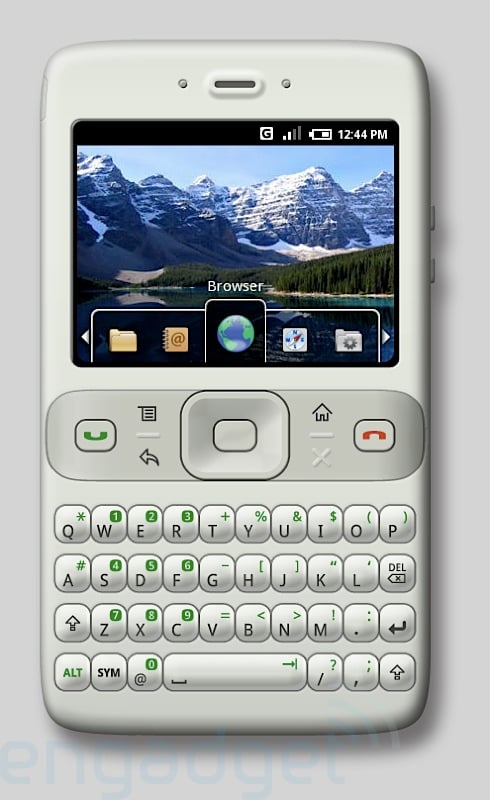
You do understand there were touchscreen phones before the iPhone, right? you're also aware that Android has numerous different types of phones - full touchscreen, qwerty, portrait slider, landscape slider, etc. That picture is one model of an early prototype.
Those early days aside, in more recent times Android was first to market with multitasking, but nobody cried foul when Apple implemented it. Apple blatantly stole the notification system for ios5 directly from Android. is Google suing? Nope.
Multi tasking, Parallel processing, multi processing, was invented and implemented commercially back in 1960's. Google didn't invent anything.
I love the thought process of Apple fanatics. Android was announced before the iPhone, Android phones contained numerous features before iPhones had them, and Apple has been blatantly stealing features from Android recently, but these "experts" believe that android manufacturers should be paying Apple licensing fees? Apple should be the ones paying the fees.
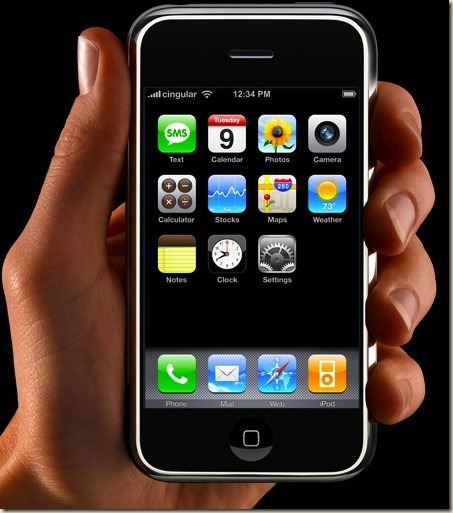
Yup, because this is the same http://www.engadget.com/2007/11/12/a-visual-tour-of-androids-ui/
as this
Its not like Google/Android shifted course when Apple unveiled the the iPhone in 2007
Now back on topic,
Once competitors begin to land victories over Apple, as Samsung has been attempting with lawsuits over 3G-related patents, Apple may find it beneficial to settle the ongoing lawsuits to bring some stability back to the market.
I've never commented on any of these paten lawsuit post, but I like this part of the article.