Macworld reveals an interesting fact about the CDMA iPhone 4Ss that wasn't immediately obvious. The Sprint CDMA iPhone 4S comes GSM-unlocked, while the Verizon CDMA iPhone 4S can be unlocked by request after 60 days.
Sprint plans to sell the iPhone 4S with its micro-SIM slot unlocked; Verizon’s will be initially locked, but if you’ve been a customer in good standing for 60 days, you can call Verizon and ask for an “international unlock.” (A Verizon spokesperson told me that this is Verizon’s standard policy for all world phones—it’s just the first time it’s manifested itself on an iPhone.)
This is welcome news to those looking to travel internationally. In those situations, customers can buy a local SIM card to use during travel, eliminating costly roaming charges.
Macworld does a great job breaking down the advantages and disadvantages of world roaming on the various U.S. carriers. AT&T iPhone 4Ss will apparently still come locked.
Sprint and Verizon iPhone 4Ss should start arriving on Friday, October 14th.
Sunday September 13, 2026 3:00 am PDT by Eric Slivka
Update 10:04 a.m.: iOS 27 is rolling out now, though it may take a bit for all users to see it, so keep checking!
Apple is about to release iOS 27, which will finally deliver more advanced Siri AI capabilities as well as a variety of other refinements, improvements, and new features to iPhones. It's Apple's biggest software update of the year, and Apple announced at Wednesday's iPhone event...
Monday September 14, 2026 9:00 am PDT by Joe Rossignol
Update — 10 a.m. Pacific Time: Apple has released iOS 27.
During its iPhone 18 Pro and iPhone Duo event last week, Apple announced that iOS 27 will be released widely on Monday, September 14.
iOS 27 should be available around 10 a.m. Pacific Time / 1 p.m. Eastern Time today via the Settings app, under General → Software Update.
Below, we have highlighted eight new features and...
Tuesday September 15, 2026 1:43 am PDT by Tim Hardwick
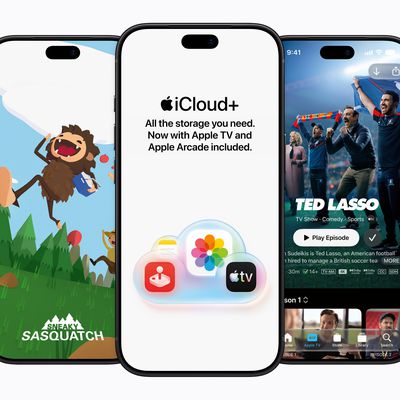
Apple today announced a new subscription initiative that turns paid iCloud+ subscriptions into a broader services bundle in more than 100 countries.
In select countries, Apple says every paid iCloud+ plan, including the cheapest 50GB tier, now includes Apple TV and Apple Arcade "at no additional cost," while family sharing extends the storage, TV and Arcade access to up to five people....
The days when CDMA iPhone users were at a disadvantage when traveling internationally are long behind us. As just discovered by Macworld, the iPhone 4S is even more of a worldphone than we originally thought.
According to them, not only can your Sprint or Verizon CDMA iPhone be used internationally on GSM networks, but the SIM slot that it comes with is actually unlocked, meaning you can pop in any SIM you want. Thats right, when youre traveling to other GSM countries, youll be able to buy a local micro-SIM card (or a normal one and cut it), and pop it into your iPhone 4S.
While Sprint will be making this a standard, Verizon will still be locking the iPhone 4S SIM slot for new users, and will only grant what they call international unlock for folks whove been good and around for at least 60 days.
The big unknown, of course, is whether you could actually pop an AT&T micro-SIM into such a device. Weve tried to find out, but havent been able to figure that out yet. If its the case, that would be a very interesting feature. After all, since youre paying for the contract, why should the carrier prevent you from doing what you want with the phone, right? But thats a whole other debate.
There's a big difference.
Any cellphone can be unlocked in the past 4+ years but the iphone here. So I wouldnt be surprised if our US money hungry carriers wouldnt lock it to their own GSM sims only.
A major reason to use GSM is to be able to swap in local SIMs on long trips.
Verizon has always unlocked the GSM side of their World Phones for customers in good standing. There's no reason to think they would change in this case.
AT&T, like about half the world's GSM carriers, refuses to unlock the iPhones they sell. Worse, they won't even unlock it after it's paid off. They don't want their users jumping to carriers like T-Mobile.
Verizon and Sprint is no better in that regard, of course. They don't let the other's CDMA phones onto their network, for the same reason: they don't want to make it too easy to jump carriers.


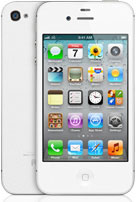 Macworld reveals an interesting fact about the CDMA iPhone 4Ss that wasn't immediately obvious. The Sprint CDMA iPhone 4S comes GSM-unlocked, while the Verizon CDMA iPhone 4S can be unlocked by request after 60 days.