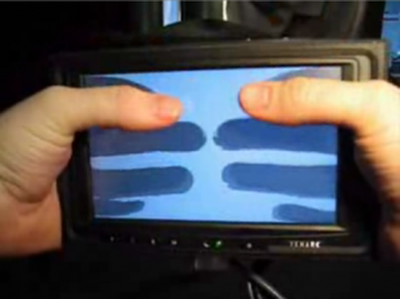
Gizmodo points to a Youtube video and New Scientist article which detail and demonstrate a technology called "LucidTouch" developed by Mitsubishi Electric Research Labs.
The prototype video demonstrates a user using the back of the device as a touch surface to manipulate objects on the screen. The prototype uses a mounted video camera to provide visual feedback on screen as to where the users fingers are. By using this "see-through" interface, it attempts to solve the issue in traditional front-touch screens where fingers may obstruct the view of the screen itself.
Apple has also been researching this technology which was revealed in a patent application from January 2007. The patent application was titled "Back-Side Interface for Hand-Held Devices". Apple's implementation did not go so far as to depict the users fingers, but instead opted to display a pointer or cursor to show where contact was being made.
Apple appears to have prematurely revealed the name of its rumored lower-cost MacBook model, which is expected to be announced this Wednesday.
A regulatory document for a "MacBook Neo" (Model A3404) has appeared on Apple's website. Unfortunately, there are no further details or images available yet.
While the PDF file does not contain the "MacBook Neo" name, it briefly appeared in a link...
Apple today introduced two new devices, including the iPhone 17e and an updated iPad Air.
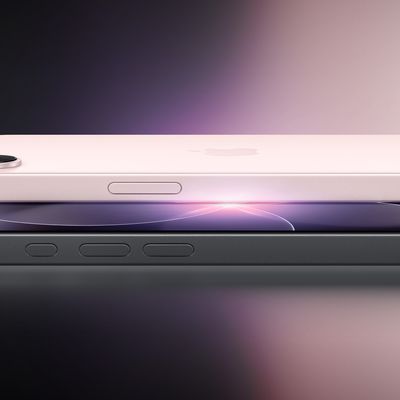
iPhone 17e features the same overall design as the iPhone 16e, but it gains Apple's A19 chip, MagSafe for magnetic wireless charging and magnetic accessories, Apple's second-generation C1X modem for faster 5G, and a doubled 256GB of base storage. In the U.S., the iPhone 17e starts at $599, just like the ...
Apple today announced the iPhone 17e, featuring the A19 chip, MagSafe connectivity, faster charging, and more.
The iPhone 17e contains the A19 chip introduced in iPhone 17. It features a 6-core GPU and a 4-core GPU. Apple pointed out that this makes it up to 2x faster than the iPhone 11. The new 16-core Neural Engine is optimized for large generative models. The iPhone 17e also contains...