Motorola and 'low-k' Tech
The Register notes that Motorola has successfully implemented 'low-k dielectric materials' in its current 0.18 micron SOI processors and plan on implementing it in a 0.13 micron process this month. This technology is said to provide a 20% performace boost to processors.
Reducing that cross-circuit interference with low-k dielectrics allows transistors to switch more quickly and draw less power. The trouble is, implementing low-k dielectrics has not proved easy - new materials require new methods, all of which must be thoroughly proved before they can be implemented in commercial products.
Motorola did not give specifics on particular processors, but was quoted as targeting steady improvements: "Our goal is to stay with a frequency doubling every 18 months or so, and get into the 2GHz range for PowerPC, but at very low power consumption of, say, 20W."
Popular Stories
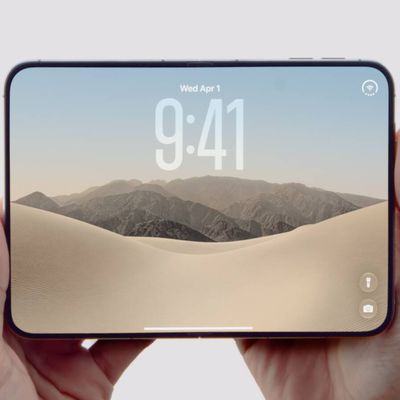
Apple today announced the "iPhone Duo," a new kind of iPhone featuring two screens and a foldable inner display.
The two halves of the iPhone Duo connect into a single continuous frame with the same aspect ratio across both displays, and Apple said the transition between open and closed is designed to feel fluid. When fully open, Apple says it is the thinnest iPhone ever made, with an...
Apple's "Surprise and Shine" event kicks off today at 10:00 a.m. Pacific Time, where we're expecting to see the foldable iPhone Duo, the iPhone 18 Pro and Pro Max, Apple Watch Series 12 and Ultra 4 models, new AirPods 5 earphones, and perhaps some other announcements.
Apple is providing a live video stream on its website, on YouTube, and in the company's TV app across various platforms. We...
Apple's biggest event of the year is almost here, and all eyes are on Cupertino. With the first foldable iPhone expected to headline Apple's "Surprise and Shine" event on Wednesday, September 9, at 10:00 a.m. Pacific Time, the rumor mill has been running full throttle, fuelled by the biggest single design change in the life of the iPhone.
To get you up to speed, here's a quick reference...