FCC Proposal Aims to Make Subscription TV Available on Any Set-Top Box

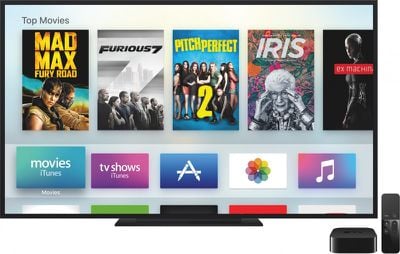
United States Federal Communications Commission chairman Tom Wheeler introduced a proposal [PDF] this afternoon that would de-couple cable subscriptions from cable set-top boxes. Under the proposal, cable and satellite subscribers would be able to access and watch cable content on any set-top box of their choosing, including the Apple TV, rather than being limited to the set-top box provided by the cable company.

While allowing customers to access the full content provided with a cable subscription through the Apple TV is not quite the cord-cutting solution Apple has been aiming for, it is a step towards a more open relationship between technology companies and cable companies. Such a system would not give Apple control over content, but it would allow Apple to build an interface for that content.
appletvos

The new rules would create a framework for providing device manufacturers, software developers and others the information they need to introduce innovative new technologies, while at the same time maintaining strong security, copyright and consumer protections. Nothing in this proposal changes a company's ability to package and price its programming to its subscribers, or requires consumers to purchase new boxes.

As The Verge points out, the FCC faces a tough battle attempting to get this proposal passed and implemented due to resistance from cable companies who want to have control over content and how and where it's displayed.

A similar plan for the CableCard, which allows companies like TIVO to offer cable content, has largely failed because of its complexity and because many cable providers refused to make the process simple enough to be widely adopted. Cable companies are against the proposal because of the loss of control and the loss of the revenue from rented cable set-top boxes, and more than 40 telecommunications groups have already formed a coalition to oppose the FCC's plan.

Cable companies argue it would give technology companies unfair access to customer data and potentially disrupt deals that have been established for channel positioning, giving some programmers better spots in the lineup for higher payments.

Having continually failed to reach deals with content providers and cable companies, Apple has settled on focusing on its tvOS operating system and the App Store available on the fourth-generation Apple TV. The tvOS App Store model allows for cable companies to create apps and deliver cable content to consumers on the Apple TV, but it's a fragmented system that's less than ideal because it still doesn't give Apple full control over the interface. The FCC's proposal has the potential to greatly improve the cable watching experience on the Apple TV, at least for cable subscribers.

Tag: FCC

Popular Stories

maxresdefault

Apple Shows Off a Key Reason to Upgrade to the iPhone 17

Saturday February 7, 2026 9:26 am PST by
Apple today shared an ad that shows how the upgraded Center Stage front camera on the latest iPhones improves the process of taking a group selfie. "Watch how the new front facing camera on iPhone 17 Pro takes group selfies that automatically expand and rotate as more people come into frame," says Apple. While the ad is focused on the iPhone 17 Pro and iPhone 17 Pro Max, the regular iPhone...
m5 macbook pro deal

Why You Shouldn't Buy the Next MacBook Pro

Tuesday February 10, 2026 4:27 pm PST by
Apple is planning to launch new MacBook Pro models as soon as early March, but if you can, this is one generation you should skip because there's something much better in the works. We're waiting on 14-inch and 16-inch MacBook Pro models with M5 Pro and M5 Max chips, with few changes other than the processor upgrade. There won't be any tweaks to the design or the display, but later this...
apple wallet drivers license feature iPhone 15 pro

Apple Says These 7 U.S. States Plan to Offer iPhone Driver's Licenses

Monday February 9, 2026 6:24 am PST by
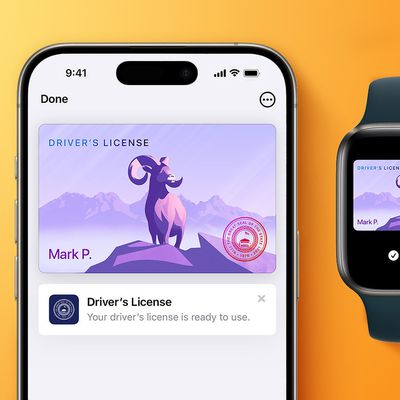
In select U.S. states, residents can add their driver's license or state ID to the Apple Wallet app on the iPhone and Apple Watch, and then use it to display proof of identity or age at select airports and businesses, and in select apps. The feature is currently available in 13 U.S. states and Puerto Rico, and it is expected to launch in at least seven more in the future. To set up the...
iOS 26

Apple Releases iOS 26.3 and iPadOS 26.3

Wednesday February 11, 2026 10:07 am PST by
Apple today released iOS 26.3 and iPadOS 26.3, the latest updates to the iOS 26 and iPadOS 26 operating systems that came out in September. The new software comes almost two months after Apple released iOS 26.2 and iPadOS 26.2. The new software can be downloaded on eligible iPhones and iPads over-the-air by going to Settings > General > Software Update. According to Apple's release notes, ...
Apple Logo Zoomed

Apple Expected to Launch These 10+ Products Over the Coming Months

Tuesday February 10, 2026 6:33 am PST by
It has been a slow start to 2026 for Apple product launches, with only a new AirTag and a special Apple Watch band released so far. We are still waiting for MacBook Pro models with M5 Pro and M5 Max chips, the iPhone 17e, a lower-cost MacBook with an iPhone chip, long-rumored updates to the Apple TV and HomePod mini, and much more. Apple is expected to release/update the following products...

Top Rated Comments

ToroidalZeus Avatar
131 months ago
The FCC needs to stay out of this. I hate the cable companies but it seems whenever we see one of these mandates things just get even more screwed up.
no.

If it wasn't for the FCC, AT&T would still be throttling people that used more than 5GB of data a month.
Score: 26 Votes (Like | Disagree)
chriscrowlee Avatar
131 months ago
This is a prime example of how screwed up our government is. The government allowed these mega cable company mergers to create geographic monopolies (yes, it's a monopoly, try getting a satellite in San Francisco or New York or Chicago high-rises, it's cable or nothing). They allow them based on the cable companies making promises to not raise rates or degrade service. Then when the monopolistic mergers go through, the FCC who approved the merger to begin with all of a sudden is interested in introducing regulation to fight what they themselves approved. But by this time, the cable companies are so big and have so much money their lobbyist machine buys their way into the government hush club.

It's really so screwed up. All I can say is thank god the DOJ didn't allow TMO and ATT to merge, because had they, we'd have a cellular industry that looks just like the cable TV industry.
Score: 26 Votes (Like | Disagree)
131 months ago
All this nonsense makes you wonder why anybody cares about TV to begin with. It truly is becoming an idiot box.
Score: 15 Votes (Like | Disagree)
Mac4Brains Avatar
131 months ago
Making net neutrality that much more important. Think about it, using your cable company for internet to bypass their monopoly on cable channels is a major incentive to throttle or totally block your ability to bypass them.
Score: 15 Votes (Like | Disagree)
MJedi Avatar
131 months ago
Cable companies argue it would give technology companies unfair access to customer data and potentially disrupt deals that have been established for channel positioning, giving some programmers better spots in the lineup for higher payments.
Waah, waah, waah. If cable companies didn't price gouge, strong-arm, and bully their customers, and actually provided great services, then it wouldn't have to come to this.

I also find it hilarious that they are calling this plan "unfair" when they themselves are being unfair when it comes to net neutrality, price hikes, lobbying and eliminating competition.

Bring it, FCC.
Score: 14 Votes (Like | Disagree)
chriscrowlee Avatar
131 months ago
Understood. But when Apple locks down their systems, it's good business practice, when anyone else does it, it's greed.
I don't agree with your comparison. Apple having a closed system doesn't compare to a monopoly. A proper analogy would be if Delta Air Lines were to be allowed to be the only airline that serves Atlanta, and then Delta were to buy the FAA and DOT. That would be more of a fair comparison to what's going on with the cable company.

If you live at 1234 Broadway, Unit 1201, your choice is Comcast, or Comcast. And if you don't like it, you have no alternative. If you go with Comcast, you're at the mercy of their pricing. Comcast owns NBC Universal, so all of the channels that go with that are held hostage by Comcast's motives.

Apple is a closed system. If you don't like it, you can get a Dell. Or an HP. There's not a monopoly in the personal computer technology spectrum, one has many options, several operating systems to chose from. If you want a Mac with Windows you can have it. If you want a PC with Windows you can have it. Sure you can't (lets play dumb here) have Mac on a PC... but for all intensive purposes there's a ton of choice in the computer industry.

Now back to TV... in a large portion of the US population (estimates say 40-50% of households) there is no ability to get satellite, and only one choice of television (cable) provider. At some point as uVerse, Fios, etc continue to expand, that'll increase, but how would you see FiOS or uVerse being competitive when they have to pay their competitor (Comcast NBC Universal) to re-sell half the channels offered?

It's a mess. If it doesn't infuriate you, sorry.
Score: 11 Votes (Like | Disagree)