Apple to Add Near Field Communication (NFC) Payments to iPad 2 and iPhone 5?

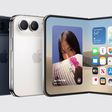
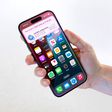
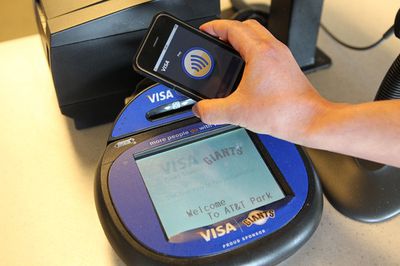
Bloomberg claims that Apple will be incorporating NFC (Near Field Communication) hardware in the next iPhone and iPad. This feature would allow customers to use the iPhone and iPad to make purchases:
The services are based on "Near-Field Communication," a technology that can beam and receive information at a distance of up to 4 inches, due to be embedded in the next iteration of the iPhone for AT&T Inc. and the iPad 2, Doherty said. Both products are likely to be introduced this year, he said, citing engineers who are working on hardware for the Apple project.
Apple could potentially tie this payment system into people's existing iTunes accounts. It's described to allow customers to walk into a store and make payments directly from their iOS device. Apple may also incorporate loyalty rewards and credit system in iTunes as well. Other possibilities include using location based transactions to improve iAd targeting.According to this source, Apple has already made prototype payment terminals intended for small businesses to scan NFC-enabled iPhones and iPads. These terminals could be subsidized or even given away to encourage adoption.
Apple has been hiring NFC experts as well as applied for several patents on the technology. A couple of previous reports have also pegged the next generation iPhone as having NFC technology built in.
Top Rated Comments
(View all)I have seen NFC in other applications (example: authentication in a car sharing system), but not as a payment system.
Christian
Visa are already rolling out an RFID based system in the UK and have been for over 2 years. No chance that Apple will be able to compete at this stage.
This sounds like a HUGE security risk to me. Anybody know enough about this technology to know whether I am being paranoid?
I think, certainly the VISA system in the UK mentioned above, has a limit of £15 ($23ish) for any single transaction using NFC. From the VISA website, it says you may also have to enter your PIN occasionally as a security check, which makes sense - say for example if there were 3 transactions in a short period it might ask for your PIN (that is entirely a theory as to how this might work...).
More info on the VISA system here http://www.visa.co.uk/en/products/contactless.aspx. Of course, I have no idea what the Apple system would be like!
This sounds like a HUGE security risk to me.
Without doubt considering the security of iTunes accounts is already questionable to say the least.
I recently had mine hacked to the value of £390 and Apple were unable to allow me to speak to anybody (physically....only a robot at the end of an email) about it nor give me any explanation as to how it happened or what they would be doing to stop it happening in the future.
So based on the above why would I or any other person want to use this system?
This sounds like a HUGE security risk to me. Anybody know enough about this technology to know whether I am being paranoid?
There is little known about NFC security, but it is questionable at least.
The idea of NFC is to keep the range very short (about 4 inches). This is intentional. If you hold your device close enough to the reader you are authenticated. No need to enter a PIN or password. The reason is to authenticate a ot of people quickly (example: use as a ticket in public transport).
But this can be abused by anyone who has stolen your device. This is probably ok as long it is a prepaid system and only a limited amount can be stolen. But when it is really coupled to your iTunes account or even the credit card.... ?
Bad luck.
The other problem is: There is close to nothing known about technical security (encryption etc). So security experts cannot evaluate the system. Security by obscurity has never been a trustworthy approach and has failed many times in the past.
Christian
This sounds like a HUGE security risk to me. Anybody know enough about this technology to know whether I am being paranoid?
Of course there will be vulnerabilities, but there is in any payment system so you have to consider those in context. Bottom line is this type of payment system has been in use in various parts of the world for several years now and, if properly implemented, has not proved any more of a risk than cash/cheques/credit cards.
Best example of its use in the UK is the Oyster card used on London Transport which has been in use for years now, but also taking off in the UK there are now credit cards that you can make micro-payments with using this type of technology. As I say, it's how the technology is implemented that makes the difference, for example limiting the amount per transaction or daily maximum that can be made from each device.
[ Read All Comments ]

As noted by ifoAppleStore, Apple is continuing its trickle of retail store openings this week with a new location opening on Friday, May 25 in Paris. The new Les Quatre Temps store will be...
TiVo owners can control their devices via an iOS app on the iPhone and iPad, but -- for the moment -- can only watch shows on their television.
But that's all going to change in a few months....
Binary Nights has dropped the price of its file-transfer app ForkLift to $0.99, down from $29.99, for a limited time.
ForkLift is a well-reviewed file management app that offers FTP, SFTP,...
Our sister-site TouchArcade notes that Chillingo's excellent physics puzzler Feed Me Oil is free today for both the iPhone and iPad. It's normally $0.99 for iPhone and $1.99 for iPad....